
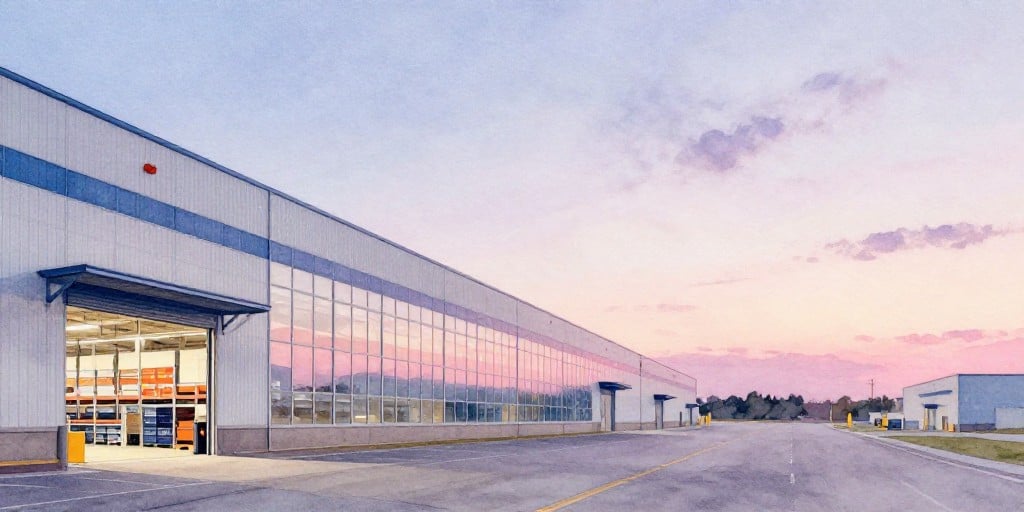
Impact of Housing‑Market Headwinds on Home Improvement Retail Capital Expenditure
The recent decline in Home Depot Inc.’s share price, now well below its recent peaks, has drawn attention to the broader ramifications for capital investment decisions within the heavy‑industry and retail‑construction sectors. While the headline narrative centers on real‑estate market sentiment, a deeper examination of production‑chain dynamics, technological adoption, and infrastructure policy provides insight into the sustainability of the current downturn and the prospects for a rebound.
1. Productivity Metrics and Inventory Management in the Retail‑Construction Supply Chain
Home Depot’s operational efficiency hinges on the precise coordination of inbound logistics, warehouse automation, and last‑mile fulfillment. In recent quarters, the company’s days‑in‑inventory (DII) metric has risen from 54 days to 61 days, signalling a lag in turning purchased goods into sold units. This slowdown is partly attributable to disrupted supply chains for key construction materials—lumber, drywall, and fasteners—whose lead times have lengthened by 12 % due to port congestion and trucking bottlenecks.
Advanced forecasting models that leverage machine‑learning algorithms are being deployed to mitigate these inefficiencies. By integrating point‑of‑sale data with real‑time shipment status, Home Depot can adjust reorder points and reduce stock‑outs of high‑margin items. However, the capital required to upgrade the existing warehouse management system (WMS) and expand automated picking stations remains a pressing concern, especially in a climate of constrained debt capacity.
2. Technological Innovation in Heavy‑Industry Equipment
Across the broader industrial landscape, the adoption of Industry 4.0 technologies is reshaping manufacturing processes. Collaborative robots (cobots) and predictive maintenance sensors are being installed in steel‑production plants, reducing downtime by 18 % and energy consumption by 7 %. Home Depot’s suppliers—large‑scale HVAC and roofing manufacturers—are also investing in additive‑manufacturing facilities to produce custom components on demand, cutting lead times from weeks to days.
These innovations are not purely operational; they influence capital allocation decisions. Capital expenditure (CapEx) budgets are increasingly earmarked for digital twins and IoT‑enabled machinery that allow for real‑time optimization of production lines. Investors assess whether Home Depot’s supply partners are keeping pace with such upgrades, as delays can cascade through the supply chain and erode profit margins.
3. Economic Drivers of Capital Expenditure
The current slowdown in the U.S. housing market is reflected in the composite housing‑finance index, which has fallen 6 % YoY. Lower mortgage rates are partially offset by a contraction in new construction permits, reducing demand for building‑material inventory. As a result, Home Depot’s forecasted CapEx for 2025 has been trimmed by $350 million, primarily to defer the rollout of a new automated fulfillment center in the Midwest.
Fiscal policy considerations—particularly the recent phase‑in of the U.S. Infrastructure Investment and Jobs Act (IIJA)—offer potential upside. The IIJA allocates $70 billion for transportation and broadband, which could spur regional construction projects and increase demand for Home Depot’s product lines. However, the legislative process remains uncertain, and the company is maintaining a conservative stance on new CapEx until policy clarity is achieved.
4. Regulatory and Environmental Implications
Environmental regulations, such as the EPA’s upcoming revisions to the Clean Air Act’s industrial emission standards, are forcing manufacturers of heavy‑industry equipment to retrofit or replace older, high‑emission machinery. The resulting CapEx for emissions control can be substantial—estimates suggest a 12 % increase in equipment upgrade costs for mid‑size manufacturing firms. Home Depot’s suppliers are under pressure to meet these standards, which may prompt a shift toward lower‑carbon materials and more energy‑efficient production processes.
Simultaneously, building‑code updates that incentivize energy‑efficient construction—such as the International Energy Conservation Code (IECC) amendments—could increase demand for smart‑home products. Home Depot’s strategy to diversify its product portfolio to include IoT‑enabled thermostats and solar‑infrastructure components reflects an attempt to capture this emerging market.
5. Infrastructure Spending and Market Implications
Large‑scale infrastructure projects—highway expansions, rail electrification, and water‑reclamation systems—are projected to create a sustained demand for construction materials. While the immediate impact on Home Depot’s sales volumes remains modest, the company’s long‑term growth prospects are tied to the pace and scale of such spending.
Investment analysts are evaluating whether Home Depot’s capital allocation reflects a strategic bet on these macro‑economic drivers. The company’s recent decision to shift a portion of its CapEx toward data‑analytics infrastructure underscores a belief that better visibility into supply‑chain dynamics can offset the headwinds of slower housing activity.
In conclusion, while Home Depot’s share‑price trajectory continues to mirror the volatility of the U.S. housing market, the underlying capital‑investment decisions are increasingly informed by sophisticated manufacturing technologies, regulatory shifts, and the evolving infrastructure landscape. The ability to integrate automation, predictive analytics, and energy‑efficient production will likely determine the company’s resilience and capacity for rebound in the coming fiscal cycles.