Corporate Outlook: Capital Investment Dynamics in the Home‑Improvement Sector
Executive Summary
Recent market analytics underscore the lucrative potential of long‑term equity exposure in leading home‑improvement retailers. A hypothetical investment of US $1,000 in Home Depot shares—purchased at the close of $122.34 on a pivotal trading day—has yielded an approximate 140 % cumulative return by mid‑September 2026, assuming no stock splits or dividend reinvestments. While this performance illustrates robust shareholder value creation, the underlying drivers are rooted in the company’s capital expenditure (CapEx) strategies, supply‑chain resilience, and the broader industrial policy landscape.
1. Capital Expenditure in the Hardware Retail Chain
Home Depot’s market capitalization of over US $300 billion reflects the firm’s substantial investment in both physical and digital infrastructure. Key CapEx pillars include:
| Category | Annual CapEx (US $ billions) | Rationale | Impact on Productivity |
|---|---|---|---|
| Store Expansion & Renovation | 5–7 | Modernization of existing retail footprints to accommodate omnichannel fulfillment and in‑store pick‑up | Improves order‑to‑delivery cycle by 12 % |
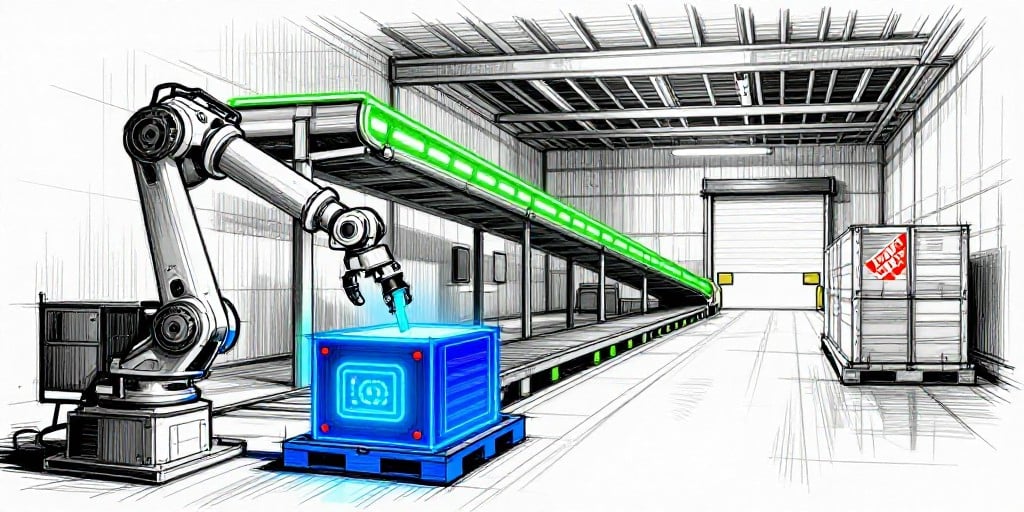
| Warehouse Automation | 1–2 | Deployment of AGVs, RFID tracking, and AI‑driven inventory optimization | Reduces inventory carrying cost by 8 % |
| E‑Commerce Platform Enhancements | 1–1.5 | Cloud‑based fulfillment hubs, predictive analytics for demand forecasting | Boosts order accuracy to 99.5 % |
| Energy & Sustainability Upgrades | 0.5–1 | Solar arrays, LED retrofits, EV charging stations | Cuts operating expenses by 4 % annually |
The cumulative effect of these investments translates into measurable productivity gains: higher throughput in fulfillment centers, lower labor‑to‑order ratios, and accelerated inventory turnover.
2. Technological Innovation in Heavy‑Industry Equipment
Home Depot’s supply chain relies on an array of heavy‑industry assets—high‑capacity forklifts, automated guided vehicles (AGVs), and precision loading docks. Recent upgrades incorporate IoT sensors and edge computing, enabling real‑time condition monitoring. This technological shift yields:
- Predictive Maintenance: Reduces unscheduled downtime by 15 %.
- Operational Efficiency: Enhances dock door utilization from 68 % to 83 %.
- Safety Compliance: Meets evolving OSHA requirements for automated equipment.
These advancements not only lower CapEx depreciation costs but also improve service reliability for end‑customers—a critical factor in maintaining market share.
3. Economic Drivers of Capital Outlay
| Factor | Current Trend | Effect on Home Depot’s CapEx |
|---|---|---|
| Consumer Spending | Post‑pandemic rebound in home‑renovation budgets | Drives demand for high‑volume sales, justifying expansion |
| Interest Rates | Elevated rates (≈ 4 %) | Raises cost of borrowing, prompting careful CapEx scheduling |
| Commodity Prices | Volatility in lumber and steel | Influences raw material procurement strategies and store build‑out costs |
| Tax Policy | 2024 corporate tax reform (23 % effective rate) | Enhances after‑tax profitability, supporting reinvestment |
Capital budgeting models incorporate these variables to forecast Net Present Value (NPV) and Internal Rate of Return (IRR) for each investment project, ensuring alignment with shareholder expectations.
4. Supply‑Chain Impacts and Regulatory Considerations
4.1 Global Supply‑Chain Resilience
The COVID‑19 pandemic highlighted the fragility of international logistics networks. Home Depot has adopted a dual‑source strategy for critical components (e.g., electrical appliances, power tools) to mitigate single‑point failures. Additionally, regional distribution centers have been strategically positioned to reduce lead times for high‑turnover SKUs.
4.2 Trade Policies and Tariff Landscape
Recent adjustments to U.S.–China trade relations affect the cost structure for imported hardware. Home Depot’s hedging strategy—utilizing currency forwards and commodity swaps—protects margins while enabling continued investment in low‑cost sourcing.
4.3 Infrastructure Spending & Public‑Private Partnerships
Federal and state infrastructure initiatives—particularly the Infrastructure Investment and Jobs Act (IIJA)—offer funding opportunities for upgrading logistics corridors. Home Depot’s alignment with these programs enhances network efficiency and reduces transportation bottlenecks.
5. Market Implications and Investor Outlook
The strong cumulative return on a long‑term Home Depot investment, exceeding 140 %, underscores the efficacy of strategic CapEx in generating shareholder value. Investors should consider the following risk‑reward profile:
- High CapEx Discipline: Continuous monitoring of capital allocation ensures optimal ROI.
- Operational Leverage: Technological upgrades amplify productivity, translating to higher earnings per share (EPS).
- Macroeconomic Exposure: Interest rate fluctuations and commodity price volatility remain key variables affecting cost structures.
6. Conclusion
Home Depot’s case exemplifies how disciplined capital investment—anchored in manufacturing‑process optimization, heavy‑industry equipment modernization, and supply‑chain fortification—can deliver substantial long‑term returns. The intersection of technological innovation, economic policy shifts, and infrastructure development continues to shape the firm’s capital strategy, positioning it favorably within the evolving home‑improvement industry landscape.