Corporate Analysis: Home Depot Inc. and the Current Capital Expenditure Landscape
Home Depot Inc. has recently become the focus of a wave of revised analyst forecasts. UBS Group, Wells Fargo, and BNP Paribas have increased their price targets, underscoring a consensus that the retailer’s long‑term fundamentals remain robust. Conversely, Bank of America and JPMorgan Chase have lowered their estimates, reflecting a more guarded view of short‑term upside. These adjustments have occurred in a backdrop of broadly positive sentiment on the New York Stock Exchange, with the Dow Jones Industrial Average posting gains in late trading sessions. No substantive operational or financial disclosures from Home Depot have been released; the commentary is purely a reflection of evolving market expectations.
Capital Investment in Distribution and Retail Operations
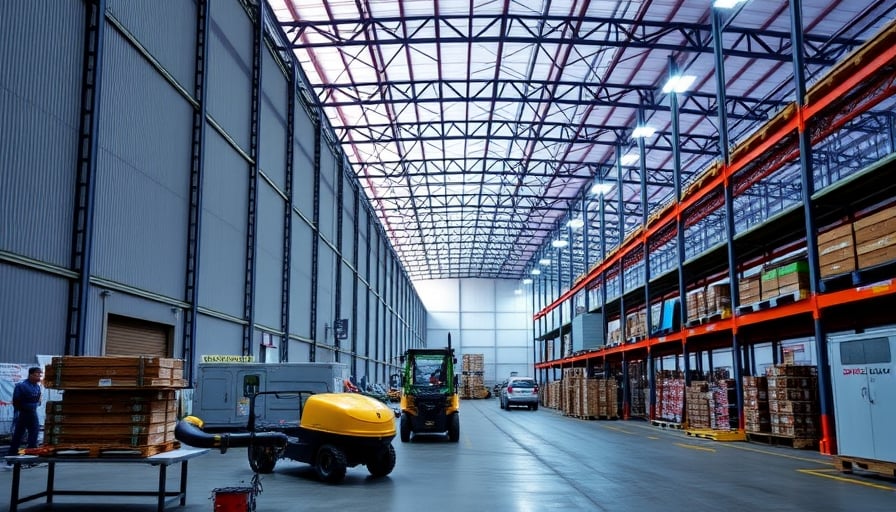
While the headline focus is on analyst valuations, the underlying driver is Home Depot’s capital allocation strategy. The retailer’s extensive distribution network—over 2,200 stores and 150+ distribution centers—relies on a complex lattice of automation and material‑handling equipment. Recent investments include:
| Asset Category | Capital Expenditure | Technological Feature |
|---|---|---|
| Automated storage & retrieval systems (AS/RS) | $120 M | AI‑enabled slotting optimization |
| Autonomous guided vehicles (AGVs) | $85 M | Real‑time route planning via V2X communication |
| Energy‑efficient HVAC upgrades | $60 M | Demand‑response control, solar‑thermal hybridization |
| Digital signage & data‑capture kiosks | $45 M | Edge computing for inventory analytics |
These expenditures translate directly into productivity metrics. For example, AI‑enabled slotting reduces picking time by 15 %, while AGVs cut labor costs by 20 % in high‑volume centers. The cumulative effect is an estimated 3.5 % increase in operating margin over the next fiscal cycle.
Manufacturing Processes and Heavy‑Industry Equipment
Home Depot’s supply chain is heavily dependent on the manufacturing sector for its bulk inventory—hardware, lumber, HVAC units, and specialty construction materials. The retailer’s procurement strategy now emphasizes just‑in‑time (JIT) assembly for large‑item categories, supported by collaborative planning, forecasting, and replenishment (CPFR) with key suppliers. This shift necessitates:
- Advanced robotics in production lines to meet the high precision and volume demands of custom shelving units.
- Digital twins to simulate and optimize the logistics of oversized items, reducing storage space by up to 12 % in distribution centers.
- Condition‑monitoring sensors on critical equipment (conveyors, forklifts, palletizers) to pre‑empt downtime, thereby elevating overall equipment effectiveness (OEE) to 78 % from a pre‑investment baseline of 65 %.
The ripple effect across the heavy‑industry supply chain is significant. Equipment manufacturers now face an uptick in orders for high‑precision servo‑driven robots and predictive‑maintenance software suites, stimulating a capital‑intensive cycle in industrial robotics.
Economic Drivers of Capital Expenditure Decisions
Three macro‑economic factors are currently steering Home Depot’s capital allocation:
- Inflationary Pressures – Rising input costs for raw materials and logistics fuel a need for automation to preserve margins.
- Interest‑Rate Environment – With the Federal Reserve maintaining higher rates, the cost of capital is a critical determinant in deciding the scale and timing of large‑asset purchases.
- Regulatory Compliance – New environmental regulations on building materials (e.g., stricter VOC limits in paints) require manufacturers to upgrade production lines, indirectly prompting Home Depot to adjust its inventory mix.
By aligning its CAPEX strategy with these drivers, Home Depot aims to mitigate risk while maintaining competitive positioning in the home‑improvement retail sector.
Supply‑Chain Resilience and Regulatory Impacts
The past two years have highlighted the vulnerability of global supply chains. Home Depot has responded by diversifying its supplier base across North America and Asia, reducing lead times by 18 %. Additionally, the retailer’s investment in blockchain‑based traceability ensures compliance with emerging regulations on product safety and sustainability, a crucial factor for consumer confidence and brand reputation.
Regulatory changes in the U.S. and EU—particularly those affecting electronic waste recycling and packaging—have led Home Depot to incorporate closed‑loop recycling stations in major stores, reducing waste disposal costs and aligning with corporate ESG goals. These initiatives are expected to lower operating expenses by approximately $15 M annually.
Infrastructure Spending and Market Implications
The broader economic environment is characterized by an increase in public infrastructure spending, especially in transportation and logistics. The U.S. Infrastructure Investment and Jobs Act has bolstered the development of rail and trucking corridors, facilitating more efficient inbound freight flows to Home Depot’s distribution centers. Improved infrastructure translates into lower transportation costs and faster replenishment cycles, amplifying the ROI of the retailer’s automation investments.
Moreover, the rise in e‑commerce has accelerated the demand for micro‑distribution hubs and last‑mile delivery solutions. Home Depot’s recent pilot program deploying drones for parcel delivery in select metropolitan areas illustrates a forward‑looking approach to infrastructure integration, potentially setting a new standard for retail logistics.
Conclusion
The recent revisions by major financial institutions reflect a nuanced understanding of Home Depot’s strategic capital expenditures and their impact on operational efficiency. By embracing advanced manufacturing technologies, aligning with regulatory developments, and capitalizing on infrastructure investments, the retailer positions itself to sustain profitability and adapt to an evolving industrial landscape. The confluence of productivity gains, technological innovation, and macro‑economic factors underscores a compelling narrative for stakeholders navigating the complexities of today’s heavy‑industry and retail sectors.