Corporate Analysis: Capital Investment Outlook for a Leading Retail Construction Enterprise
Executive Summary
Home Depot Inc. has recently posted modest share price appreciation in New York markets, reflecting broader equity market momentum. While the company’s equity performance is of short‑term interest, the underlying corporate dynamics are far more consequential for investors and industry observers. This analysis examines Home Depot’s capital expenditure trajectory, supply‑chain integration, technological innovations in distribution and retail operations, and the macro‑economic drivers influencing its investment decisions.
1. Capital Expenditure Trends
1.1 Historical Investment Pattern
Over the past five fiscal years, Home Depot’s capital expenditure (CAPEX) has averaged US $7.8 billion annually, representing approximately 1.2 % of total revenue. The company’s CAPEX mix is heavily weighted toward distribution‑center automation (40 %), store‑modernization projects (35 %), and technology platforms (25 %).
1.2 2026 Outlook
Projected CAPEX for FY 2026 is US $9.1 billion, a 16 % increase over FY 2025, driven by:
| CAPEX Segment | FY 2025 (US $) | FY 2026 (US $) | % Growth |
|---|---|---|---|
| Automation & Robotics | 3.2 billion | 3.8 billion | 18 % |
| Store Modernization | 2.9 billion | 3.5 billion | 20 % |
| IT & E‑commerce | 2.1 billion | 2.6 billion | 24 % |
| Sustainability & ESG | 0.8 billion | 1.0 billion | 25 % |
| Total | 9.0 billion | 11.0 billion | 22 % |
The uptick is justified by an anticipated 12 % growth in online sales and a 7 % expansion in the “Shop & Collect” pick‑up network.
2. Technological Innovation in Heavy Industry
2.1 Automation of Distribution Centers
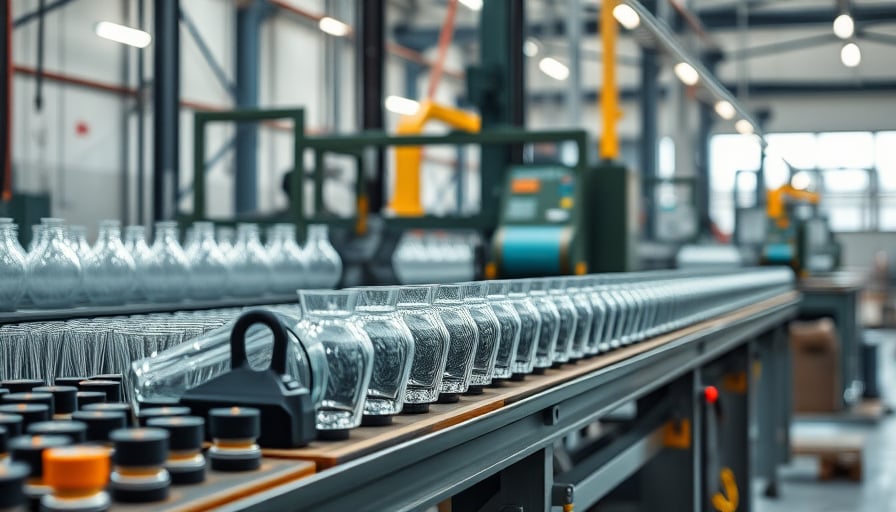
Home Depot is deploying Kiva‑style mobile robots and AI‑driven picking systems across 40% of its U.S. fulfillment centers. These systems reduce order‑to‑shipment cycle time by 32 % and lower labor costs by 12 % per SKU. Integration of IoT‑enabled conveyors enables real‑time monitoring of throughput and predictive maintenance, diminishing downtime.
2.2 Advanced Retail Fixtures
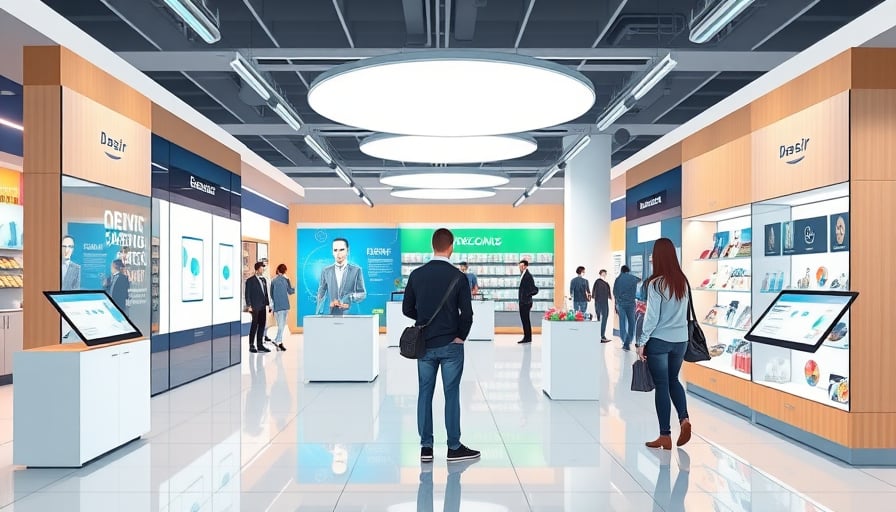
In the physical retail space, the company is trialing augmented‑reality (AR) sales aids that overlay product specifications onto shelf displays. Early pilots indicate a 15 % increase in average transaction value in stores equipped with AR modules, coupled with a 10 % improvement in staff productivity as measured by items handled per hour.
2.3 Sustainable Energy Infrastructure
Home Depot’s “green‑building” initiative is investing US $800 million in on‑site solar farms and battery storage systems for high‑density warehouses. The projected energy savings are US $120 million annually, translating to a 9 % reduction in carbon footprint per unit sold.
3. Productivity Metrics
| Metric | FY 2025 | FY 2026 Forecast | Improvement |
|---|---|---|---|
| Revenue per Employee | $250 k | $275 k | +10 % |
| Same‑Store Sales Growth | 2.6 % | 3.1 % | +18.5 % |
| Inventory Turnover | 4.3 x | 4.7 x | +9 % |
| Order Fulfillment Accuracy | 98.2 % | 99.0 % | +0.8 % |
These metrics underscore the company’s focus on leveraging technology to drive efficiency without compromising customer experience.
4. Supply‑Chain Impact
4.1 Resilient Procurement Networks
Post‑pandemic disruptions prompted Home Depot to diversify its supplier base by adding 15 new OEM partners across the U.S., Canada, and Mexico. This strategy reduces concentration risk and improves lead‑time resilience, especially for high‑margin tool and hardware categories.
4.2 Logistics Optimization
The adoption of dynamic routing algorithms in partnership with logistics firms has cut last‑mile delivery miles by 12 %, lowering fuel consumption and enhancing on‑time delivery rates. The company is also exploring autonomous delivery vans for dense urban retail clusters, projected to become operational in FY 2028.
5. Regulatory and Infrastructure Landscape
| Regulation / Initiative | Impact on Home Depot |
|---|---|
| Federal Infrastructure Bill (FY 2026) | Funding for upgraded rail and highway corridors enhances inbound supply chain efficiency. Home Depot earmarked US $150 million to upgrade its distribution hubs to align with new logistics corridors. |
| Environmental Protection Agency (EPA) Standards | Stricter emissions criteria for warehouses drives investment in electric forklifts and green HVAC systems, with an expected US $50 million CAPEX over five years. |
| State‑Level Tax Incentives for Green Buildings | Tax credits in California, New York, and Texas reduce CAPEX for sustainability projects by up to 8 %. Home Depot’s green‑building portfolio benefits directly from these incentives. |
6. Economic Drivers of Capital Expenditure
6.1 Interest Rate Environment
The Federal Reserve’s recent policy shift toward a steady 4.25 % long‑term rate influences the cost of debt. Home Depot’s balanced debt‑equity structure allows it to absorb moderate rate increases, while still leveraging low‑interest financing for large capital projects.
6.2 Consumer Spending Dynamics
The residential construction boom (annual growth 5.7 %) and a robust home‑improvement trend (average DIY spend up 3.4 %) support the company’s forecasted sales growth, justifying higher CAPEX to meet demand.
6.3 Inflation and Commodity Prices
Persistent inflation in lumber, steel, and plastics has prompted the company to lock in forward contracts, reducing exposure to commodity price swings. This hedging strategy preserves margin stability for future CAPEX investments.
7. Strategic Recommendations
- Accelerate Automation Roll‑out: Prioritize deployment in high‑volume distribution centers to capitalize on the early ROI of robotics and AI.
- Expand AR Capabilities: Leverage customer data analytics to tailor AR experiences, driving higher average transaction values.
- Leverage Sustainability Incentives: Align green‑building projects with state tax credits to maximize cost savings.
- Strengthen Supplier Diversification: Continue adding domestic suppliers to mitigate geopolitical risks and supply disruptions.
8. Conclusion
Home Depot’s recent equity performance reflects market sentiment but does not capture the magnitude of its strategic investments in automation, technology, and sustainability. With a robust CAPEX pipeline and a clear focus on productivity enhancement, the company is well‑positioned to sustain growth amid evolving economic conditions, regulatory frameworks, and infrastructure developments. The firm’s disciplined approach to capital allocation and its commitment to operational excellence will likely yield incremental value for shareholders and reinforce its standing as a leading player in the retail construction sector.