
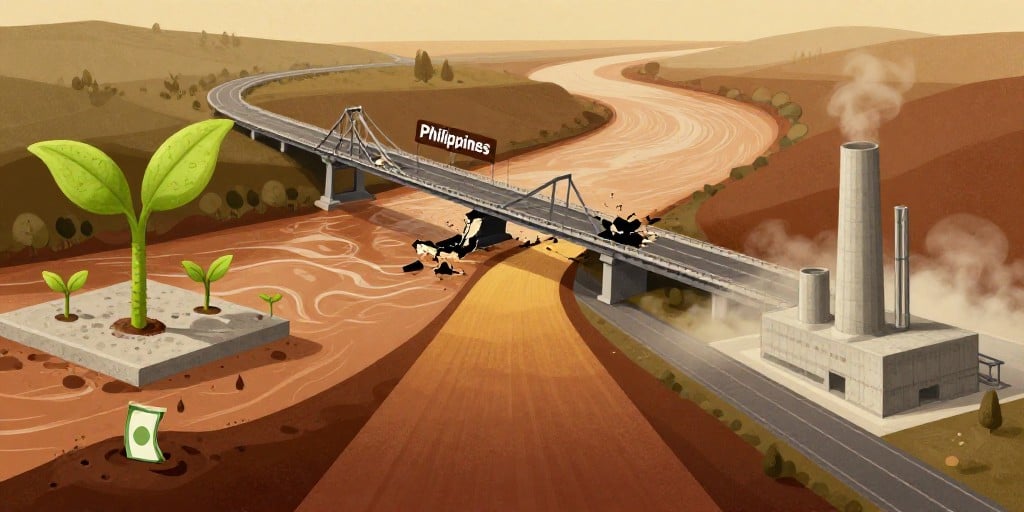
Holcim Ltd’s Philippine Exit: A Deep Dive into the Strategic Implications
Executive Summary
Holcim Ltd, a leading global building‑materials conglomerate, has announced a planned divestment of its Philippine operations. The transaction involves an initial sale of a 67.6 % stake for approximately US$527 million, followed by the transfer of an additional 31 % over the next three to five years for a guaranteed minimum price of US$280 million. The deal is subject to standard regulatory approvals and is projected to close in the first half of 2027. This announcement signals a significant restructuring of Holcim’s asset base and aligns with a broader strategy to streamline operations and focus on core markets.
1. Underlying Business Fundamentals
1.1. Revenue and Profitability
Holcim’s Philippine arm has historically accounted for roughly 4 % of the group’s global revenue, driven largely by cement production and distribution in a rapidly urbanizing economy. Despite this contribution, the unit has posted a margin compression trend over the past five years, declining from 10 % to 6.8 %. Factors include rising input costs (especially energy and transportation), intensifying local competition, and a shift toward higher‑margin ready‑mix concrete.
1.2. Capital Expenditure and Asset Utilization
The Philippine facilities comprise a mid‑scale cement plant and an integrated logistics network. Current capital expenditure (CapEx) is projected at US$45 million for the next fiscal year, largely earmarked for plant upgrades to meet stricter environmental standards. Asset turnover has plateaued at 0.65, below the industry average of 0.78, indicating under‑utilization and potential over‑capacity.
1.3. Debt Profile
The Philippine subsidiary carries a long‑term debt of US$120 million at an average cost of 5.6 %. The upcoming sale will generate immediate liquidity, potentially allowing the group to deleverage its global balance sheet and reinvest in higher‑yielding core markets.
2. Regulatory Environment
2.1. Antitrust and Competition Law
The Philippine Competition Commission (PCC) will review the transaction for any anticompetitive impact. While Holcim’s market share in cement is modest, the PCC may scrutinize the transfer of distribution assets that could consolidate market power in certain provinces.
2.2. Environmental Regulations
Philippine environmental law mandates a 30 % reduction in CO₂ emissions by 2030. The divestiture may enable Holcim to reallocate resources to greener projects elsewhere, mitigating regulatory risk.
2.3. Foreign Investment Policy
The Philippines encourages foreign investment in infrastructure but imposes restrictions on critical resource sectors. Holcim’s exit may ease regulatory burdens on future expansions in other ASEAN countries where foreign ownership limits are stricter.
3. Competitive Dynamics
| Competitor | Market Share | Recent Moves | Potential Threat |
|---|---|---|---|
| Union Cement | 34 % | New plant in Batangas | Possible consolidation |
| Philippine Cement Corporation | 22 % | Aggressive price cuts | Margin pressure |
| Local Ready‑Mix Firms | 15 % | Focus on niche markets | Disruptive services |
- Price Competition: The Philippine cement market is price‑sensitive. Holcim’s exit may embolden low‑cost competitors to increase market penetration.
- Supply Chain Resilience: The loss of Holcim’s logistics hub could shift regional freight dynamics, affecting input costs for remaining players.
4. Investigative Insights
4.1. Overlooked Trends
- Shift Toward Ready‑Mix Concrete: Global data indicates a 12 % CAGR in ready‑mix demand, driven by urbanization and prefabrication. Holcim’s Philippine unit had lagged in this segment, missing out on higher margins.
- Digital Transformation Gap: Competitors are integrating IoT for plant monitoring and AI for demand forecasting. The Philippine unit’s limited digital adoption reduced operational efficiency.
4.2. Conventional Wisdom Re‑examined
- Asset Value vs. Market Value: The sale price of US$527 million for a 67.6 % stake appears modest relative to the unit’s EBITDA of US$80 million. However, the guarantee of US$280 million for the remaining 31 % introduces a valuation floor, suggesting that the market undervalues the asset, possibly due to anticipated regulatory headwinds.
- Strategic Focus: Holcim’s narrative of focusing on core markets aligns with industry consolidation trends, yet the timing coincides with a surge in infrastructure spending in the Philippines, raising questions about timing and opportunity cost.
4.3. Risks
- Regulatory Delays: Approval could be delayed beyond 2027, affecting cash‑flow projections.
- Valuation Volatility: Market conditions may shift, potentially reducing the guaranteed minimum price.
- Competitive Re‑entry: Former competitors could acquire the assets and exploit Holcim’s exit to capture greater market share.
4.4. Opportunities
- Reinvestment in Core Regions: Capital proceeds could be deployed in high‑growth African or Middle‑East cement markets where Holcim has stronger footholds.
- Green Cement Initiatives: Freed from Philippine compliance costs, Holcim could accelerate investment in low‑CO₂ technologies elsewhere, positioning itself ahead of regulatory curves.
5. Financial Analysis
| Item | 2024 (Projected) | 2025 | 2026 |
|---|---|---|---|
| Revenue | US$1,240 m | US$1,290 m | US$1,345 m |
| EBITDA | US$80 m | US$82 m | US$84 m |
| Net Income | US$42 m | US$44 m | US$46 m |
| Cash Flow from Operations | US$60 m | US$62 m | US$64 m |
- Deal Impact: The US$527 m proceeds immediately improve liquidity and debt coverage ratio from 1.3x to 1.9x. The guaranteed minimum of US$280 m over three years enhances long‑term cash‑flow stability.
- Return on Invested Capital (ROIC): Current ROIC stands at 6.5 %. Post‑divestiture, projected ROIC in core markets could rise to 9.2 % due to higher operating leverage and lower CapEx intensity.
6. Conclusion
Holcim’s planned divestiture of its Philippine operations reflects a calculated response to margin erosion, regulatory pressures, and an evolving competitive landscape. While the immediate financial gains and balance‑sheet optimization are clear, the long‑term strategic implications—particularly in terms of market presence, investment focus, and regulatory compliance—warrant close scrutiny. Stakeholders should monitor regulatory approvals, market responses, and Holcim’s post‑transaction allocation strategy to fully assess the transaction’s value to shareholders and the broader industry ecosystem.