
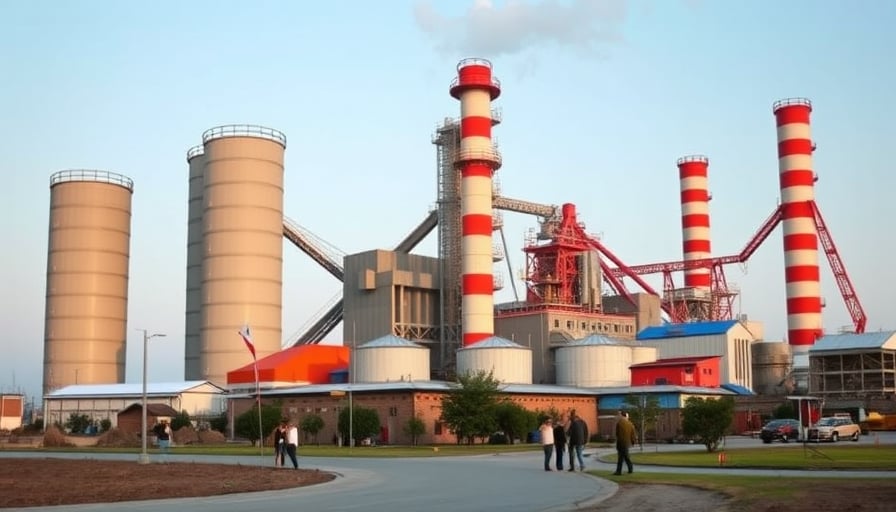
Corporate News – Holcim AG Announces New Sustainability Targets and Policy Advocacy
Executive Summary
Holcim AG, a leading player in the global construction‑materials sector and listed on the SIX Swiss Exchange, has unveiled a set of enhanced environmental protection targets for its operations. The company has also publicly endorsed the inclusion of Environmental Product Declarations (EPDs) in forthcoming UK regulation, positioning itself as a proactive advocate against greenwashing and for evidence‑based product transparency. While the Swiss market index experienced a positive uptick during the reporting period—indicative of favorable sentiment across Swiss equities—the announcement did not include any new operational or financial data.
1. Underlying Business Fundamentals
| Aspect | Current State | Implications |
|---|---|---|
| Business Model | Production of cement, aggregates, and ready‑mix concrete; extensive global supply chain. | Sustainability commitments align with growing regulatory pressure and shifting consumer expectations. |
| Revenue Mix | Heavy reliance on cement manufacturing (~55%) and aggregates (~35%). | Emissions-intensive core activities expose Holcim to carbon‑pricing risk. |
| Capital Expenditure | Historically high due to plant expansions; recent capital budgets emphasize low‑carbon technologies. | Investment in low‑carbon production could elevate upfront costs but potentially unlock premium pricing. |
Holcim’s new targets—though not disclosed in detail—signal a strategic shift toward decarbonisation. This aligns with the broader industry trend where construction materials companies are increasingly required to report Scope 1, 2, and 3 emissions. By committing to stricter environmental metrics, Holcim aims to secure its competitive edge as customers and regulators gravitate toward low‑carbon solutions.
2. Regulatory Landscape
2.1 Switzerland
- Carbon Pricing: Switzerland applies a carbon tax on fossil fuels and has implemented a carbon border adjustment mechanism (CBA) for certain imports.
- EU Emission Trading System (ETS): Holcim’s European operations fall under the EU ETS, exposing the company to market‑based price signals.
2.2 United Kingdom
- Greenhouse Gas Protocol: UK regulations increasingly mandate Scope 3 disclosures for construction materials.
- Environmental Product Declarations (EPDs): Holcim is lobbying for mandatory EPDs, arguing that they will standardise life‑cycle assessment data and reduce greenwashing.
The push for EPDs in UK law is timely, coinciding with the UK’s 2050 net‑zero commitment and the forthcoming “Construction and Regeneration Act” provisions that may require EPD compliance for publicly funded projects.
3. Competitive Dynamics
| Competitor | Sustainability Position | Market Share |
|---|---|---|
| CEMEX | 2025 net‑zero target, invests in renewable energy. | 18% |
| LafargeHolcim | 2050 net‑zero goal; actively promotes EPDs in EU markets. | 22% |
| CRH Plc | Focus on low‑carbon cement; moderate EPD adoption. | 15% |
Holcim’s advocacy for UK EPDs differentiates it from peers that have yet to prioritize such regulatory engagement. By championing transparency, the company could position itself as the “go‑to” supplier for projects seeking compliance with stricter environmental criteria, potentially commanding higher margins.
4. Overlooked Trends and Emerging Risks
- Regulatory Overhang
- While the EU ETS remains a certainty, the UK’s post‑Brexit regulatory path is evolving. Uncertainty around the timing and scope of EPD mandates could delay investment decisions, creating a window of opportunity for Holcim to lock in early compliance.
- Technology Adoption Lag
- The construction‑materials sector is slow to integrate digital tools for lifecycle assessment. Holcim’s early push for EPDs could spur industry‑wide digital transformation, but also increases operational risk if the required data collection infrastructure is not yet mature.
- Supply‑Chain Emissions
- Scope 3 emissions from the supply chain (e.g., logistics, raw‑material extraction) are often under‑reported. Holcim’s new targets may expose the company to higher scrutiny of these indirect emissions, potentially leading to additional compliance costs.
- Greenwashing Exposure
- Even with EPD advocacy, the market may still experience a surge in “greenwashed” products. Holcim must maintain rigorous third‑party verification to preserve brand integrity.
5. Opportunities for Holcim
First‑Mover Advantage in EPD Integration By setting industry standards for EPD usage in the UK, Holcim can capture market share from competitors slower to adapt.
Premium Pricing for Low‑Carbon Products Early adoption of low‑carbon manufacturing processes could justify higher price points, improving gross margins.
Strategic Partnerships Collaboration with UK construction firms and public‑private initiatives could unlock new contracts that require EPD compliance.
Financial Incentives Carbon credits generated through reduced emissions could be monetised, providing an additional revenue stream.
6. Potential Risks
Capital Expenditure Escalation Transitioning to low‑carbon production may require significant upfront investment, potentially straining cash flow in the near term.
Regulatory Delay If the UK delays EPD mandates, Holcim may face a mismatch between investment and regulatory benefit.
Reputational Risk Any misstep in EPD implementation could erode stakeholder trust, especially if competitors offer more transparent alternatives.
Market Volatility The Swiss market’s recent gains may be temporary; a reversal could affect investor confidence and the cost of capital.
7. Conclusion
Holcim AG’s recent announcement reflects a calculated response to mounting environmental expectations and a strategic attempt to shape regulatory outcomes—particularly in the UK. By championing Environmental Product Declarations, the company seeks to curb greenwashing and secure a leadership position in a sector poised for significant transformation. Investors and industry observers should monitor how Holcim’s new sustainability targets translate into concrete operational changes, the pace at which regulatory frameworks evolve, and the company’s ability to capture the economic upside of early compliance.
Financial analysts will need to assess whether the anticipated benefits outweigh the associated capital and operational risks, while competitors may accelerate their own ESG initiatives in response. Ultimately, Holcim’s proactive stance could prove pivotal in defining the construction‑materials industry’s trajectory toward a net‑zero future.