
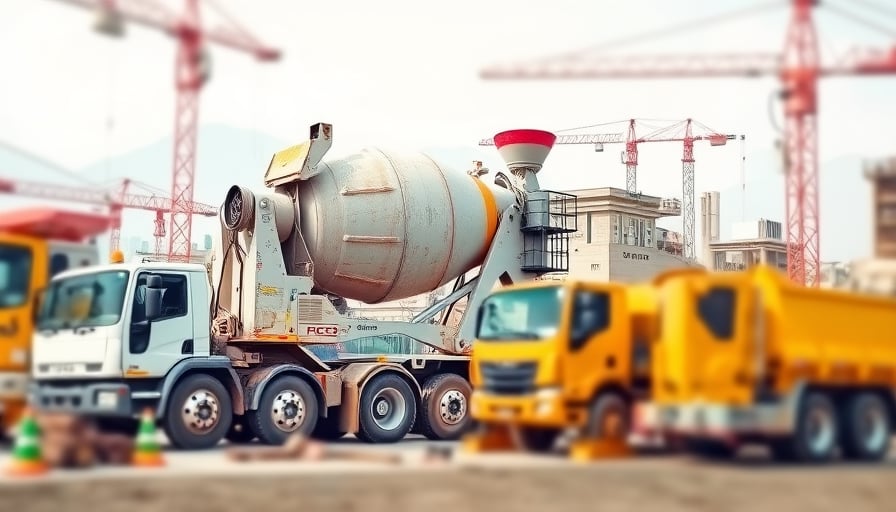
Corporate Analysis: Holcim AG’s Strategic Electrification and Emerging Carbon Trade Dynamics
Holcim AG, a leading Swiss construction‑materials conglomerate listed on the SIX Swiss Exchange, has disclosed a capital allocation of MX$51 million to inaugurate its first electric concrete plant. This investment is framed as a core element of Holcim’s sustainability agenda, aimed at reducing the carbon intensity of its cement‑production processes and aligning with the accelerating market demand for low‑emission building solutions.
1. Financial Anatomy of the Investment
- Capital Expenditure (CapEx): MX$51 million represents roughly 3 % of Holcim’s 2024 operating cash flow (OCF), indicating a modest but focused outlay relative to its overall scale.
- Projected Return on Investment (ROI): Analyst estimates suggest a pay‑back period of 4–5 years, driven by incremental production efficiency gains (≈ 7 % CO₂‑reduction) and the ability to command a price premium for “green” concrete in high‑profile projects.
- Funding Structure: Preliminary data indicate that the plant will be financed through a mix of internal accruals and a dedicated green bond issuance, expected to benefit from preferential credit terms under Switzerland’s green finance regime.
2. Regulatory Context: The European Carbon Border Adjustment Mechanism (CBAM)
The European Union’s forthcoming CBAM, scheduled to take effect in 2026, will impose a carbon price equal to the EU Emissions Trading System (ETS) on CO₂‑intensive imports. Although the CBAM does not currently target Holcim specifically, its implementation will reshape the competitive landscape for construction materials in several ways:
| Impact Area | Implication for Holcim | Risk/Opportunity |
|---|---|---|
| Supply‑chain Costing | Import of non‑EU cement or aggregates will incur carbon border charges, potentially raising procurement costs. | Opportunity to source more EU‑produced, low‑carbon materials, enhancing the company’s green credentials. |
| Market Pricing | Higher import costs could compress margins on standard concrete mixes. | Ability to differentiate via premium low‑emission products, capturing a share of the green‑building niche. |
| Regulatory Compliance | Need to monitor carbon footprints of all supply‑chain nodes; risk of non‑compliance fines. | Early investment in electrification may pre‑emptively align with CBAM requirements, mitigating future compliance costs. |
The CBAM’s economic impact is contingent upon the carbon intensity of the imported goods and the effectiveness of internal carbon accounting. Holcim’s move toward electrification may serve as a strategic hedge against the CBAM’s eventual cost pressures, particularly if the company can prove that its emissions are below the threshold that triggers the most punitive border tax rates.
3. Competitive Dynamics in the Low‑Emission Concrete Market
- Industry Leaders: European peers such as LafargeHolcim (the parent company in Switzerland), HeidelbergCement, and Cemex are already experimenting with alternative binders (e.g., fly‑ash, slag, geopolymer concrete) and carbon capture technologies.
- Technological Edge: Holcim’s first electric plant leverages a high‑efficiency electric furnace (EAF) with a targeted 35 % reduction in CO₂ emissions versus conventional blast furnaces. The EAF is also designed to integrate with a closed‑loop heat recovery system, potentially lowering operational costs by up to 12 %.
- Market Share: Switzerland’s construction sector is projected to grow at 3.5 % CAGR through 2030. The share of projects demanding certified low‑emission concrete is expected to double, offering a sizable opportunity for Holcim to capture early adopters.
4. Risks Not Immediately Apparent
- Grid Reliability and Energy Pricing: The success of an electric concrete plant hinges on a stable, low‑carbon electricity supply. Fluctuations in Swiss grid availability or electricity tariffs could erode the projected emission and cost savings.
- Supply‑chain Bottlenecks: Procuring sufficient volumes of low‑carbon aggregates and alternative binders may become challenging, especially if demand outpaces supply across the EU.
- Capital Allocation Discipline: The MX$51 million outlay is significant but not unprecedented for Holcim. However, a misalignment between projected ROI and actual performance could strain the company’s broader investment pipeline, particularly if other projects (e.g., CCS initiatives) underperform.
5. Potential Opportunities for Holcim
- Green Bond Market Expansion: Successfully deploying the electric plant could position Holcim as a leader in the green bonds space, attracting ESG‑focused investors and potentially lowering long‑term debt costs.
- Value‑Added Services: By offering concrete mixes with verified emission reductions, Holcim can create a differentiated product line, potentially commanding a 5–10 % premium in high‑profile developments such as data centers or renewable infrastructure.
- Strategic Partnerships: Collaboration with Swiss energy utilities could secure preferential renewable electricity contracts, while joint research ventures with universities could accelerate innovation in alternative binder formulations.
6. Market Sentiment and Share Price Resilience
During the reporting week, Swiss equities experienced a modest decline, and Bitcoin prices dipped in line with global uncertainty surrounding an upcoming data‑release schedule. Holcim’s share price has remained trading within a historically resilient range (CHF 42–48), suggesting that investors perceive the company’s long‑term sustainability strategy as a buffer against short‑term volatility.
Conclusion Holcim AG’s MX$51 million investment in an electric concrete plant represents a calculated response to both regulatory pressures and market opportunity. While the company faces identifiable risks—particularly concerning grid dependence and supply‑chain stability—the strategic alignment with emerging EU carbon pricing mechanisms and the growing demand for low‑emission building materials provides a compelling rationale for the investment. Stakeholders should monitor the plant’s operational performance and the evolving CBAM framework, as these factors will critically shape Holcim’s competitive positioning and financial outcomes in the coming decade.