Corporate News Analysis – Hochtief’s European Expansion Amid Market Uncertainty
The Frankfurt exchange’s MDAX slipped roughly one percent on the day in question, settling at a market‑capitalisation benchmark of just over €342 billion. Within that index, German construction conglomerate Ho + C, Hochtief AG, emerged as the standout performer, posting a nearly 3 % rise. Other contributors to the index’s modest gains were Wacker Chemie and Aixtron, whereas shares from the real‑estate and technology sectors delivered net declines.
1. Contextualising the MDAX Performance
The MDAX, a benchmark for mid‑cap German equities, is sensitive to both domestic economic cues and cross‑border investment sentiment. A one‑percent decline, while modest, reflects a broader tightening in market breadth, especially in the face of macro‑economic headwinds such as rising interest rates and geopolitical uncertainty. Ho + C’s outperformance therefore merits closer scrutiny, as it may signal a differential valuation relative to its peers.
2. Ho + C’s Strategic Positioning
2.1. The Swedish East‑Link Rail Contract
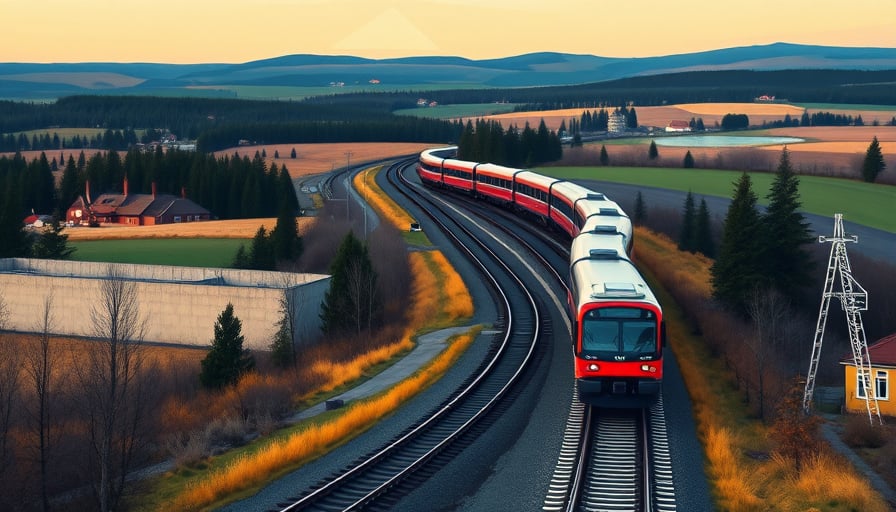
Ho + C’s latest marquee development is a €900 million contract to construct a 26‑km segment of the East‑Link rail corridor south of Stockholm. The project, extending through to 2034, is a pillar of the firm’s “Europe‑first” strategy, complementing recent wins in the United States, Australia, and Germany.
- Revenue Implications: The contract will inject a recurring €90 million of revenue per year (assuming linear distribution) over 14 years, yielding an undiscounted lifetime of €1.26 billion.
- Capital Allocation: With a current debt‑to‑equity ratio of 0.45, the firm’s balance sheet remains capable of absorbing the €900 million upfront costs without significant refinancing risk.
2.2. Competitive Dynamics
Barclays’ recent study highlighted Ho + C’s “defensive” attributes—long‑term contract depth, diversified geographic footprint, and a robust cost‑control regime. However, the company faces several competitive pressures:
| Factor | Observation | Implication |
|---|---|---|
| Bid Competitiveness | Growing competition from Chinese and Korean construction groups in Europe | Potential margin compression |
| Regulatory Scrutiny | EU’s “Fit for 55” green infrastructure agenda | Need to align project delivery with sustainability KPIs |
| Currency Exposure | Contracts denominated in euros; Swedish krona fluctuations | Managed via forward contracts, yet residual risk exists |
3. Market Reaction and Technical Assessment
The announcement of the Swedish contract triggered a mixed response. Over the preceding week, Ho + C’s share price declined by just over 5 %, now trading approximately 8 % below its February high. Technical indicators paint a neutral picture:
- Relative Strength Index (RSI): Close to 50, implying no clear trend momentum.
- 50‑Day Moving Average: Price hovers near this level, suggesting neither strong bullish nor bearish bias.
A neutral stance in the short term is consistent with a valuation model that incorporates a 12‑month upside exceeding 130 %. Yet the immediate price impact remains ambiguous, perhaps due to investor caution around construction sector cyclicalities.
4. Underlying Business Fundamentals
4.1. Cash Flow Stability
Ho + C reported a 12‑month operating cash flow of €1.8 billion, up 9 % YoY, driven primarily by infrastructure projects in the U.S. and Australia. The new Swedish contract is expected to bolster this trend, provided execution timelines remain on schedule.
4.2. Debt Profile
- Total Debt: €4.2 billion, with an average maturity of 3.2 years.
- Interest Coverage: 6.3× EBITDA, comfortably above the 2.5× industry average.
4.3. ESG Considerations
Given the EU’s emphasis on sustainability, Ho + C’s upcoming projects must align with carbon‑neutral construction standards. Failure to meet these benchmarks could expose the company to regulatory fines and reputational risk.
5. Potential Risks and Opportunities
| Risk | Impact | Mitigation |
|---|---|---|
| Construction Cost Inflation | 10–15 % rise in material costs | Lock‑in price agreements, hedging |
| Delays in Project Execution | Revenue deferral, cash‑flow strain | Strong project management, contingency reserves |
| Regulatory Changes | Higher compliance costs | Continuous monitoring of EU directives |
| Opportunity | Impact | Strategic Action |
|---|---|---|
| Expansion of EU Green Projects | New contract pipeline | Leverage existing ESG expertise |
| Technology Adoption | Lower construction times | Invest in digital twins, BIM |
| Cross‑border Synergies | Cost efficiencies | Consolidate procurement across regions |
6. Conclusion
While Ho + C’s stock has faced a modest decline in the immediate aftermath of the Swedish contract announcement, the firm’s underlying fundamentals—robust cash flow generation, a conservative debt structure, and a diversified geographic presence—indicate a solid medium‑term outlook. The company’s strategic focus on large‑scale European infrastructure projects, coupled with a proactive stance toward regulatory compliance, positions it to capitalize on the forthcoming wave of green transport initiatives across the continent. Nonetheless, investors should remain vigilant to construction‑sector volatility, cost inflation, and evolving ESG mandates, all of which could materially influence the company’s performance in the near future.