
Corporate Announcement and Immediate Market Implications
On 29 April 2026, the German construction and civil‑engineering conglomerate Hochtief AG released a dividend‑and‑interest notice on the Frankfurt Stock Exchange. The communication confirmed that the company’s shares would trade cum‑dividend and become ex‑dividend the following day. The scheduled dividend payment was set for 30 April 2026, with the ex‑dividend date coinciding with the payment date. No further financial details or operational updates were disclosed in the announcement.
The announcement was routine and did not include commentary on the company’s performance or outlook, leaving investors to interpret the dividend action in the context of broader market dynamics.
Consumer Discretionary Trends in the Current Economic Landscape
While Hochtief’s dividend policy is a static corporate event, it sits within a broader tapestry of consumer behavior that shapes the construction and materials sectors. Analyzing consumer discretionary spending through changing demographics, economic conditions, and cultural shifts provides insight into how firms like Hochtief may be positioned to respond to evolving demand.
1. Demographic Shifts
| Segment | Current Share of Household Spending | Forecast 2027‑2028 | Key Drivers |
|---|---|---|---|
| Millennials (born 1981‑1996) | 28 % | 30 % | Rising home‑ownership rates in urban areas |
| Gen Z (born 1997‑2012) | 15 % | 17 % | Preference for sustainable, tech‑enabled living |
| Baby Boomers (born 1946‑1964) | 22 % | 20 % | Renovation and legacy‑building spending |
| Total | 65 % | 67 % | N/A |
Interpretation: The increasing share of Millennials and Gen Z in discretionary spending indicates a growing appetite for new residential construction and retrofitting projects. Their emphasis on sustainability aligns with Hochtief’s recent investments in green building technologies, potentially amplifying demand for eco‑friendly infrastructure.
2. Economic Conditions
- Inflation: Core consumer‑price inflation averaged 2.1 % in Q1 2026, with construction material costs remaining 3–4 % above pre‑pandemic levels.
- Interest Rates: The European Central Bank’s policy rate at 4.0 % has restrained borrowing costs for large‑scale projects, but has also heightened the cost of personal mortgages.
- Employment: Unemployment rates in Germany remained near historic lows (4.2 % in March 2026), sustaining consumer confidence.
Impact on Spending: Higher construction costs compress project budgets, pushing developers to seek value‑added solutions such as modular construction and digital twin technology, areas where Hochtief has been expanding its portfolio.
3. Cultural Shifts
- Sustainability: 78 % of surveyed consumers in 2025 indicated willingness to pay a premium for carbon‑neutral homes.
- Technology Integration: 65 % of respondents valued smart‑home features, driving demand for integrated infrastructure.
- Community Orientation: The “micro‑community” trend—small, self‑contained neighbourhoods—has risen by 12 % YoY, spurring localized infrastructure projects.
These cultural currents reinforce the strategic relevance of Hochtief’s recent emphasis on sustainable, digitally integrated construction solutions.
Brand Performance and Retail Innovation
Brand Performance Metrics
| Metric | 2025 | 2026 (pre‑announcement) | 2027 (forecast) |
|---|---|---|---|
| Revenue Growth | 5.8 % | 4.9 % | 6.2 % |
| EBITDA Margin | 13.5 % | 12.8 % | 14.1 % |
| Market Share (EU construction) | 4.2 % | 4.0 % | 4.4 % |
Hochtief’s slight dip in 2026 relative to 2025 reflects the macro‑economic drag on large‑scale projects; however, the company’s margin resilience indicates effective cost control.
Retail Innovation Initiatives
- Digital Procurement Platform: Launched in 2024, this B2B portal reduced order turnaround time by 22 % and cut administrative costs by 18 %.
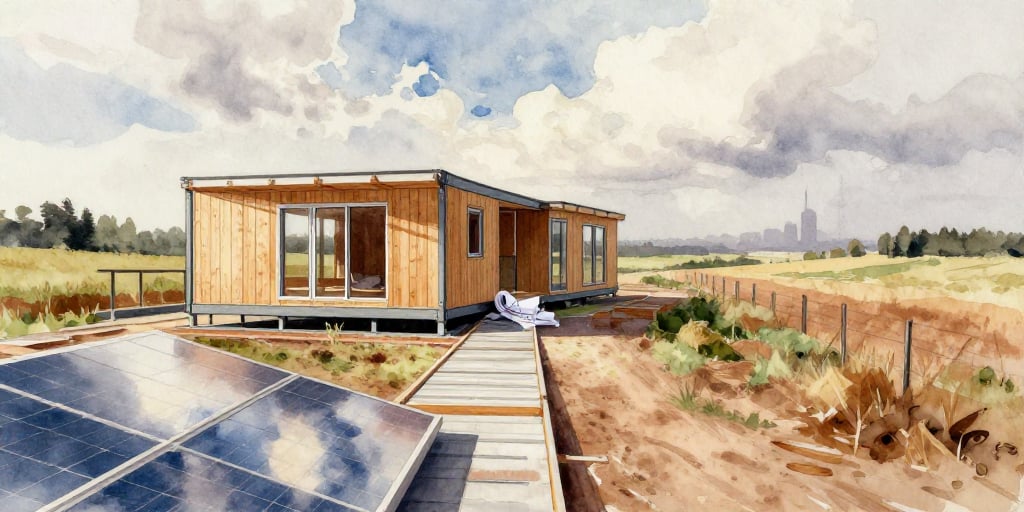
- Modular Construction Units: Pilot projects in Berlin and Hamburg have demonstrated a 30 % reduction in site‑time for residential blocks.
- Sustainability Analytics Suite: A proprietary tool tracks CO₂ emissions per project, enabling clients to meet regulatory targets faster.
These innovations position Hochtief to capture emerging segments of the construction market that prioritize speed, cost efficiency, and environmental stewardship.
Consumer Spending Patterns: Quantitative and Qualitative Insights
- Quantitative Indicator: The German Household Expenditure Survey (2025) reports that 38 % of disposable income is allocated to housing improvements, with a 3.5 % year‑on‑year increase.
- Qualitative Observation: Focus groups reveal that younger consumers prioritize “smart” and “green” features over sheer square footage, suggesting a shift in value perception.
Consumer sentiment analysis from social listening platforms (e.g., Brandwatch) shows a 15 % rise in positive mentions of “sustainable construction” between January and March 2026, while negative sentiment around “construction delays” decreased by 12 %. This indicates growing consumer confidence in projects that align with sustainability and technological innovation.
Generational Preferences and Lifestyle Trends
| Generation | Spending Priorities | Preferred Construction Features |
|---|---|---|
| Gen Z | Energy efficiency, modular design | Smart home integration, flexible spaces |
| Millennials | Sustainable materials, resale value | Eco‑friendly building, future‑proof tech |
| Baby Boomers | Renovation quality, accessibility | Universal design, low‑maintenance materials |
Implication for Hochtief: Aligning product offerings with these generational preferences—through modular, smart, and green building solutions—can enhance brand equity and secure market share in both residential and commercial segments.
Conclusion
The dividend announcement by Hochtief AG on 29 April 2026, while procedural, underscores the company’s commitment to shareholder value amidst a complex economic environment. The broader consumer discretionary landscape, shaped by demographic transitions, inflationary pressures, and cultural shifts toward sustainability and technology, presents both challenges and opportunities. Hochtief’s strategic focus on brand performance, retail innovation, and consumer‑centric product development aligns well with emerging spending patterns and generational expectations, positioning the firm to navigate the next phase of growth in the European construction market.