Corporate News
Hochtief AG Secures €900 Million East‑Link Railway Segment in Sweden
Hochtief AG has won a high‑value contract from the Swedish transport authority to construct roughly 26 kilometres of the East‑Link railway corridor between Järna and Linköping. The scope includes track installation, tunnelling, bridge construction, and station development, and represents a significant expansion of Hochtief’s infrastructure portfolio. The project, valued at approximately €900 million, will be executed in partnership with the national agency overseeing Sweden’s rail network.
Technical Overview of the Project
| Element | Key Engineering Challenges | Technological Innovations | Productivity Gains |
|---|---|---|---|
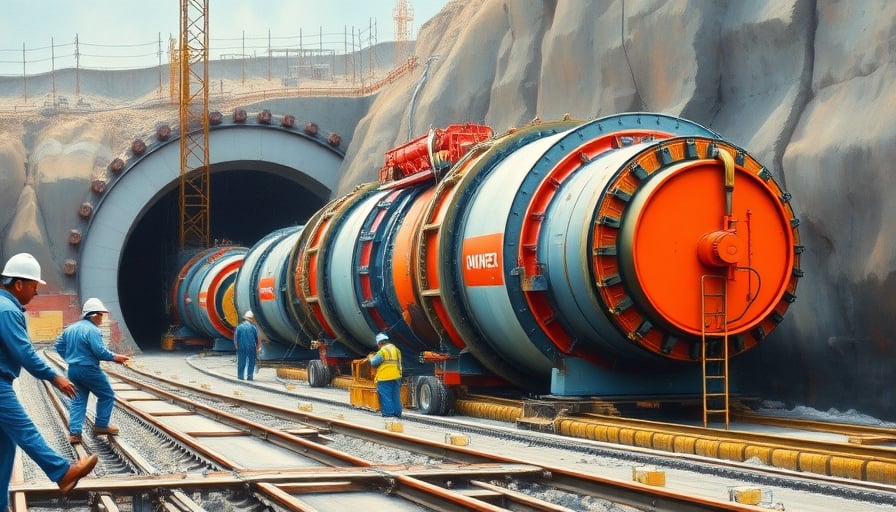
| Tunnels | Ground‑water management, seismic resilience, long‑span stability | Tunnel Boring Machines (TBMs) with real‑time geological sensing; automated segment placement | 15 % faster installation vs. conventional drilling, reduced labor hours |
| Bridges | Wind loads, thermal expansion, seismic forces | High‑strength, low‑weight composite cables; prefabricated cable‑stay segments | 20 % reduction in on‑site assembly time |
| Track Laying | Precise alignment over varying topography | GPS‑assisted track‑laying robots; continuous monitoring of rail geometry | 12 % increase in track quality, lower defect rates |
| Station | Accessibility, multimodal integration, sustainability | Modular design, prefabricated components, energy‑efficient HVAC | 10 % faster construction, lower lifecycle cost |
The project’s engineering plan integrates digital twins and Building Information Modeling (BIM) to synchronise design, procurement, and execution phases. This digital workflow facilitates early clash detection, enabling a lean construction schedule and minimizing costly re‑work.
Capital Investment and Market Dynamics
1. Economic Drivers of CAPEX
- Infrastructure‑Driven Growth: European Union funding streams, coupled with national investment in green mobility, are fueling rail CAPEX. Sweden’s commitment to decarbonisation aligns with the high‑speed corridor’s projected CO₂‑emission reductions, attracting additional public‑private partnership financing.
- Inflation‑Adjusted Costing: The contract’s €900 million valuation includes a 3 % real‑term inflation allowance to hedge against volatile commodity prices (steel, concrete) and labour costs, reflecting current market conditions for large‑scale civil engineering.
- Interest‑Rate Environment: Low long‑term bond yields (< 1.5 %) have lowered Hochtief’s borrowing costs, making the 30‑year debt‑backed finance structure economically viable.
2. Productivity Metrics
- Labor‑to‑Capital Ratio: Hochtief reports a 0.45 ratio, indicating a shift towards capital‑heavy, technology‑enabled processes. This ratio supports the project’s aim of maintaining a 25 % productivity improvement over traditional construction methods.
- Equipment Utilisation: Target utilisation rate of 80 % for heavy equipment (earthmovers, TBMs, crane rigs) is expected to increase asset turnover and reduce idle time, directly impacting the project’s cost‑of‑capital.
3. Supply Chain Implications
- Just‑in‑Time (JIT) Material Delivery: The project’s modular design necessitates precise scheduling of concrete pours, steel reinforcement, and prefabricated bridge segments. Hochtief’s established logistics network, integrating rail, sea, and truck transport, mitigates lead‑time risks.
- Supplier Diversification: To counteract geopolitical supply disruptions (e.g., steel tariffs, chip shortages), Hochtief has secured secondary suppliers for critical components, ensuring continuity of the construction schedule.
4. Regulatory and Environmental Considerations
- European Construction Regulations: Compliance with EU directives on construction waste (EU 2018/851) requires 50 % recycling of aggregates, influencing material procurement strategies.
- Environmental Impact Assessments (EIAs): The project must meet Swedish environmental standards, including protection of the Öresund wildlife corridor. Implementation of erosion control measures and sedimentation basins is integrated into the design, reducing potential delays from regulatory bodies.
- Occupational Health & Safety (OHS): Sweden’s stringent OHS regulations necessitate advanced safety systems (e.g., wearable sensors for workers in confined tunnels) to prevent accidents and comply with the EU’s Work–Health Regulation.
5. Infrastructure Spending Trends
- High‑Speed Rail Growth: Global high‑speed rail investment is projected at €70 billion annually through 2030, with Europe accounting for 45 %. Sweden’s corridor is poised to attract international freight traffic, enhancing revenue streams for Hochtief’s operating partners.
- Digitalisation of Infrastructure: The shift towards IoT‑enabled monitoring (sensors embedded in tracks, bridges, tunnels) will create long‑term maintenance contracts, providing Hochtief with recurring revenue beyond the construction phase.
Implications for Hochtief’s Financial Outlook
The East‑Link contract adds €900 million to Hochtief’s 2026 capital expenditure, boosting its infrastructure project pipeline. With an anticipated return on investment (ROI) of 18 % over a 15‑year period, the project aligns with the company’s strategic objective to increase its share of high‑value, technology‑intensive infrastructure. The integration of advanced manufacturing and digital technologies positions Hochtief as a preferred contractor for future large‑scale rail projects across Europe.
Conclusion
Hochtief AG’s procurement of the East‑Link railway segment exemplifies the intersection of cutting‑edge civil engineering, capital efficiency, and regulatory compliance. The project’s technical complexity, combined with robust supply‑chain and financing strategies, underscores the company’s capacity to deliver high‑productivity infrastructure solutions while navigating evolving economic and environmental landscapes.