
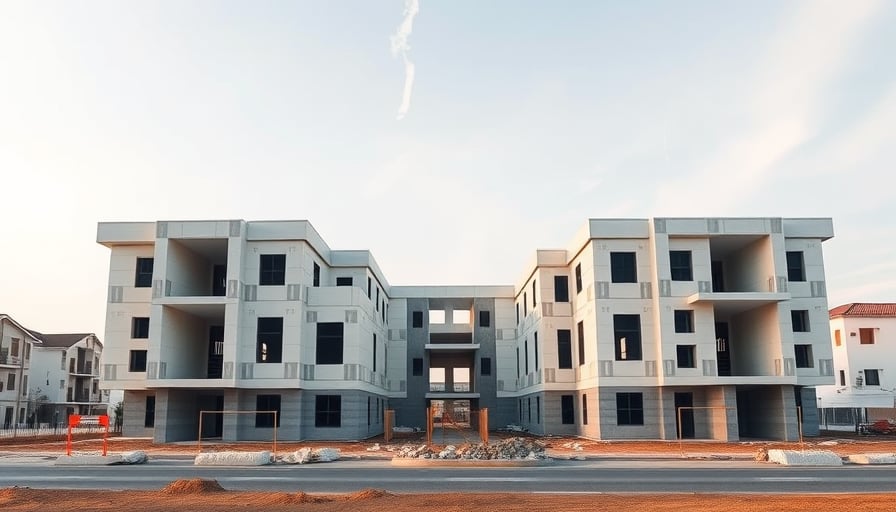
Corporate News: Hochtief AG Secures €230 Million Max‑Rubner Institute Project
Hochtief AG, the German‑based multinational construction and engineering conglomerate, has announced the award of a €230 million contract for the design, construction, and 30‑year operation of the Max‑Rubner Institute in Kiel. The project, which will be executed by Hochtief PPP Solutions, is slated for completion in the autumn of 2028. This development aligns with Hochtief’s broader strategy of pursuing substantial infrastructure undertakings across its five core operational divisions—namely airport, development, and regional construction services—thereby reinforcing its position as a key player in the European construction landscape.
Project Scope and Strategic Context
The Max‑Rubner Institute, a research centre focused on environmental and sustainable technology, represents a significant investment in Germany’s scientific infrastructure. By securing the contract, Hochtief expands its footprint within the public‑private partnership (PPP) domain, a sector that has gained prominence as governments seek cost‑effective delivery mechanisms for large‑scale projects. The long‑term operation agreement further underscores the company’s commitment to value‑based construction, wherein operational performance and asset maintenance become integral to the contractual framework.
From a strategic perspective, the project demonstrates Hochtief’s ability to manage complex, long‑term construction contracts that require integrated project management, engineering expertise, and financial acumen. The alignment with its five operational divisions—airport construction, development, regional construction, civil engineering, and PPP solutions—allows the company to leverage cross‑functional capabilities, optimize resource allocation, and mitigate project‑specific risks.
Market Dynamics and Competitive Positioning
The construction and engineering sector remains highly cyclical, influenced by macroeconomic factors such as interest rates, fiscal stimulus, and public investment budgets. Hochtief’s portfolio diversification across infrastructure types mitigates exposure to any single sector downturn. Moreover, the firm’s PPP solutions division is well‑positioned to capture demand in the public sector, where governments increasingly prefer private‑sector involvement to spread risk and accelerate project delivery.
Within the broader European market, competition is intense, with firms such as VINCI, ACS, and Skanska vying for flagship projects. Hochtief’s focus on sustainable construction and long‑term operational agreements differentiates it from competitors that primarily offer short‑term construction contracts. This differentiation aligns with global trends toward sustainability, resilience, and circular economy principles, thereby enhancing the company’s appeal to public entities prioritizing environmental credentials.
Economic Implications
The €230 million project injects capital into the German construction sector, supporting employment, supply chain activity, and technological advancement. The projected 30‑year operational phase suggests a steady cash flow stream for Hochtief, contributing to its long‑term financial stability. In the context of a post‑pandemic recovery, such large‑scale public infrastructure projects are likely to be catalysts for broader economic growth, particularly as governments aim to rebuild and upgrade critical assets.
Share Price Performance and Market Sentiment
Hochtief AG’s shares, listed on the Xetra exchange, have demonstrated a robust upward trajectory over the past decade. A hypothetical investment made at the close price ten years ago would have yielded substantial appreciation, reflecting the company’s consistent operational performance and resilience in the face of sector volatility. This historical performance underscores investor confidence in Hochtief’s long‑term growth prospects.
In contrast, the MDAX index—a benchmark for mid‑cap German companies that includes Hochtief—closed the latest trading session slightly lower than its previous close. While the decline is modest, it signals a transient shift in market sentiment, possibly attributable to broader macroeconomic concerns such as rising interest rates or geopolitical tensions. Nonetheless, Hochtief’s individual performance appears decoupled from the broader index movement, suggesting that company‑specific fundamentals remain strong.
Conclusion
Hochtief AG’s acquisition of the Max‑Rubner Institute contract exemplifies its strategic focus on high‑value, long‑term infrastructure projects within the PPP framework. The deal not only strengthens the firm’s competitive positioning in the European construction market but also aligns with global economic trends emphasizing sustainability, resilience, and public‑sector collaboration. Despite modest fluctuations in the MDAX index, Hochtief’s share price history and project pipeline indicate sustained investor confidence and a solid foundation for future growth.