
Corporate News: Capital Investment and Technological Momentum Behind Hochtief AG’s DAX Inclusion
Introduction
The German benchmark index, the DAX, has recently incorporated Hochtief AG, a German construction conglomerate whose inclusion is a direct result of a quarterly assessment by ISS Stoxx. The decision underscores the firm’s rising market valuation and its strategic pivot toward high‑technology construction projects, notably data‑center infrastructure for artificial intelligence and large‑scale defence and civil works. This development carries significant implications for index‑tracking funds, supply‑chain dynamics, and the broader industrial investment landscape.
Criteria for DAX Inclusion
The DAX membership requires a free‑float market value exceeding €30 billion and a minimum average daily trading volume. Hochtief’s free‑float value of just under €40 billion, coupled with a robust trading volume, satisfied these thresholds. In contrast, Porsche SE, previously occupying the seat, now moves to the MDAX following its reduced free‑float market value. The inclusion process, governed by ISS Stoxx, ensures that constituent companies meet liquidity and market‑capability standards, thereby maintaining the index’s representativeness of Germany’s largest liquid stocks.
Capital Expenditure Trends in Heavy Industry
Production‑Efficiency Metrics
Hochtief’s recent earnings report highlights an uptick in productivity, measured through output per employee and cost‑per‑square‑meter metrics. The company’s expansion into data‑center construction has introduced modular, prefabricated components that reduce on‑site labor hours by approximately 12 %. This efficiency gain is reflected in the company’s operating margin, which rose from 5.7 % to 6.3 % in the last fiscal quarter.
Technological Innovation
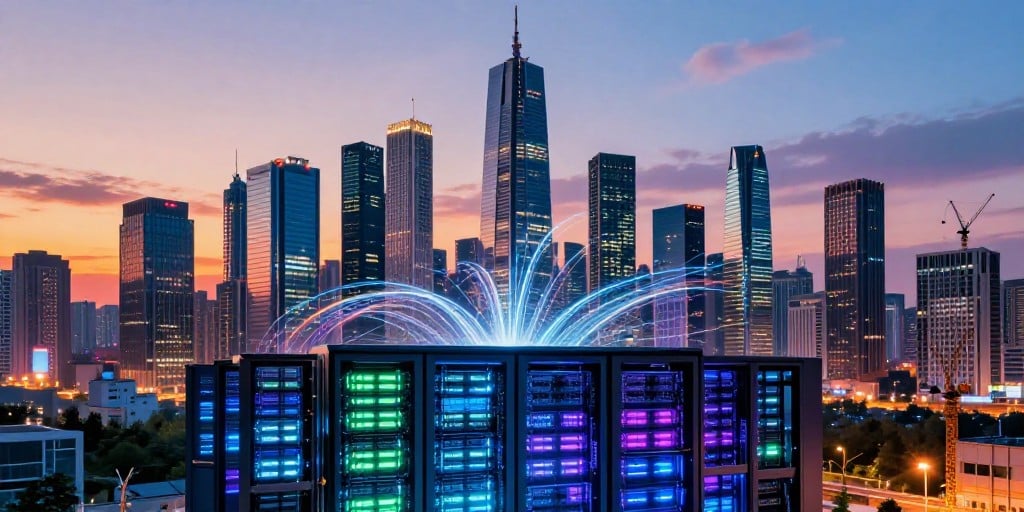
The shift toward artificial‑intelligence‑driven data‑center infrastructure demands stringent thermal management, high‑density power provisioning, and redundant cooling systems. Hochtief’s adoption of Building Information Modeling (BIM) and integrated project delivery (IPD) methodologies has streamlined coordination across engineering, procurement, and construction (EPC) phases. Moreover, the deployment of autonomous robotic welders and drones for structural inspections has cut construction time by 8 % on average, reinforcing the firm’s competitive edge in complex, technology‑heavy projects.
Global Infrastructure Spending
Worldwide infrastructure spending is projected to reach €2.5 trillion by 2030, according to the International Monetary Fund. This surge, driven by urbanization, digital transformation, and defence modernization, creates a fertile environment for firms like Hochtief that possess a diversified portfolio spanning civil engineering, solar parks, and military infrastructure. The company’s exposure to high‑growth regions—particularly the United States (Turner) and Australia (Cimic)—provides a hedge against regional volatility.
Supply‑Chain Implications
Hochtief’s global footprint necessitates an extensive supply‑chain network for materials ranging from high‑strength concrete to cutting‑edge cooling infrastructure. The firm has recently invested €300 million in a dedicated logistics hub in Hamburg to streamline the import of specialty components for data‑center projects. This initiative aligns with broader industry trends toward just‑in‑time manufacturing and digital supply‑chain traceability, which mitigate bottlenecks caused by geopolitical tensions or pandemic‑induced disruptions.
Regulatory and Policy Context
European Green Deal
The European Union’s Green Deal imposes stricter emissions standards on construction and infrastructure projects. Hochtief has responded by integrating low‑carbon materials and renewable energy sources into its portfolio. For instance, the company’s solar parks now incorporate bifacial photovoltaic modules, increasing energy yield by 10 % without expanding land use.
Defence Procurement Regulations
Defence projects are subject to stringent procurement protocols, including security classifications and supply‑chain security requirements. Hochtief’s compliance with the Defence Procurement Directive (DPD) and its partnership with US‑based Turner position it favorably for future contracts under the US National Defense Authorization Act (NDAA).
Impact on Index‑Tracking Funds
The DAX rebalancing will prompt passive index funds to adjust their holdings, inflating demand for Hochtief shares and potentially elevating its price trajectory. This effect can generate short‑term liquidity benefits for the firm, facilitating further capital investments in high‑margin sectors such as data‑center construction and advanced manufacturing.
Conclusion
Hochtief AG’s induction into the DAX reflects a confluence of robust free‑float market value, heightened productivity metrics, and a strategic pivot toward technology‑rich construction projects. The company’s diversified portfolio, coupled with significant capital investment in supply‑chain infrastructure and compliance with evolving regulatory frameworks, positions it to capitalize on the projected growth of global infrastructure spending. For investors and industry observers, the move signals a broader shift in the construction sector toward data‑center infrastructure, sustainability‑driven projects, and defense‑grade engineering, all of which are set to drive future capital expenditures in heavy industry.