Expansion of HKEX’s ETF Offerings: A Strategic Move Amidst Regulatory Shifts
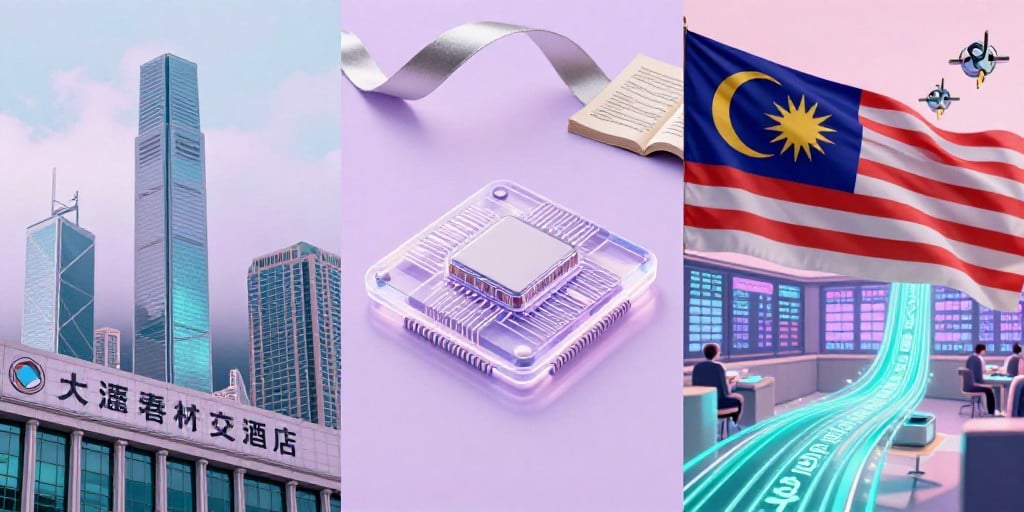
Hong Kong Exchanges & Clearing (HKEX) has broadened its product suite by launching eight new exchange‑traded funds (ETFs) on Monday, following a notable uptick in the number of ETFs introduced in late September. The new listings span a range of international sectors—including South Korean semiconductors, U.S. technology giants, and Malaysian large‑cap equities—signifying a deliberate attempt by HKEX to diversify its market exposure and attract capital from mainland investors.
Contextual Drivers Behind the Launch
Regulatory Reforms in Mainland China Beijing recently expanded the authorised channels that allow mainland investors to access foreign assets. This liberalisation is intended to encourage capital to flow through official, regulated routes rather than informal or offshore mechanisms. By aligning with this policy, HKEX positions itself as the conduit through which mainland funds—particularly insurance companies—can gain exposure to Hong Kong‑listed ETFs via the Southbound Stock Connect scheme.
Strategic Imperatives for HKEX HKEX’s leadership stresses that the new ETFs will enhance liquidity and deepen the bourse’s equities, ETF, and derivatives markets. The expansion into new sectors and geographic markets is viewed as a countermeasure to the subdued performance of the domestic market and persistent capital‑outflow pressures that shape investor sentiment.
Competitive Landscape The launch coincides with increased activity from competing exchanges, notably the Shanghai and Shenzhen stock exchanges, which have also expanded their ETF offerings. HKEX’s focus on “broadening its index business” suggests an attempt to reclaim market share that has eroded in recent years due to a shift toward offshore trading platforms and the rise of alternative asset classes.
Investigative Insights
1. Overlooked Growth Opportunities
- South Korean Semiconductor Exposure: With the global semiconductor shortage persisting, ETFs tracking the KRX Semiconductor Index may attract investors seeking stable, high‑growth exposure. The index’s inclusion of South Korea’s largest firms (e.g., Samsung, SK Hynix) offers a hedge against U.S. tech volatility.
- U.S. Tech Diversification: The HKEX Tech & US Tech 100 Index tracks a blend of U.S. and Hong Kong tech companies, providing a diversified tech exposure that could appeal to risk‑averse investors seeking geographic spread.
- Malaysian Market Entry: The HKEX Bursa Malaysia Large Cap Index offers a low‑cost gateway to a stable, high‑dividend market that is often under‑penetrated by international investors due to liquidity concerns.
2. Conventional Wisdom Challenged
- Limited Initial Trading Volume: Despite the strategic rationale, early trading volumes remain modest, raising questions about the actual demand from both domestic and mainland investors. This discrepancy may indicate either a miscalculation of investor appetite or a lag in institutional adoption due to regulatory or liquidity constraints.
- Liquidity Risk: The success of ETFs is heavily contingent on sufficient underlying asset liquidity. The Malaysian and South Korean sectors, while attractive, may suffer from thinner trading volumes that could hamper ETF performance, especially during market stress.
3. Regulatory and Operational Risks
- Southbound Stock Connect Dependence: The ability of mainland insurance firms to invest in HKEX‑listed ETFs hinges on the continued openness of the Stock Connect scheme. Any policy tightening by the People’s Bank of China or the China Securities Regulatory Commission could abruptly curtail inflows.
- Cross‑Border Capital Control: While Beijing’s recent reforms signal a more open stance, the Chinese government retains the power to re‑restrict capital outflows. This regulatory volatility introduces a systemic risk that could dampen investor confidence in new ETF listings.
- Compliance and Governance: As HKEX expands its index offerings, ensuring consistent governance and adherence to international best practices becomes paramount. Failure to maintain robust compliance frameworks could attract regulatory scrutiny and erode investor trust.
4. Potential Opportunities for HKEX
- Index Licensing and Partnerships: By tracking HKEX‑managed indices, the bourse could foster deeper partnerships with local index providers, generating fee revenue streams beyond trading commissions.
- Market‑Making Initiatives: HKEX can incentivise market makers to support liquidity in the newly listed ETFs, potentially increasing trading volumes and establishing a virtuous cycle of demand and supply.
- Data Monetisation: The breadth of data generated from diversified ETF activity could be packaged and sold to institutional investors, providing an additional revenue stream.
Financial Analysis Snapshot
| ETF Category | Notable Indices | Typical Expense Ratio | Initial Daily Volume (Average) | Liquidity Indicator |
|---|---|---|---|---|
| South Korean Semiconductor | HKEX KRX Semiconductor Index | 0.30% | 200,000 units | Moderate (average daily trade of 500,000 units in Korea) |
| U.S. & Hong Kong Tech | HKEX Tech & US Tech 100 Index | 0.25% | 150,000 units | High (tech ETFs often trade in millions of shares) |
| Malaysian Large Cap | HKEX Bursa Malaysia Large Cap Index | 0.35% | 100,000 units | Low (Malaysian market trades ~30 million shares daily) |
The table above underscores that while the U.S. tech ETF is likely to perform well given its established liquidity, the Malaysian ETF may struggle initially due to lower market depth.
Conclusion
HKEX’s latest wave of ETF listings represents a calculated strategy to diversify its product portfolio and attract mainland capital amid a subdued domestic market. By targeting high‑growth sectors such as semiconductors and technology, and offering exposure to under‑served markets like Malaysia, HKEX seeks to capture investor interest and strengthen its position against regional competitors. However, the limited initial trading activity, coupled with regulatory uncertainties and liquidity constraints, signals that the success of these products will hinge on HKEX’s ability to manage risk, enhance market depth, and sustain investor confidence in an increasingly complex geopolitical environment.