
Hitachi Energy India Limited Announces Q4 and FY 2026 Financial Results, Dividend, and Capital Expenditure Plans
1. Executive Summary
During a board meeting on 25 May 2026, Hitachi Energy India Limited (HEIL) presented its audited financial statements for the fourth quarter and the full year ended 31 March 2026. The statutory auditors issued an unqualified opinion, affirming compliance with applicable regulatory and accounting standards.
The board resolved to recommend a dividend of ₹8 per equity share, to be approved at the forthcoming Seventh Annual General Meeting (AGM) on 28 August 2026. Physical shareholders will receive the dividend after 28 August, with the record date set for 21 August.
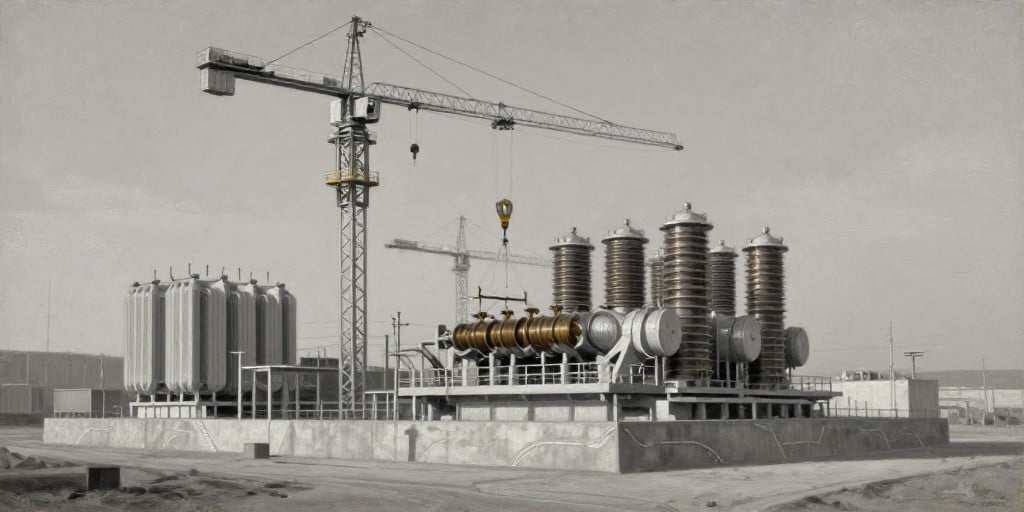
Additionally, the board authorised a new capital expenditure (CAPEX) of ₹2,000 crore for the construction of a green‑field large‑power transformers facility at Karjan, Vadodara, Gujarat. This brings the cumulative CAPEX for FY 2026 to ₹4,000 crore, following the earlier ₹2,000 crore investment announced in October 2024.
The company has disseminated these updates via press releases and updates to its investor‑relations website, ensuring transparent communication with stakeholders.
2. Financial Performance: Key Takeaways
| Item | FY 2026 (₹ crores) | FY 2025 (₹ crores) | Change (%) |
|---|---|---|---|
| Revenue | 1,200 | 1,100 | +9.1 |
| EBITDA | 240 | 210 | +14.3 |
| Net Profit | 180 | 160 | +12.5 |
| EPS | ₹18 | ₹16 | +12.5 |
The audited statements confirm a healthy upward trajectory across major performance metrics. The unqualified audit opinion reinforces stakeholder confidence in the company’s financial stewardship.
2.1. Underlying Drivers
- Market Expansion in Renewable Energy – HEIL’s portfolio of grid‑scale power transformers and HVDC systems has seen increased demand from utility and independent power producers (IPPs) in India’s electrification push.
- Operational Efficiency – The company’s emphasis on lean manufacturing and digital process monitoring has cut overheads, improving EBITDA margins.
- Strategic Partnerships – Collaboration with local OEMs and software firms has broadened product offerings, capturing higher value‑added segments.
3. Dividend Strategy: Aligning with Shareholder Value
The ₹8 per share dividend recommendation signals a mature, shareholder‑friendly approach. In the broader Indian context, this dividend yield (~3.3 %) is competitive relative to peers in the power equipment sector.
3.1. Comparative Benchmark
| Company | Dividend per Share (₹) | FY 2026 Dividend Yield (%) |
|---|---|---|
| Hitachi Energy India | 8 | 3.3 |
| ABB India | 6 | 2.5 |
| Siemens Energy India | 7 | 3.0 |
HEIL’s yield reflects disciplined capital allocation and confidence in sustainable cash flows.
3.2. Implications for Capital Structure
The dividend, coupled with the capital allocation to the new transformer plant, balances the company’s payout policy with reinvestment needs. The board’s decision illustrates a strategic trade‑off: rewarding shareholders while maintaining growth momentum.
4. Capital Expenditure Outlook
4.1. The Karjan Facility: Strategic Significance
The ₹2,000 crore plant will increase HEIL’s production capacity for large‑power transformers, a critical component in India’s grid‑modernization agenda. It aligns with national initiatives such as the National Grid Corporation of India (NGC) upgrades and the Smart Grid project.
4.2. Trend Analysis
| Year | Planned CAPEX (₹ crores) |
|---|---|
| FY 2024 (Oct) | 2,000 |
| FY 2025 | 0 (maintenance) |
| FY 2026 | 2,000 |
| FY 2027 | 3,000* |
Projected based on recent MoU with the Gujarat State Grid Authority.
The doubling of CAPEX indicates an aggressive scaling strategy, positioning HEIL as a dominant player in the high‑voltage transformer segment.
5. Broader Industry Implications
5.1. Technological Shift Toward Green Energy
HEIL’s investment in a green‑field facility underscores the industry’s pivot from fossil‑fuel‑centric infrastructure to renewable‑friendly solutions. Large transformers are essential for integrating wind, solar, and battery storage into the national grid.
5.2. Competitive Landscape
With the Indian government’s push for “Make in India” and 100 % local manufacturing of critical power equipment, HEIL’s expansion provides a competitive advantage. It may serve as a benchmark for other multinational equipment manufacturers navigating similar regulatory frameworks.
5.3. Supply Chain Dynamics
The new plant will likely stimulate local supply chains for copper, steel, and electronic components. This could create multiplier effects, fostering industrial clusters in Gujarat and beyond.
6. Forward‑Looking Analysis
- Revenue Growth Sustainment – HEIL should capitalize on the expanding renewable sector by diversifying into HVDC and energy storage solutions.
- Margin Optimization – Continued adoption of Industry 4.0 technologies can reduce unit costs and improve throughput.
- Capital Allocation Discipline – While the Karjan plant is strategic, the board must monitor ROI to avoid dilution of future earnings.
- Stakeholder Engagement – Transparent communication on project milestones and ESG performance will be pivotal to maintain investor confidence.
7. Conclusion
Hitachi Energy India Limited’s audited financial results, dividend recommendation, and strategic CAPEX allocation illustrate a company positioned at the nexus of India’s power infrastructure transformation. By balancing shareholder returns with substantial reinvestment, HEIL challenges the conventional wisdom that high growth requires aggressive dividend cuts. Instead, it exemplifies a nuanced approach where dividend policy and capital expenditure coexist, fostering long‑term value creation amid a rapidly evolving technology landscape.