
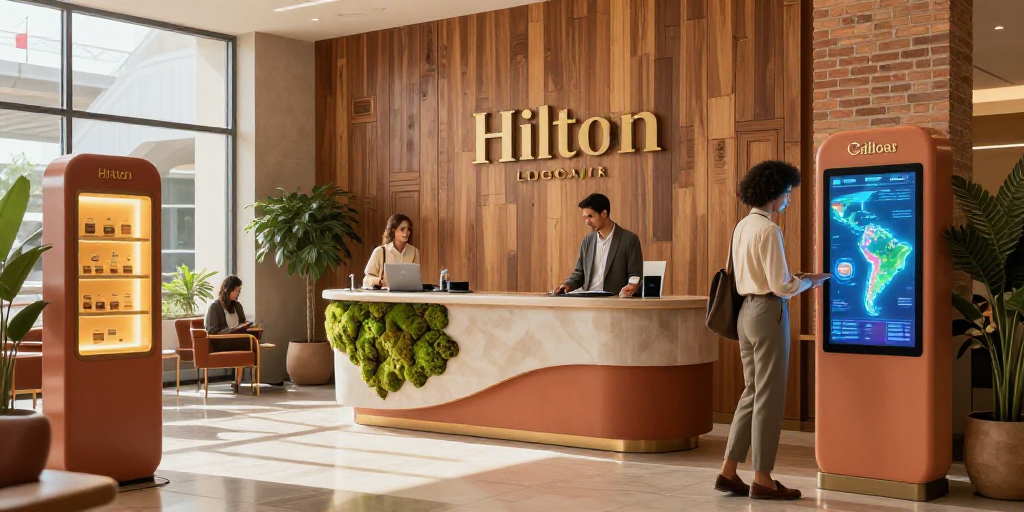
Hilton Worldwide’s Strategic Re‑Entry into Latin America: A Case Study of Digital‑Physical Synergy and Demographic‑Driven Growth
Hilton Worldwide Holdings Inc. has publicly disclosed that its chief executive officer, Christopher Nassetta, is investigating the possibility of re‑establishing commercial operations in Venezuela. This initiative, announced to the Spanish‑language outlet El Nacional, is framed as part of a broader global expansion strategy that includes potential re‑entry into three Latin American markets—Venezuela, Cuba, and other nations where the company previously operated hotels before political developments led to nationalisation. The move is grounded in the brand’s historic footprint, notably the twelve properties once managed in Venezuela before the 2009 nationalisation under Hugo Chávez’s administration. Nassetta notes that a number of former hotel sites are now ready to re‑engage with the Hilton brand, signalling a possible revival of operations in the region.
While this specific announcement does not contain immediate financial details, it is situated within a broader sectoral analysis of hospitality and consumer‑cyclical companies. Analysts view Hilton alongside peers such as Las Vegas Sands, with valuations and sentiment ranging from neutral to slightly positive. The consensus remains that the company’s performance will be measured against industry benchmarks, and that any expansion will need to navigate the geopolitical and economic conditions that historically influenced its operations in these markets.
Linking Lifestyle Trends to Market Opportunity
The decision to explore a re‑entry into Venezuela aligns with a convergence of several macro‑trends that shape contemporary consumer behaviour:
| Trend | Impact on Consumer Spend | Implication for Physical Retail |
|---|---|---|
| Digital‑First Experience | Younger generations (Gen Z, Millennials) now expect seamless integration of mobile booking, digital concierge, and AI‑driven personalization. | Physical hotel properties must embed IoT, contactless services, and data‑rich environments to remain relevant. |
| Experience‑Economy | Travel is increasingly valued as a cultural and lifestyle experience rather than mere accommodation. | Hotels must curate local partnerships (e.g., guided tours, culinary studios) that resonate with experiential tourists. |
| Demographic Shift | The rise of dual‑income households and extended life expectancy shifts spending toward premium leisure offerings. | Brands can upsell through tiered experiences, wellness packages, and loyalty programmes that reward repeat visits. |
| Post‑Pandemic Resilience | Heightened emphasis on safety, sustainability, and flexible booking models. | Physical spaces need to adopt modular layouts, eco‑friendly infrastructure, and transparent hygiene protocols. |
Hilton’s potential move into Venezuela, therefore, can be seen as an attempt to capture a market segment that is becoming increasingly receptive to digitally integrated hospitality solutions while still valuing the tangible allure of physical spaces. By leveraging its established brand equity, the company can appeal to both traditional travelers and the newer, tech‑savvy cohort that seeks authenticity blended with convenience.
Digital Transformation Meets Physical Retail: The Hilton Model
The hospitality industry has long been a testing ground for innovations that blend digital and physical touchpoints. Hilton’s loyalty programme, Hilton Honors, already integrates mobile check‑in, digital room keys, and AI‑based recommendation engines. The company’s “Hilton 360°” platform, which uses data analytics to tailor experiences, demonstrates how consumer insights can drive product development.
In markets like Venezuela, the digital ecosystem presents both challenges and opportunities. While internet penetration is moderate, mobile usage is high, creating a fertile ground for app‑centric services. Hilton can deploy a phased approach:
- Digital Readiness Assessment – Map out local connectivity, payment gateways, and regulatory frameworks to ensure compliance and operational efficiency.
- Hybrid Service Model – Combine automated check‑in kiosks and virtual concierge services with personalised in‑person staff to cater to a broad demographic spectrum.
- Data‑Driven Localization – Use real‑time analytics to adjust offerings (e.g., local cuisine menus, cultural events) that resonate with both expatriate and domestic guests.
This strategy aligns with the broader consumer trend of seeking hybrid experiences, where the physical environment is augmented rather than replaced by digital tools.
Generational Spending Patterns and Consumer Experience Evolution
Recent studies indicate that Millennials and Gen Z allocate a disproportionate share of discretionary spend to travel and experiential activities. Their preference for immersive, narrative‑rich experiences—such as “staycations” that spotlight local culture—has spurred hotels to rethink their value proposition. In contrast, Baby Boomers and Gen X tend to value stability and premium service. Hilton’s portfolio, spanning luxury to midscale, is uniquely positioned to cater to both ends of the spectrum.
In Venezuela’s evolving market, these generational dynamics will shape demand. Younger travelers may prioritize affordability coupled with digital convenience, while older demographics may seek curated services and assurance of safety. Hilton can respond by deploying a differentiated mix of properties—e.g., boutique hotels in urban centers for younger guests, and heritage‑style resorts for senior travellers—each underpinned by a unified digital framework.
Forward‑Looking Analysis: Market Opportunities and Risks
| Opportunity | Strategic Lever | Potential Pay‑Off |
|---|---|---|
| Revitalised Physical Presence | Re‑establishing hotels on existing sites | Immediate revenue stream and brand reinforcement |
| Digital Upsell | Integrating AI‑driven services and loyalty incentives | Higher average spend per guest |
| Local Partnerships | Collaborating with regional tour operators and culinary ventures | Enhanced experiential appeal and community goodwill |
| Sustainability Positioning | Implementing green building standards | Attraction of eco‑conscious travelers and potential regulatory benefits |
However, the geopolitical climate remains volatile. The company must monitor:
- Currency Instability – Fluctuations in the Venezuelan bolívar can impact profitability.
- Regulatory Shifts – Sudden changes in hospitality licensing or foreign investment laws could constrain operations.
- Infrastructure Reliability – Power, water, and internet reliability will affect service delivery and guest satisfaction.
Mitigating these risks requires robust scenario planning, diversified sourcing strategies, and strong local partnerships that can navigate regulatory nuances.
Conclusion
Hilton Worldwide’s exploratory discussions to re‑enter Venezuela exemplify a strategic alignment between traditional hospitality strengths and emerging consumer imperatives. By harnessing digital transformation while preserving the allure of physical spaces, the company can tap into evolving generational spending patterns and cultural movements that favour experiential, tech‑enhanced travel. Successful execution will hinge on a nuanced understanding of local dynamics, an agile digital architecture, and a differentiated service portfolio that caters to a broad demographic spectrum. In doing so, Hilton positions itself not only to capture a new market but also to set a benchmark for how legacy brands can adapt to the future of consumer experience.