
Corporate Update: German Defence Industry Amid Capital Expenditure Expansion
Market Response to Geopolitical Speculation
On Monday, equities within the German defence sector exhibited a measurable uptick, a reaction that can be attributed to speculation regarding a potential reduction in the United States military presence on German soil. This market sentiment spilled over into the broader European industrial segment, where shares of key players—Hensoldt and Renk—experienced modest gains. Investors assessed the likelihood of heightened demand for domestically produced defence systems, particularly advanced radar and electronic warfare equipment.
Hensoldt: Capital Allocation and Production Capacity
Hensoldt’s share price advanced by approximately 2 % in early trade. Despite this positive movement, analysts noted that the company’s equity has recently endured headwinds, prompting a re‑evaluation of its forward‑looking metrics. A prominent investment bank revised its price target downward while retaining an “equal‑weight” rating, reflecting a cautious outlook amid evolving earnings dynamics.
The firm faces a pronounced supply‑chain bottleneck, evidenced by a book‑to‑bill ratio of 1.9—a figure that indicates orders are arriving at a pace exceeding the firm’s current production throughput. To reconcile this disparity, Hensoldt is committing to a sizeable capital outlay for new manufacturing facilities and entering into a long‑term semiconductor supply agreement. This dual strategy aims to expand production capacity while securing a reliable raw‑material stream for high‑precision components critical to radar and electronic warfare systems.
Production Modernisation and Automation
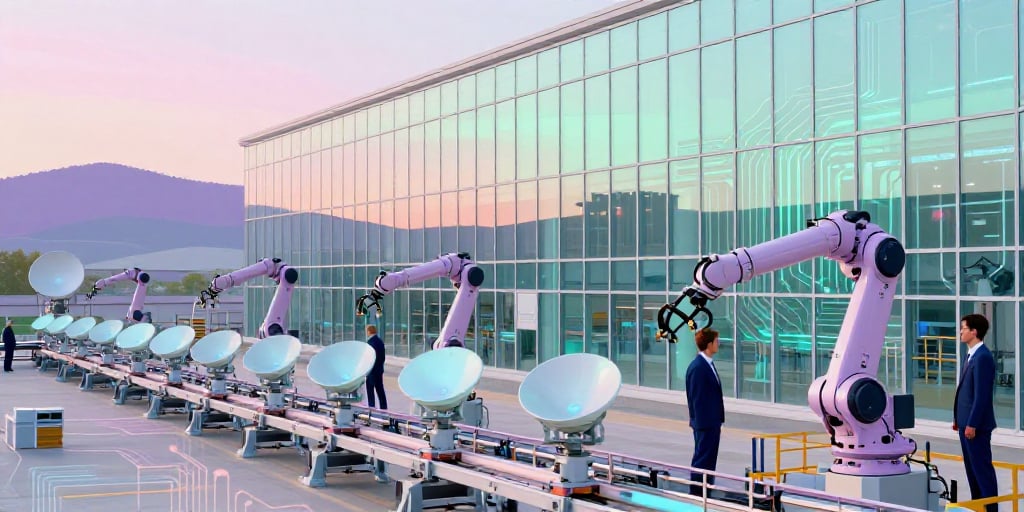
The planned facilities will incorporate additive manufacturing (AM) techniques for complex sensor housings, reducing part count and cycle time. Automation will be enhanced through collaborative robots (cobots) and Industrial Internet of Things (IIoT) sensors, enabling real‑time monitoring of process parameters such as temperature, vibration, and material feed rates. These technologies are expected to increase throughput by 12–15 % and reduce defect rates by up to 8 %, thereby aligning output with the elevated order pipeline.
Revenue Forecast and Profitability Projections
Management maintains confidence in the 2026 revenue forecast of just over €2 billion, projecting a stable EBITDA margin in the high‑teens. The forecast leverages expected growth in air‑defence radar contracts and associated electronic systems, bolstered by the German defence budget exceeding €108 billion this fiscal year and the European SAFE programme injecting an additional €150 billion in funding.
Economic Drivers of Capital Expenditure
- Defence Spending Surge – National budgets and pan‑European programmes have created a demand environment that incentivises manufacturers to expand capacity proactively.
- Semiconductor Shortage – The global chip scarcity has pressured firms to secure long‑term supply contracts, a move that often entails significant upfront costs but mitigates downstream production risks.
- Regulatory Compliance – Enhanced cybersecurity and data‑privacy regulations in the EU necessitate upgraded manufacturing cyber‑physical systems, encouraging investment in secure production lines.
Supply‑Chain Implications
The heightened book‑to‑bill ratio underscores the necessity for just‑in‑time (JIT) inventory models that are resilient to component lead‑time volatility. Hensoldt’s semiconductor agreement mitigates this risk, yet the broader supply chain must adapt to fluctuating demand signals. The firm’s investment in in‑house component fabrication—particularly for high‑performance RF components—will reduce dependency on external suppliers and insulate the company from geopolitical disruptions.
Regulatory and Infrastructure Context
The European Union’s SAFE (Secure and Resilient European Defence) Programme not only provides financial support but also sets stringent procurement standards aimed at fostering a sustainable, technologically advanced defence industrial base. Compliance with these standards requires investments in high‑automation production facilities and sustainable manufacturing practices, including energy‑efficient HVAC systems and renewable power integration.
Furthermore, the European Commission’s Industrial Acceleration Plan emphasizes infrastructure upgrades such as high‑speed rail and digital networks, which indirectly benefit manufacturers by improving logistics and data connectivity. Hensoldt’s strategic expansion aligns with these infrastructure initiatives, ensuring that new sites benefit from state‑of‑the‑art transport and communication links.
Outlook
Hensoldt is navigating a period of robust demand, strategic investment, and capacity constraints. The company’s planned capital expenditure—comprising new manufacturing lines, automation upgrades, and a long‑term semiconductor agreement—positions it to capture forthcoming contracts while mitigating supply‑chain risks. Market participants will closely monitor the company’s forthcoming quarterly earnings, which are expected to shed further light on operational performance, supply‑chain resilience, and the effectiveness of its productivity‑enhancing initiatives.
Prepared for corporate news distribution. No author attribution provided.