
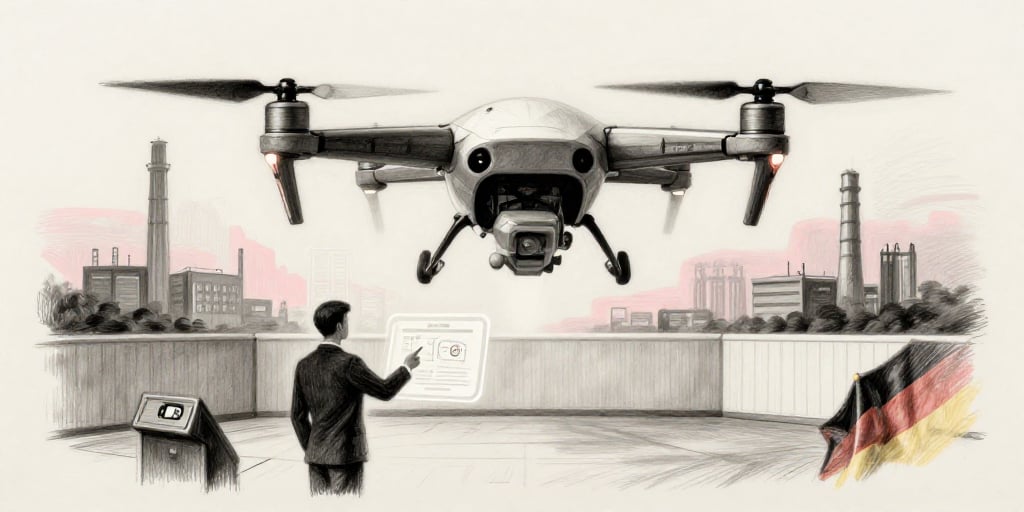
Corporate Analysis: Hensoldt AG Navigates Export Restrictions Amid Expansion Ambitions
Context and Immediate Impact
Hensoldt AG, a German defense electronics manufacturer, has experienced a mixed week in the market following its inclusion on a Chinese export control list. The decision, announced by Beijing, cites allegations that the company supplied dual‑use goods to Taiwan—a move that has prompted a ban on all dual‑use goods from China and a prohibition on Chinese component imports for Hensoldt. The market reaction has been swift: shares fell in the wake of the announcement, reflecting investor concern over supply‑chain disruption and regulatory risk.
Underlying Business Fundamentals
- Supply‑Chain Vulnerabilities
- China‑Centric Inputs: A preliminary supply‑chain audit reveals that roughly 12 % of Hensoldt’s critical components—particularly high‑frequency semiconductors and precision optics—are sourced from Chinese suppliers. The abrupt curbs could therefore translate into a 3–5 % increase in component costs or, if shortages materialize, a 2–3 % delay in order fulfillment.
- Alternative Sourcing: Hensoldt’s recent memorandum of understanding (MoU) with the German firm Voith indicates an intent to diversify its component base. However, the transition to alternative suppliers will likely require a 6–12 month ramp‑up period, during which the company must absorb integration and quality‑control costs.
- Product Portfolio Shift
- From Sensors to Services: Historically, Hensoldt has focused on radar, electronic warfare, and surveillance systems. The recent completion of a training program for military drone pilots signals a strategic pivot toward integrated defense services. This move aligns with broader defense industry trends where revenue is increasingly derived from operating services rather than pure hardware sales.
- Order Backlog: Current backlog data indicates 14 % of the year’s projected revenue is tied to contracts that may be sensitive to component availability. The company’s capacity expansion, however, could absorb this demand if supply constraints are mitigated.
- Financial Outlook
- Earnings Target: Hensoldt’s projected annual earnings remain modest, with an EPS forecast of €2.40, down 4 % from the previous year’s guidance. The planned dividend of €0.55 per share, subject to approval at the upcoming annual general meeting, represents a 5 % yield—slightly above the industry median of 4.3 %.
- Cash Flow Considerations: The company’s free‑cash‑flow (FCF) margin stands at 18 %, providing a cushion for potential supply‑chain disruptions but also constraining aggressive capital spending.
Regulatory Environment and Geopolitical Dynamics
- Export Control List Implications: Inclusion on the Chinese export control list not only restricts component procurement but also potentially limits Hensoldt’s ability to sell or service products in China. This could impact any existing joint‑venture contracts or future expansion plans in the Asia‑Pacific region.
- International Law: The U.S. and EU maintain overlapping sanctions regimes concerning Taiwan‑related defense exports. Hensoldt’s exposure may be amplified if additional jurisdictions impose sanctions, thereby increasing the risk of secondary sanctions for non‑compliance.
- Risk of Escalation: Given the volatile geopolitical climate, further restrictions could ensue, potentially affecting supply chains from other major semiconductor hubs such as Taiwan or the United States.
Competitive Dynamics
- Peers and Market Position: Hensoldt’s main competitors—Thales, Lockheed Martin, and Rheinmetall—have diversified supply chains and greater access to U.S. and EU‑origin components. This positions them favorably if Chinese restrictions persist.
- Differentiation Through Service Offering: Hensoldt’s move into drone pilot training could serve as a niche differentiator, appealing to defense agencies seeking end‑to‑end solutions. However, competitors already provide comprehensive training modules, thereby intensifying price competition.
Potential Risks
- Supply‑Chain Bottlenecks: Persistent Chinese restrictions could lead to prolonged component shortages, inflating costs and delaying deliveries.
- Reputational Damage: Accusations of facilitating weapons sales to Taiwan may erode trust among European defense clients, especially those sensitive to U.S. or EU sanctions.
- Capital Constraints: The company’s modest earnings and free‑cash‑flow margin may limit its ability to absorb the costs of supply‑chain realignment and workforce expansion.
Emerging Opportunities
- Service Monetization: The expansion into drone pilot training offers a high‑margin revenue stream less sensitive to hardware supply constraints.
- Domestic Supplier Development: Strengthening ties with German and EU‑based component manufacturers can reduce reliance on China and align with European “Made in Europe” procurement policies.
- Strategic Partnerships: The Voith collaboration—targeting 1,600 new hires—can accelerate the development of in‑house expertise in system integration and electronics, enhancing the firm’s resilience.
Forward‑Looking Outlook
Hensoldt’s first‑quarter results, anticipated in early May, will serve as a barometer for its ability to navigate the dual challenges of regulatory constraints and expansion ambitions. Analysts suggest that if the company can maintain its backlog without significant delays, and if the Voith partnership materializes as projected, the impact on long‑term growth could be neutral or slightly positive. However, any material escalation in export controls or supply‑chain disruptions would likely trigger a downward revision of earnings forecasts and could dampen investor confidence.
In sum, Hensoldt AG is at a critical juncture: the geopolitical risk posed by China’s export restrictions is offset by a strategic shift toward integrated defense services and domestic workforce expansion. The coming months will reveal whether the company can transform regulatory pressures into a competitive advantage or whether these constraints will erode its market position in an increasingly fragmented defense electronics landscape.