
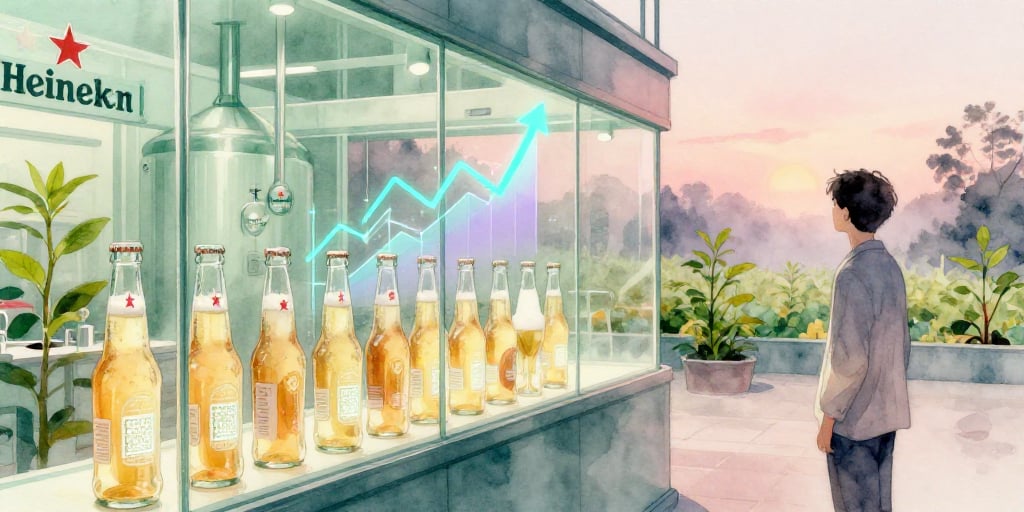
Heineken Holding N.V. Announces Recent Share Buyback Milestone
In the second tranche of its €750 million share‑buyback programme, Heineken Holding N.V. has repurchased approximately 885 000 shares during the first week of May 2026. The average transaction price was around €60 per share, a modest decline compared with earlier phases of the programme. The company continues to monitor and disclose the buyback on a weekly basis, with summaries posted every Monday on its investor‑relations website. Heineken Holding maintains that its sole purpose is to hold an interest in and provide oversight for Heineken N.V., and the programme remains fully compliant with EU regulations governing share repurchases.
Digital Transformation and the Resurgence of Physical Retail
While the beer industry has long been synonymous with traditional distribution channels, the past decade has seen a convergence of digital and physical retail. Consumers now expect seamless omnichannel experiences: a mobile app to locate nearby outlets, contact‑less payment options, and real‑time inventory updates. The Heineken buyback underscores a broader trend of consumer‑packaged‑goods (CPG) firms reinforcing capital structure resilience to fund digital initiatives.
- Omnichannel Growth: E‑commerce sales of alcoholic beverages in key markets grew 12 % in 2025, driven by subscription models and home‑delivery services.
- Data‑Driven Merchandising: Retailers leverage AI to predict shelf‑space demand, tailoring promotions to local taste profiles.
- Experiential Pop‑Ups: Temporary venues that blend brand storytelling with interactive technology are revitalising foot traffic, particularly in urban centres.
For Heineken and its peers, allocating capital toward technology infrastructure—such as AI‑enabled supply‑chain optimisation, digital shelf‑management platforms, and immersive in‑store experiences—represents a strategic response to evolving consumer expectations.
Generational Spending Patterns
The demographic shift towards Millennials and Gen Z is reshaping consumption habits within the beverage sector:
| Generation | Typical Spending Behaviours | Implications for CPG Companies |
|---|---|---|
| Millennials (1981‑1996) | Value authenticity, sustainable sourcing, and shareable experiences | Demand for transparent supply chains and branded social‑media activations |
| Gen Z (1997‑2012) | Prioritise convenience, personalised products, and digital engagement | Opportunity for modular packaging and subscription services |
| Gen X (1955‑1980) | Focus on quality and reliability, but increasingly tech‑savvy | Loyalty programmes that integrate mobile wallets and data analytics |
Heineken’s buyback can be interpreted as a signal to shareholders that the company is confident in its ability to invest in initiatives that will resonate with these cohorts. For instance, the introduction of a “personalised beer kit” delivered through an app could capture Gen Z’s penchant for DIY experiences while appealing to Millennials’ interest in artisanal craftsmanship.
Cultural Movements and the Evolution of Consumer Experience
Broader cultural currents—such as the rise of wellness, sustainability, and the “experience economy”—continue to dictate consumer expectations:
- Wellness‑Focused Offerings: Low‑calorie, alcohol‑free, or functional‑beverage lines are gaining traction as consumers seek healthier lifestyles.
- Sustainability Commitments: Brands that demonstrate transparent carbon‑footprint reductions, recyclable packaging, and ethical sourcing attract socially conscious buyers.
- Immersive Storytelling: Virtual reality (VR) tours of breweries and augmented reality (AR) label interactions enrich the purchase journey.
The intersection of these movements with digital touchpoints creates a fertile ground for new revenue streams. Companies that can embed sustainability metrics into their mobile apps, or offer VR‑enhanced store experiences, stand to differentiate themselves in a crowded marketplace.
Strategic Implications and Market Opportunities
Heineken Holding’s share‑buyback activity, while a classic financial maneuver, can be viewed as a pre‑emptive measure to preserve capital for strategic initiatives that align with contemporary consumer trends:
- Capital Allocation to Innovation: Freed capital may be directed toward R&D for non‑alcoholic variants or novel brewing technologies that appeal to health‑and‑wellness consumers.
- Investment in Digital Platforms: Enhanced mobile commerce solutions and AI‑driven recommendation engines can improve customer acquisition and retention.
- Expansion of Experiential Retail: Pop‑up bars and immersive tasting rooms that fuse digital interactivity with traditional brewing heritage could drive brand loyalty among younger shoppers.
- Sustainability Integration: Deploying blockchain to trace ingredient provenance and real‑time emissions monitoring can satisfy regulatory requirements and consumer demand for transparency.
By aligning financial discipline with forward‑looking consumer engagement strategies, Heineken can strengthen its competitive position amid the convergence of digital innovation and experiential retail.
Conclusion
Heineken Holding’s latest progress in its share‑buyback programme illustrates how mature consumer brands are balancing financial stewardship with the need to stay agile in an era of digital transformation. As lifestyle trends, demographic shifts, and cultural movements converge to redefine the consumer experience, firms that effectively integrate technology, sustainability, and experiential touchpoints will unlock new growth pathways. The careful deployment of capital—whether through targeted buybacks or strategic reinvestment—will be critical for navigating this evolving landscape and capitalising on emerging market opportunities.