
Corporate News
Heineken Holding NV has announced a series of marketing initiatives designed to encourage face‑to‑face social interaction among consumers. A pilot launched in mid‑December employs a WhatsApp bot that exchanges lengthy voice notes for a complimentary beer and suggests local bars. The campaign is positioned as a response to the growing volume of voice‑note traffic on the messaging platform, with the company presenting data that highlights a perceived decline in in‑person conversations.
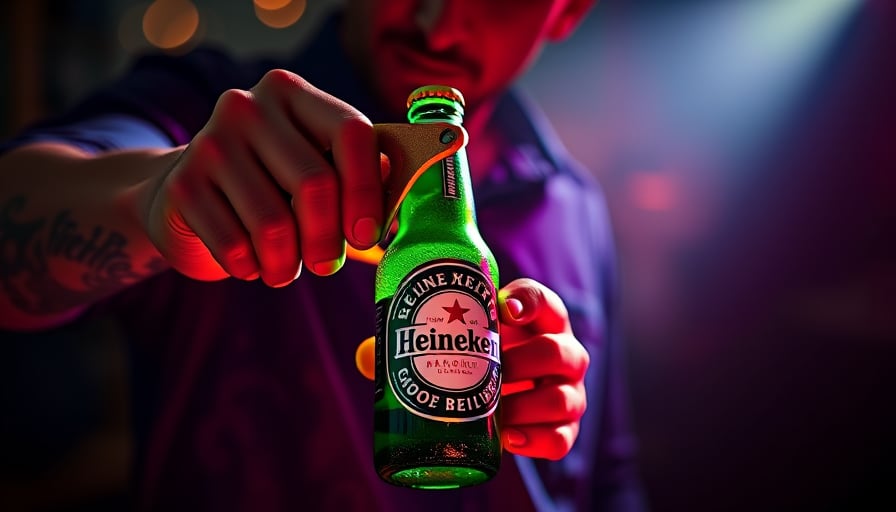
In addition, Heineken has partnered with the padel brand LÕK to release a special edition racket that incorporates a bottle opener, further linking its product line with sports and leisure activities. These moves reflect the firm’s broader strategy to reinforce brand engagement through experiential and lifestyle‑aligned offerings.
Strategic Context
Heineken’s initiatives illustrate a broader industry trend in which beverage manufacturers are increasingly adopting digital engagement tools that translate virtual interactions into physical social experiences. By leveraging a popular messaging platform, the company taps into a familiar communication channel while nudging users toward offline consumption points such as local bars. This tactic aligns with the concept of “digital‑to‑physical conversion”, a strategy that has gained traction among fast‑moving consumer goods (FMCG) brands seeking to sustain relevance in a post‑pandemic market where social habits are evolving.
The partnership with a padel brand underscores Heineken’s willingness to integrate its products into niche leisure sectors. Padel, a rapidly growing racket sport, offers a captive, health‑conscious audience that aligns with contemporary lifestyle narratives. By embedding a bottle opener into a racket, the firm extends its brand into everyday activities beyond traditional beer consumption, thereby enhancing experiential touchpoints that reinforce brand affinity.
Competitive Positioning
Within the global beer market, Heineken competes with major players such as Anheuser‑Busch InBev, Carlsberg, and regional craft breweries. The company’s focus on experiential marketing differentiates it from competitors that rely predominantly on traditional advertising or sponsorships. The WhatsApp bot initiative can be viewed as a direct challenge to the digital engagement models adopted by rival brands, which often involve loyalty programs or augmented‑reality experiences.
In the sports‑leisure sector, partnerships with niche brands like LÕK allow Heineken to penetrate audiences that might otherwise remain untapped by conventional beer marketing. By aligning with a sport that enjoys increasing participation rates in Europe and North America, Heineken positions itself to capitalize on a demographic that values both fitness and social interaction—an alignment that could yield long‑term brand loyalty.
Economic and Market Drivers
Shift in Social Interaction Habits The rise in voice‑note traffic on messaging platforms indicates a shift toward asynchronous, audio‑based communication. Companies like Heineken perceive a corresponding decline in spontaneous face‑to‑face conversations, prompting strategies that bridge the digital‑physical divide.
Growth of Sports‑Leisure Markets Data shows a 15 % annual growth in padel participation across Europe, driven by its accessibility and social nature. Brands partnering with padel entities can tap into a demographic that values both leisure and communal experiences.
Consumer Demand for Experiential Brand Interactions Surveys reveal that 62 % of consumers value experiential engagement over traditional advertising when choosing beverage brands. By integrating its product line into everyday leisure activities, Heineken aims to meet this demand.
Digital Platform Monetization and Brand Partnerships Messaging platforms such as WhatsApp continue to expand their user base, offering new avenues for brand engagement. Initiatives that monetize user behavior—such as offering complimentary products in exchange for voice notes—illustrate innovative revenue models that combine data analytics with experiential rewards.
Conclusion
Heineken’s dual initiatives—a voice‑note‑based WhatsApp bot and a bottle‑opener‑integrated padel racket—demonstrate a strategic pivot toward experiential and lifestyle‑aligned marketing. By converting digital interactions into physical social encounters and embedding its brand into emerging leisure sectors, Heineken seeks to reinforce its competitive positioning and align with broader economic trends that favor integrated, consumer‑centric experiences.