
Corporate Insights: Heineken 0.0 Signals a Broader Shift in Social Drinking Habits
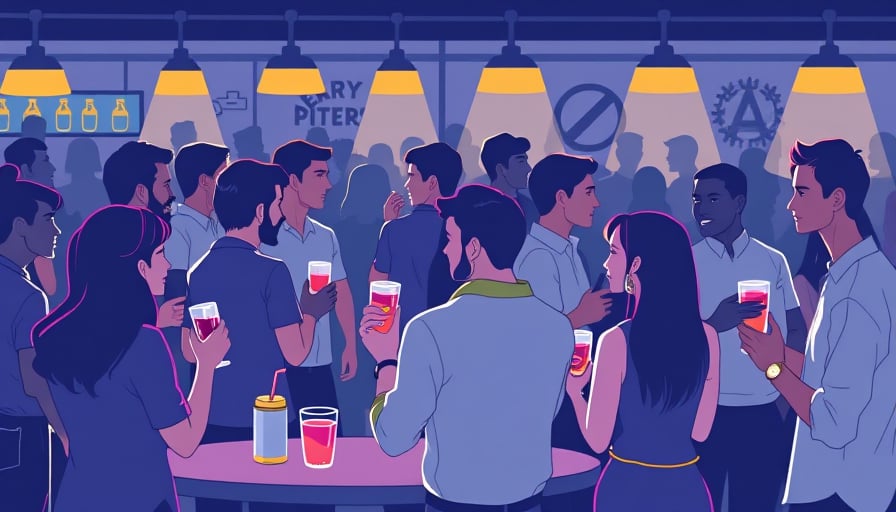
Heineken Holding NV has released the findings of a global study conducted by its non‑alcoholic beer brand, Heineken 0.0. The research, carried out in partnership with a well‑known author on sobriety, surveyed consumers in several countries and revealed that attitudes toward abstaining from alcohol at festive events are shifting. A majority of respondents expressed confidence that declining a drink will no longer attract judgment. The study also noted that the question of why someone chooses not to drink has become increasingly awkward and less socially acceptable.
Strategic Editorial Perspective
From a corporate news standpoint, this study underscores three key trends that are reshaping the consumer goods landscape:
Consumer Goods Trends Non‑alcoholic alternatives are no longer niche products but are gaining mainstream traction. The data indicates a generational shift: Gen Z and Millennials prioritize wellness, but are also socially conscious. This aligns with the broader movement toward “mindful consumption,” where consumers seek healthier lifestyle choices without sacrificing social rituals.
Retail Innovation The shift in social norms opens the door for omnichannel retail strategies. Brands that can deliver non‑alcoholic options seamlessly across physical stores, e‑commerce, and pop‑up experiences will capture the growing “social‑drinker” segment. For example, experiential kiosks in airports and festivals that showcase Heineken 0.0 alongside traditional offerings can reinforce the brand’s positioning as a mainstream choice for social occasions.
Brand Positioning Heineken’s messaging has evolved from “alternative” to “mainstream.” This re‑positioning aligns with the perception that abstaining is no longer a deviation from the norm. By framing non‑alcoholic beer as a socially acceptable, high‑quality option, the brand taps into both health‑conscious consumers and those who simply prefer a lower‑calorie beverage. The study’s findings reinforce this strategy, indicating reduced stigma around choosing 0.0.
Market Data Synthesis
| Consumer Category | Key Findings | Cross‑Sector Pattern |
|---|---|---|
| Alcoholic Beverage | Declining consumption in the U.S. (2% YoY) | Shift toward lower‑calorie, lower‑alcohol alternatives. |
| Non‑Alcoholic Drinks | 15% annual growth in Europe | Increased mainstream acceptance. |
| Retail Channels | Online sales of beverage products up 20% | Rising omnichannel demand. |
| Health & Wellness | 30% of millennials cite health as a purchase driver | Cross‑industry move toward functional ingredients. |
The table demonstrates that the rise of non‑alcoholic options is a sector‑wide trend, not limited to beverages. Health‑driven consumer behaviors are influencing packaging, marketing, and distribution strategies across the board.
Omnichannel Retail Strategies
Digital Integration • Personalized recommendations via AI on e‑commerce platforms. • Mobile ordering with in‑store pickup for “grab‑and‑go” non‑alcoholic beer.
Experiential Touchpoints • Branded pop‑ups at music festivals featuring Heineken 0.0 tasting stations. • Augmented reality experiences that educate consumers on the brewing process and health benefits.
Supply Chain Adaptations • Just‑in‑time inventory for flagship 0.0 flavors to reduce waste. • Collaboration with logistics partners to ensure rapid distribution to high‑footfall venues.
Consumer Behavior Shifts
- Social Acceptance: The study confirms that the social stigma around non‑alcoholic beverages is waning. This shift allows brands to market 0.0 products as an equal choice rather than an alternative.
- Health Consciousness: A growing segment of consumers prefers low‑calorie, low‑sugar options. Non‑alcoholic beers satisfy this demand while maintaining the traditional beer experience.
- Experience‑Driven Purchase: Consumers increasingly value the experiential aspect of purchasing. Brands that can create immersive, socially engaging moments will retain customer loyalty.
Supply Chain Innovations
- Sustainability Focus: Heineken has pledged to reduce the carbon footprint of its 0.0 production by 30% over five years. This aligns with global ESG expectations.
- Agile Manufacturing: Shorter production cycles for non‑alcoholic variants allow rapid response to seasonal demand spikes.
- Data‑Driven Logistics: Real‑time inventory dashboards help minimize stockouts in both brick‑and‑mortar and online channels.
Connecting Short‑Term Movements to Long‑Term Transformation
Short‑term market movements—such as the immediate spike in 0.0 sales during summer festivals—are indicative of a deeper, long‑term industry transformation. The convergence of health consciousness, digital convenience, and evolving social norms is reshaping the beverage industry from the bottom up. Brands that capitalize on omnichannel delivery, supply chain agility, and re‑defined brand positioning will not only capture current market share but also shape the trajectory of consumer goods for the next decade.
In summary, Heineken’s global study on non‑alcoholic beer is more than a marketing win; it reflects a pivotal shift in how consumers interact with social rituals. By aligning product innovation with consumer expectations and supply‑chain resilience, Heineken positions itself at the forefront of an industry in flux, poised for sustainable long‑term growth.