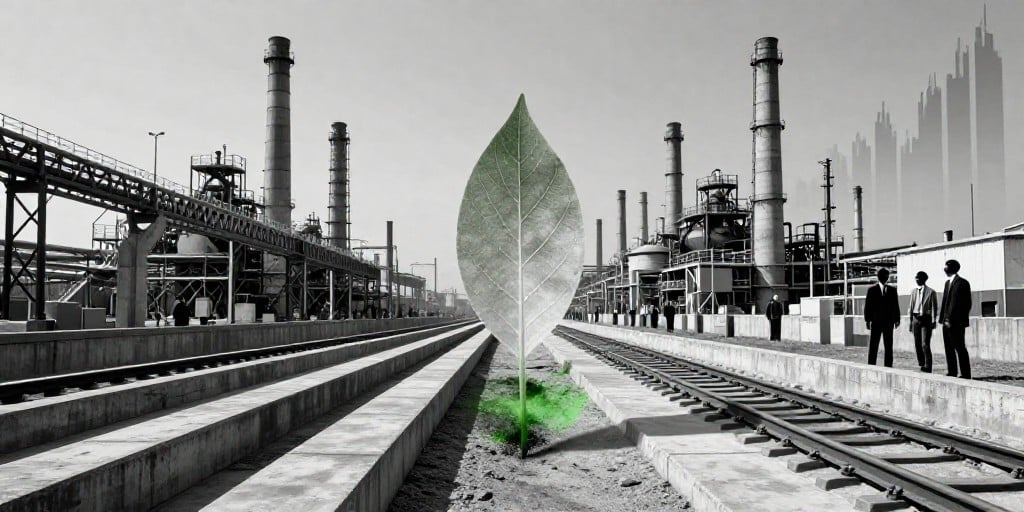
Heidelberg Materials AG Prepares for Third‑Quarter Disclosure Amid Intensifying Market Signals
Heidelberg Materials AG is scheduled to publish its third‑quarter trading update on Wednesday afternoon, joining a cohort of European companies that will unveil earnings that day. The company’s announcement arrives in a market environment that has already been punctuated by significant disclosures from Fresenius, Basler, and BMW, and against a backdrop of macro‑economic data that may influence investor sentiment toward industrial materials.
1. Contextualising the Release
The timing of Heidelberg’s results is noteworthy. While the company’s financials have not yet been released, analysts will likely scrutinise performance relative to the same period last year and to the first two quarters of the current fiscal year. The emphasis will be on revenue, gross margin, and earnings‑before‑interest‑taxes‑depreciation‑and‑amortisation (EBITDA) growth, as these metrics provide a clear window into operational efficiency and pricing power. Historically, Heidelberg has shown a capacity to maintain margin discipline even in periods of volatile commodity costs—a factor that will be examined closely in this quarter’s data.
2. Macro‑Economic Indicators and Their Significance
German purchasing managers indices (PMIs) and euro‑zone consumer price forecasts have been highlighted for the week. The latest PMI reading indicates a modest uptick in manufacturing activity, suggesting that demand for construction and industrial materials remains steady. However, inflationary pressures, as reflected in the consumer price forecasts, continue to loom over the sector. Analysts will investigate whether Heidelberg’s pricing strategy can sustain profitability amid rising input costs, and whether any hedging mechanisms are in place to mitigate exposure to volatile raw‑material prices.
3. Regulatory Filing and Short‑Sale Dynamics
A filing in the Bundesanzeiger database reports that a short‑sale position in Heidelberg’s shares had increased to 0.5 % of the issued capital as of September. While this figure may appear modest, the presence of a short‑sale indicates that institutional investors are actively monitoring the stock. Short sellers typically target perceived overvaluation or anticipate a downturn in earnings. The analyst community will need to assess whether this short position signals a broader market skepticism about Heidelberg’s ability to translate its operational performance into robust shareholder returns, or if it reflects a more nuanced view of sector‑specific risks such as tightening environmental regulations.
4. Underlying Business Fundamentals
Heidelberg operates in a market dominated by a handful of global players, yet its regional focus on European construction and infrastructure projects provides a competitive edge. A key trend that often escapes mainstream coverage is the increasing adoption of sustainable building materials. Heidelberg’s product portfolio includes a growing proportion of low‑carbon cements and recycled aggregate solutions, aligning with the European Union’s Green Deal mandates. Financial analysis of the company’s investment in research and development, as well as its capital expenditure on greener production lines, will reveal whether Heidelberg is positioning itself to benefit from forthcoming regulatory incentives.
Competitive dynamics are also shifting as emerging economies invest heavily in infrastructure to support digital and green transitions. Heidelberg’s exposure to these markets, both direct and indirect, could offer new growth vectors. The article will probe the company’s strategic alliances and supply‑chain resilience, especially in light of ongoing disruptions caused by geopolitical tensions and supply‑chain bottlenecks.
5. Potential Risks and Opportunities
Risks
- Commodity Price Volatility: The cost of limestone, coal, and natural gas can swing significantly, impacting margins if hedging strategies are insufficient.
- Regulatory Uncertainty: New EU directives on carbon intensity could impose additional compliance costs, potentially compressing profitability.
- Short‑Sale Pressure: While currently modest, a rising short‑sale position may foreshadow broader market skepticism, particularly if earnings miss expectations.
Opportunities
- Sustainability Premium: Heidelberg’s investment in low‑carbon products may allow it to charge a premium in markets that increasingly demand green building solutions.
- Infrastructure Investment: European public‑private partnerships earmarked for climate‑friendly construction could boost demand for Heidelberg’s offerings.
- Cost‑Efficiency Initiatives: Ongoing plant modernisation projects and digitalisation of production processes may yield measurable cost savings, enhancing competitive positioning.
6. Conclusion
Heidelberg Materials AG’s forthcoming third‑quarter report will be a critical barometer for the industrial materials sector. By analysing the company’s financials alongside macro‑economic signals and short‑sale activity, market participants will be able to gauge whether Heidelberg’s performance aligns with broader industry trends or diverges in ways that could redefine risk and return expectations. The investigative lens applied here—examining underlying fundamentals, regulatory impacts, and competitive dynamics—will help uncover nuances that traditional earnings analyses may overlook, thereby providing a more comprehensive view of Heidelberg’s strategic trajectory.