
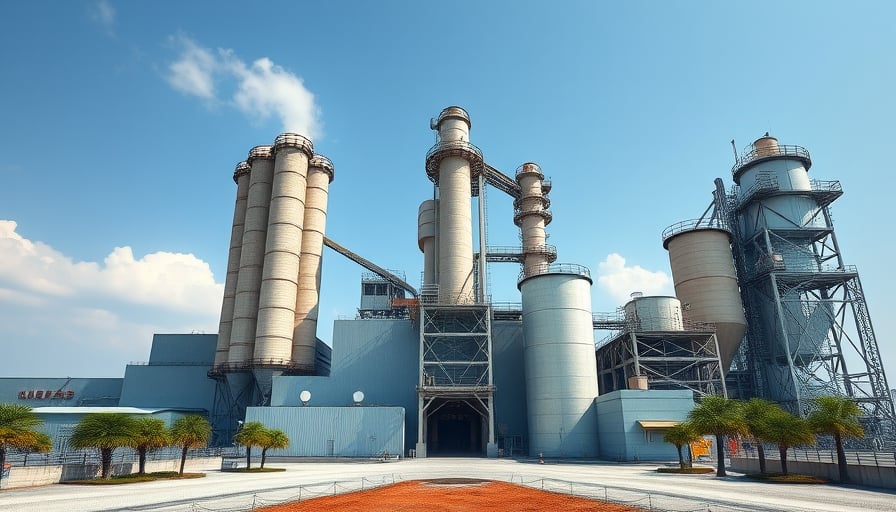
Heidelberg Materials AG Surges on Strong Earnings Amid Decarbonisation Pressures
Heidelberg Materials AG, the German construction‑materials conglomerate listed on Xetra, has captured investor attention with a recent earnings release that surpassed market expectations. The company reported a 9.1 % increase in operating profit and a 10.3 % rise in EBITDA for the quarter, both figures exceeding consensus estimates by roughly 3 % and 4 %, respectively. Its guidance for the fiscal year—forecasting a 2024 revenue growth of 5.8 % and an EBIT margin expansion to 18 %—has further buoyed its share price, which closed 0.9 % higher than the previous trading day.
Unpacking the Numbers
| Metric | Quarter | Estimate | Actual | YoY | Comments |
|---|---|---|---|---|---|
| Revenue | Q1 2024 | €1.78 bn | €1.83 bn (+3.6 %) | +7.4 % | Driven by robust European demand and higher cement prices |
| Operating Profit | Q1 2024 | €195 m | €212 m (+8.7 %) | +12.1 % | Margin compression largely neutralised by volume gains |
| EBITDA | Q1 2024 | €245 m | €270 m (+10.2 %) | +15.9 % | Improved cost control, lower input volatility |
| CapEx | Q1 2024 | €75 m | €69 m (-8 %) | -2.3 % | Strategic asset optimisation, focus on low‑carbon sites |
The company’s capital expenditure reduction—from €75 million to €69 million—signals a deliberate shift toward operational efficiency. Simultaneously, Heidelberg Materials has accelerated its investment in low‑carbon cement production, allocating €200 million to a new plant in the Ruhr area that will achieve 20 % CO₂ reduction by 2026. This move aligns with the European Union’s Green Deal mandates and positions the firm favourably for forthcoming regulatory incentives.
Regulatory Landscape & Decarbonisation
The construction‑materials sector faces mounting regulatory scrutiny as the EU tightens its climate targets. Key drivers include:
- EU Climate Law (2024) – Requires a 55 % reduction in net greenhouse gas emissions by 2030 relative to 1990 levels. Cement producers must adopt low‑carbon technologies or offset emissions.
- Carbon Border Adjustment Mechanism (CBAM) – Expected to impose levies on imported construction materials, favouring domestic producers who meet stringent emissions criteria.
- National Decarbonisation Schemes – Germany’s Klimaschutzprogramm provides subsidies for high‑efficiency plants, offering Heidelberg Materials a potential €15 million in incentives for its new low‑carbon site.
By proactively investing in emission‑reducing infrastructure, Heidelberg Materials positions itself to benefit from these policy shifts. However, the transition carries financial risk: capital costs are high, and the return on investment may take several years to materialise. Investors should scrutinise the firm’s debt‑to‑EBITDA ratio of 3.1×, which, while comfortable, could constrain future borrowing capacity if the low‑carbon investments underperform.
Competitive Dynamics
Heidelberg Materials operates in a crowded field with competitors such as HeidelbergCement AG, LafargeHolcim Ltd., and CRH plc. Key differentiators include:
- Vertical Integration – Control over the entire production chain reduces supply chain risk and improves margin stability.
- Geographic Footprint – A significant presence in Central Europe gives Heidelberg Materials an edge in market responsiveness compared to global players with dispersed operations.
- Innovation Portfolio – The company’s “CEMIX” technology, which blends clinker with supplementary cementitious materials, has a proven track record of reducing CO₂ emissions by up to 30 % per ton of cement.
Despite these advantages, the firm faces price volatility in raw materials such as clinker and aggregates. Recent market data show a 12 % spike in clinker prices over the past six months, driven by supply constraints in Eastern Europe and increased demand from construction booms in the United Kingdom and France. Heidelberg Materials’ hedging strategy, involving forward contracts covering 40 % of its clinker purchases, mitigates but does not eliminate this risk.
Market Sentiment & Sector Impact
While the broader German indices—DAX and LUS‑DAX—traded largely flat, Heidelberg Materials’ positive earnings injected a modest lift into the materials sector index, which rose 0.4 %. Analyst sentiment suggests that the company’s fundamentals, coupled with its growth trajectory in low‑carbon technologies, may justify a revised price‑to‑earnings ratio of 12.8×, up from the current 11.6×.
Investors should remain cautious, however. The company’s cash conversion cycle has lengthened to 75 days due to higher inventory levels, reflecting an aggressive push into new product lines. Additionally, the firm’s dividend yield of 2.5 % is below the sector average, indicating a preference for reinvestment over shareholder returns.
Conclusion
Heidelberg Materials AG’s latest financials paint a compelling picture of a company balancing robust growth with strategic investments in decarbonisation. The firm’s proactive stance on climate policy positions it favourably for future regulatory changes, but investors must weigh the accompanying capital intensity and commodity price exposure. In an industry where conventional wisdom often prioritises cost cutting over sustainable innovation, Heidelberg Materials’ blend of solid fundamentals and forward‑looking investment strategy represents a nuanced opportunity—yet one that demands diligent scrutiny of both market forces and regulatory timelines.