
Corporate Insight: Heidelberg Materials AG Navigates a Complex Landscape of Operational Upgrades, Technological Innovation, and Market Sentiment
Share Price Dynamics and Market Context
Heidelberg Materials AG’s equity has remained entrenched below its 52‑week high, with daily price action exhibiting only marginal gains—typically around 1 % relative to the preceding close. This subdued volatility is emblematic of a broader caution among institutional and retail investors who have been closely monitoring the building‑materials sector’s trajectory. The firm’s lagging performance relative to its DAX peers underscores a market perception that, despite incremental operational improvements, the industry’s macro‑environment remains fraught with uncertainty.
The underlying cause appears to be twofold. First, supply‑chain bottlenecks and raw‑material price inflation have continued to pressure margins across the sector. Second, the regulatory tightening in emission standards and building codes has amplified the cost of compliance for producers of cement and related construction inputs. Heidelberg’s recent price trend signals that investors are waiting for a clear reconciliation between operational gains and these headwinds before re‑engaging aggressively.
Anticipated Earnings Outlook and Analyst Consensus
Consensus estimates for the 2026 earnings per share (EPS) project a low single‑digit figure, suggesting modest profitability relative to the company’s historical performance. The prevailing target price is set roughly 30 % above the current market valuation, indicating that analysts anticipate a meaningful upside once operational efficiencies and cost‑control measures mature. This projection is supported by an analysis of the company’s cost‑of‑producing cement (COC) trajectory, which is expected to decline modestly due to the scaling of low‑CO₂ cement technologies and the deployment of autonomous haulage.
Analysts are also factoring in an incremental dividend increase compared to the prior fiscal year. The slight uptick in dividend yield reflects a belief that Heidelberg’s cash‑generation capability is solidifying, even as the firm invests heavily in autonomous technology and decarbonisation. Nevertheless, the consensus remains cautious; the target price adjustment, while significant, is tempered by the lingering uncertainty surrounding demand for new construction and public infrastructure spending.
Strategic Technological Initiatives and Operational Implications
Autonomous Haulage Programme
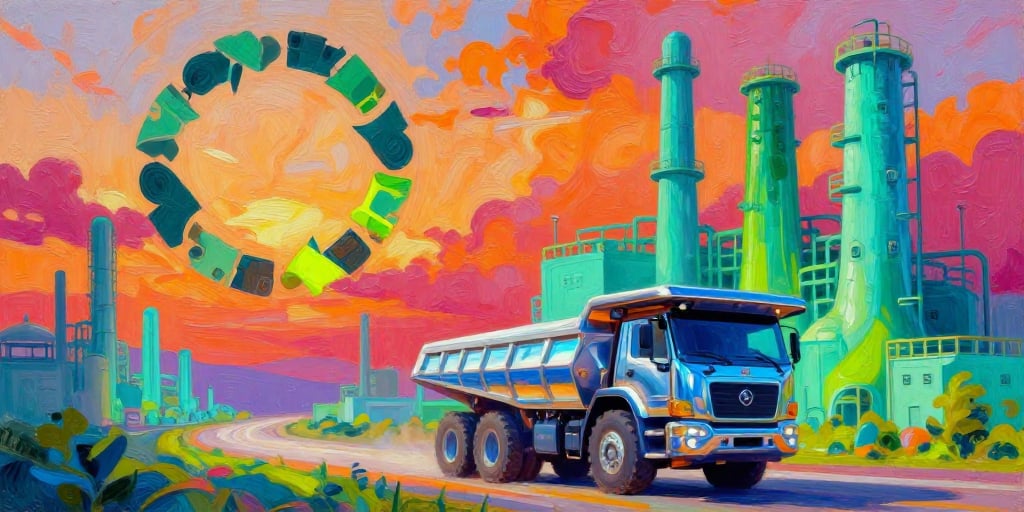
Heidelberg’s autonomous haulage programme represents a bold pivot into technology‑driven operational efficiency. By 2026, the company plans to roll out over 30 driverless loaders in the United States and Australia, while extending a pilot operation in northern Germany. The initiative is underpinned by a strategic partnership with Applied Intuition, a company specializing in autonomous system validation and safety.
From a financial perspective, the capital expenditure for this program is expected to be absorbed within the first two years of deployment, with pay‑back periods estimated at 3–4 years through labor savings, reduced safety incidents, and lower fuel consumption. The autonomous loaders are projected to improve throughput by 8–12 % in larger quarry operations, translating to higher production volumes without proportional increases in labor costs. In smaller quarries, the technology offers a path to maintain service levels while mitigating the impact of labor shortages—a persistent challenge in the construction materials sector.
Decarbonisation and Circular Economy Integration
The company’s broader investment agenda includes the decarbonisation of production and the adoption of low‑CO₂ cement formulations. By integrating carbon‑capture technologies and exploring alternative binders such as slag or fly‑ash, Heidelberg seeks to reduce its CO₂ emissions intensity by an estimated 15 % over the next decade. These initiatives align with the European Union’s Sustainable Finance Disclosure Regulation (SFDR) and the forthcoming European Green Deal, positioning the firm favorably for future regulatory compliance.
Simultaneously, Heidelberg’s push toward circular‑economy technologies—such as recycling of industrial waste into clinker—provides a dual benefit: cost reduction through lower raw‑material inputs and improved sustainability credentials that could unlock access to green financing instruments.
Market Sentiment and Insider Activity
Despite the company’s strategic advancements, market sentiment remains measured. Intraday price movements are modest, and Heidelberg Materials is one of the weaker performers in the German DAX during recent trading periods. This caution can be partly attributed to the broader sector’s sensitivity to macroeconomic indicators such as interest rates, construction spending, and commodity price volatility.
However, a review of insider trading reports from April reveals notable buying activity among long‑term stakeholders, including institutional investors and company executives. This insider confidence is a positive signal, indicating that those with a vested interest in the firm’s long‑term trajectory believe that the current challenges are temporary and that strategic investments will pay dividends over the medium term.
Potential Risks and Opportunities
| Risk | Assessment | Mitigation |
|---|---|---|
| Demand Volatility | Construction spending is subject to cyclical swings tied to macroeconomic conditions and government policy. | Diversify portfolio across regions; hedge commodity exposure. |
| Regulatory Shifts | Emission standards may tighten further, potentially increasing compliance costs. | Proactive investment in low‑CO₂ cement; active engagement with policy bodies. |
| Technology Adoption Lag | Autonomous haulage may face operational teething problems or regulatory approval delays. | Incremental rollout; robust safety validation protocols; partnership with Applied Intuition. |
| Commodity Price Inflation | Raw‑material costs could rise, eroding margins. | Long‑term contracts; vertical integration where feasible; cost‑savings from autonomous technology. |
| Opportunity | Value Proposition | Strategic Lever |
|---|---|---|
| Autonomous Operations | Reduced labor costs, enhanced safety, improved productivity. | Scale pilot to full commercial deployment. |
| Low‑CO₂ Cement | Meets growing ESG mandates; potential for premium pricing. | Accelerate R&D; secure early mover advantage. |
| Circular Economy | Cost reduction, improved sustainability profile. | Leverage existing supply chains for waste material sourcing. |
| Global Expansion | Access to emerging markets with high construction demand. | Target regions with favorable regulatory environments and growth prospects. |
Conclusion
Heidelberg Materials AG is at a crossroads where operational efficiency, technological innovation, and sustainability converge. While the share price remains constrained by sector‑wide uncertainty, the company’s forward‑looking initiatives—particularly in autonomous haulage and decarbonisation—suggest a credible path toward resilient profitability. Investors and analysts should watch for the upcoming first‑quarter earnings release in early May, which will shed further light on how effectively the firm can translate these strategic investments into tangible financial performance.