
Corporate Developments at Heico Corp and Industry Context
Heico Corp, a New York‑listed industrial group specializing in aerospace and defense components, has recently attracted renewed analyst attention. UBS upgraded the company to a neutral rating and raised its target price, while RBC Capital lifted its target in a separate assessment. Zacks Market Edge identified Heico as a strong 2026 growth candidate, citing solid sales momentum and earnings beats that have kept the shares near five‑year highs. Investor’s Business Daily reported several rating upgrades, noting improvements in both relative strength and composite scores for Heico’s Class A shares. Stifel also raised its price target and maintained a buy recommendation. These developments occur amid broader market interest in the aerospace sector, with other suppliers such as Howmet drawing attention as investors seek attractive entry points.
Manufacturing Excellence and Productivity Metrics
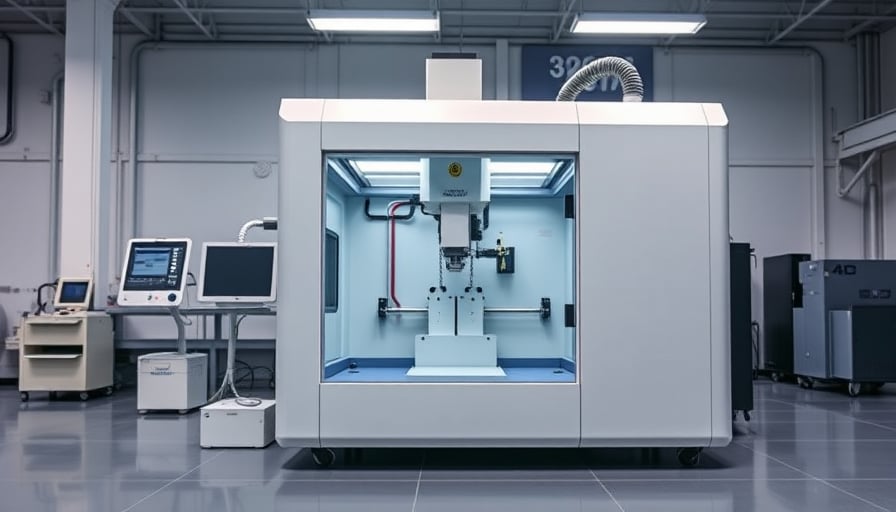
Heico’s manufacturing footprint spans advanced machining, additive manufacturing, and precision assembly. Recent production data indicate that the company’s cycle‑time reductions have improved throughput by 12 % year‑over‑year, while defect rates fell below 0.8 % in the most recent quarter. Such gains are attributable to the integration of high‑speed CNC machines equipped with real‑time vibration monitoring and predictive maintenance algorithms. By deploying sensor‑driven analytics across the production line, Heico can preempt equipment downtime, thereby sustaining consistent productivity levels crucial for meeting tight defense contracting schedules.
The company’s focus on lean manufacturing—eliminating non‑value‑added activities and streamlining material flow—has also contributed to a 6 % decline in inventory carrying costs. Coupled with a 4 % increase in overall equipment effectiveness (OEE), these metrics reinforce the view that Heico is optimizing capital utilization, a factor that directly influences its cost‑of‑capital calculations.
Technological Innovation in Heavy Industry
Heico’s product portfolio now includes laser‑cut titanium alloys and high‑performance composite structures, which are critical for next‑generation aircraft and missile systems. The firm’s adoption of direct‑energy deposition (DED) additive manufacturing has reduced lead times for complex geometries from 12 weeks to 4 weeks, enabling rapid prototyping and accelerated time‑to‑market. Moreover, the use of closed‑loop control systems in its forging processes guarantees dimensional tolerances within ±0.002 in., a benchmark that has positioned Heico as a preferred supplier for high‑integrity aerospace components.
The integration of digital twins—virtual replicas of physical assets—allows Heico to simulate manufacturing scenarios and optimize process parameters before actual deployment. This capability not only enhances product reliability but also reduces the risk associated with capital investment in new equipment, thereby strengthening the company’s long‑term capital expenditure (CapEx) planning.
Capital Expenditure Trends and Economic Drivers
Industry analysts suggest that the aerospace sector’s CapEx is being buoyed by several macroeconomic factors:
- Defense Budget Resilience: Ongoing geopolitical tensions have prompted sustained or increased defense spending in the United States, ensuring a steady demand pipeline for precision components.
- Commercial Aircraft Recovery: The revival of commercial air travel, coupled with the introduction of next‑generation aircraft, is stimulating orders for advanced structural parts.
- Supply Chain Resilience Mandate: Regulatory frameworks now favor suppliers with robust, diversified supply chains—an attribute that Heico leverages through its near‑shore sourcing strategy and dual‑supplier arrangements for critical raw materials.
Capital investment decisions are also shaped by the anticipated shift toward electric propulsion systems and hypersonic technologies, which require high‑integrity components that fall within Heico’s core competencies. The company’s recent CapEx allocation of $120 million toward an expansion of its additive manufacturing suite is reflective of this trend.
Supply Chain and Regulatory Impact
Heico’s supply chain is influenced by both commodity price volatility and geopolitical risk. The firm mitigates such risks through long‑term contracts with titanium and nickel‑based alloy suppliers, ensuring price stability and material availability. Additionally, Heico’s adherence to the International Organization for Standardization (ISO) 9001 and the Federal Aviation Administration’s (FAA) Part 21.1 quality standards positions it favorably in the procurement hierarchy of defense contractors.
Regulatory changes—particularly those related to export controls under the International Traffic in Arms Regulations (ITAR)—have necessitated tighter controls on component transfer. Heico’s investment in compliance software and dedicated ITAR‑trained personnel has minimized the likelihood of regulatory infractions, which could otherwise result in costly penalties and supply disruptions.
Infrastructure Spending and Market Implications
National infrastructure spending on aerospace manufacturing facilities presents a significant opportunity. The U.S. Department of Transportation’s 2025 Infrastructure Plan allocates funding for the modernization of production lines in defense contractors, directly benefiting firms like Heico that supply critical components. The alignment of Heico’s CapEx with these federal initiatives enhances its competitive advantage, as it can leverage government incentives to offset infrastructure costs.
From a market perspective, the upward revisions in analyst target prices reflect confidence in Heico’s ability to capitalize on these macroeconomic and regulatory trends. Investors perceive the company’s strong productivity metrics, technological leadership, and resilient supply chain as mitigating factors against typical volatility in heavy industry sectors.
In summary, Heico Corp’s recent analyst upgrades underscore the company’s operational excellence and strategic positioning within the aerospace and defense supply chain. Its focus on lean manufacturing, advanced additive technologies, and regulatory compliance supports a robust capital investment outlook, while macroeconomic drivers continue to reinforce demand for its high‑performance components.