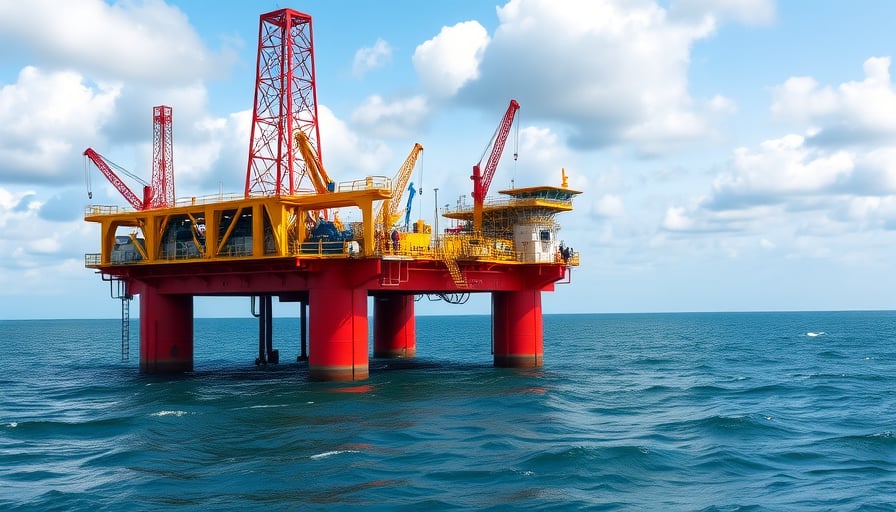
Corporate Analysis of Halliburton Co. in the Context of Energy Market Dynamics
Halliburton Co. continues to be a key player in the energy equipment and services sector, maintaining a presence on the New York Stock Exchange with a valuation measured in the billions of dollars. Recent market data indicate that the company’s share price is trading near its annual high after a notable climb from the lowest point recorded earlier in the year. The firm’s earnings‑to‑price ratio suggests a moderate valuation compared with its peers.
Supply‑Demand Fundamentals in Oil and Gas
The global oil and gas markets remain driven by a balance between constrained supply and persistent demand. Production levels in the United States, particularly from shale plays, have plateaued after a period of rapid growth, creating a tight supply environment that supports higher commodity prices. Simultaneously, demand in emerging economies continues to rise, especially for petrochemical feedstock and power generation, underpinning sustained activity in exploration and production (E&P) services. Halliburton’s integrated solutions—spanning drilling, completion, and production optimization—align closely with these sector needs, reinforcing the company’s revenue outlook.
Technological Innovations in Production and Storage
Halliburton has invested heavily in digital twins and data‑analytics platforms that enhance reservoir performance and reduce operational costs. The firm’s deployment of machine‑learning algorithms to predict equipment failures and optimize drilling schedules has been cited as a competitive advantage. In the broader market, advancements in carbon capture and storage (CCS) technologies are reshaping the traditional energy landscape. Halliburton’s participation in CCS projects—particularly through its pipeline and compression services—positions the company to benefit from the growing demand for low‑carbon infrastructure.
Regulatory Landscape and Its Implications
Regulatory developments have a dual impact on Halliburton and the wider energy sector. In the United States, the Biden administration’s emphasis on reducing greenhouse‑gas emissions is encouraging investment in renewable energy projects, yet it also maintains support for domestic oil and gas production to ensure energy security. This policy mix creates a stable operating environment for Halliburton, with no imminent regulatory shifts expected to materially affect the company’s performance. Internationally, the European Union’s stringent emissions targets are prompting a shift toward renewable energy, which may gradually reduce demand for traditional drilling services but also opens opportunities for Halliburton’s transition‑related offerings.
Commodity Prices, Production Data, and Infrastructure Development
Oil prices have recovered from the lows seen during the 2020 pandemic, hovering in the $70‑$80 per barrel range as of early March 2026. Natural gas prices, meanwhile, have seen volatility due to weather‑related demand spikes and supply constraints in Europe. Halliburton’s revenue mix reflects exposure to both commodities, with a slight tilt toward services linked to natural gas production—a segment that has benefited from the shale boom’s maturation.
Infrastructure investments, such as pipeline expansions and LNG terminals, are increasing in scale. Halliburton’s experience in constructing and maintaining these assets provides a foothold in projects that are critical for both domestic supply chains and international trade. The company’s pipeline infrastructure portfolio—valued at billions of dollars—offers steady revenue streams and positions Halliburton favorably as the market evolves toward cleaner energy flows.
Short‑Term Trading Dynamics vs. Long‑Term Energy Transition Trends
On a short‑term basis, Halliburton’s share price is sensitive to crude oil price swings, drilling rig activity, and quarterly earnings reports. The recent upward trajectory in the company’s stock price reflects positive sentiment around drilling activity in the Permian Basin and favorable cost‑control measures announced in the latest earnings release.
In the long run, the energy transition toward renewables will reshape demand for Halliburton’s traditional services. However, the company’s strategic diversification—particularly in CCS, offshore wind support, and digital oilfield solutions—mitigates this risk. Analysts project a modest, stable growth trend for Halliburton over the next five years, with potential upside from increased investment in low‑carbon technologies and continued demand for energy infrastructure services.
Conclusion
Halliburton Co. maintains a solid footing within the energy equipment and services sector, backed by robust supply‑demand fundamentals, technological innovation, and a stable regulatory environment. While the company’s short‑term performance is closely tied to commodity price movements and drilling activity, its long‑term prospects are reinforced by strategic investments in digital and low‑carbon solutions. Investors observing the company’s trajectory can expect a stable, albeit modest, growth profile that reflects the evolving dynamics of the global energy market.