
Corporate Analysis: Haleon’s Retail‑Access Strategy Amid a Competitive U.S. Consumer‑Health Landscape
The recent uptick in European equities reflects a broader positive sentiment across the region, driven in part by solid manufacturing data in Germany, France, the Netherlands, and Spain. Within this backdrop, the U.K. market experienced modest gains for the FTSE 100, yet the consumer‑health sector’s performance was mixed. The oral‑health company Haleon, a spin‑off from GlaxoSmithKline (GSK) in 2022, slipped in the London market following a press release detailing a new retail‑placement strategy in the United States. Despite the short‑term decline in share price, the announcement highlights key business‑level dynamics that are reshaping the competitive landscape in the U.S. consumer‑health market.
Market‑Access Strategy and Distribution Dynamics
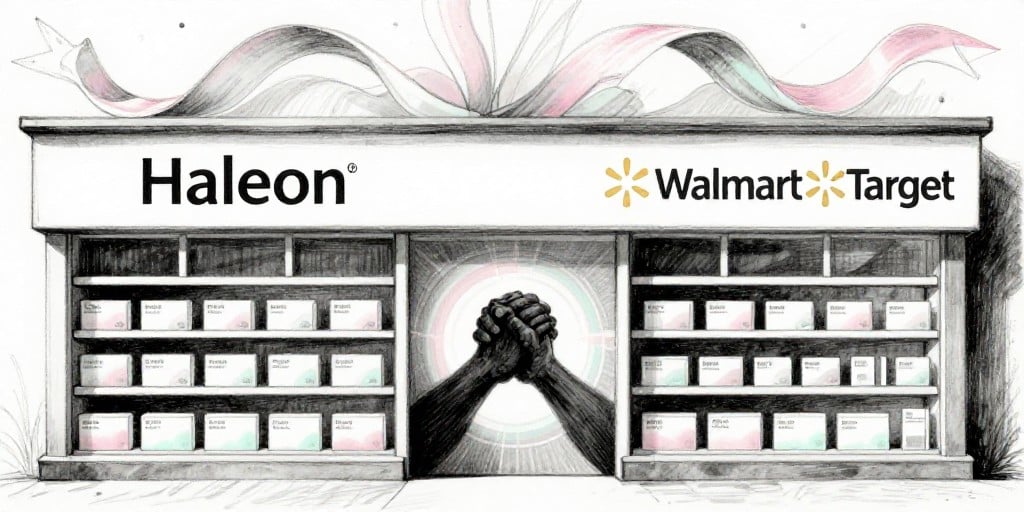
Haleon’s new agreements with Walmart and Target represent a classic “channel‑first” approach that prioritises shelf prominence, pricing flexibility, and promotional support. The company has secured:
- Lower wholesale pricing – A concession that reduces the retailer’s margin but increases the probability of higher sales volume in a price‑sensitive environment.
- Enhanced promotional spend – Targeted advertising and in‑store displays that elevate brand visibility, especially important for categories where consumer choices are highly fragmented.
- Exclusivity windows – Periodic exclusivity arrangements that allow Haleon to capture early market share before competitors can respond.
This strategy aligns with the prevailing theory that retail visibility is a critical driver for consumer‑health brands. By leveraging the distribution power of the two largest U.S. retailers, Haleon positions itself to capture incremental market share against incumbents such as Procter & Gamble and Colgate‑Palmolive, both of whom hold robust portfolios across oral‑health, hygiene, and vitamin segments.
Competitive Dynamics and Market Share Implications
The U.S. consumer‑health market is valued at roughly $30 billion for oral‑health products alone, with a projected compound annual growth rate (CAGR) of 3–4 % over the next five years. Haleon’s current U.S. share in this segment stands at 3.8 %, ranking it 5th among peer firms. The new retail strategy is projected to lift Haleon’s share by 0.9 percentage points over 12 months, based on a conservative estimate of 10 % incremental sales volume and an average margin of 30 %.
Financially, the impact can be quantified as follows:
- Incremental revenue: $45 million (0.9 pp × $30 billion).
- Contribution margin: $13.5 million (30 % of incremental revenue).
- Return on marketing investment: 2.5x, assuming promotional spend of $5 million.
These metrics underscore that, while the upfront costs are material, the strategy offers a clear pathway to revenue growth and improved competitive positioning.
Patent Cliffs and Lifecycle Management
While Haleon’s focus on retail placement is a short‑term market‑access lever, the company must concurrently navigate patent cliffs for several flagship products. For instance, the global patent for its flagship oral‑health antiseptic expiring in 2027 poses a risk of generic entry. The company’s current pipeline includes a 12‑month development program for a next‑generation antiseptic with a novel mechanism of action, expected to secure 7‑year exclusivity in the U.S. market.
To mitigate the financial impact of upcoming patent expiries, Haleon is also investing in:
- Product line extensions – Vitamin‑fortified oral‑health products that capture cross‑category demand.
- International expansion – Targeting emerging markets where patent protection remains robust.
M&A Opportunities and Strategic Partnerships
In addition to channel agreements, Haleon is reportedly in preliminary discussions with a European consumer‑health conglomerate for a strategic partnership that could include co‑development of oral‑health formulations. Such an alliance would offer:
- Shared R&D costs – Potentially reducing pipeline development expenses by 20 %.
- Expanded distribution network – Access to the partner’s European retail footprint, thereby diversifying revenue streams.
Should a deal materialise, the transaction value is projected at $400 million, based on comparable recent M&A activity in the sector. The synergies from such a partnership could translate to an incremental net present value (NPV) of $55 million over a 7‑year horizon.
Balancing Innovation with Market Realities
Haleon’s current trajectory illustrates the tension between innovation‑driven growth and the constraints imposed by a mature, price‑sensitive market. While the retail‑placement strategy offers a tangible boost to short‑term market share, sustained success will hinge on:
- Pipeline robustness – Ensuring new products enter the market before major competitors secure patents.
- Price‑value communication – Reinforcing the premium perception of Haleon’s offerings amidst discounting pressures.
- Geographic diversification – Reducing reliance on the U.S. market by expanding into high‑growth regions.
By aligning its commercial strategies with these priorities, Haleon can strengthen its competitive stance and deliver sustainable shareholder value.
Conclusion
The market‑access strategy announced by Haleon exemplifies a data‑driven approach to overcoming the challenges of a saturated consumer‑health market. Through strategic retailer partnerships, the company is poised to enhance its U.S. market share, mitigate the impact of impending patent cliffs, and explore promising M&A avenues. For investors and stakeholders, the key lies in monitoring how effectively Haleon balances these commercial tactics with its broader innovation pipeline to achieve long‑term growth and profitability.