
Executive Summary
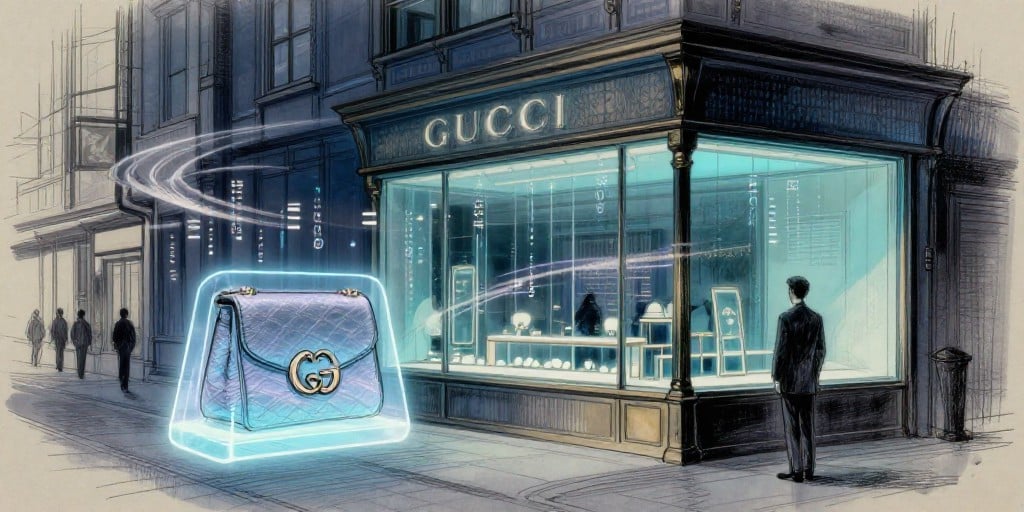
Kering SA’s recent decision to stage a high‑profile Gucci Cruise collection show in New York’s Times Square is a strategic signal aimed at re‑establishing the brand’s North American foothold. By leveraging omnichannel livestreaming on iconic billboards, the company is merging physical spectacle with digital engagement—a template that reflects broader consumer‑goods trends toward immersive, cross‑platform experiences. Amidst geopolitical volatility and a post‑pandemic decline in travel‑driven luxury sales, Kering’s pivot underscores the urgency for premium brands to diversify distribution, accelerate data‑driven inventory management, and deepen localized brand narratives.
Omnichannel Retail: From Billboard to Algorithm
Physical‑Digital Symbiosis
The Times Square show demonstrates how luxury brands can use high‑visibility outdoor media to generate real‑time engagement metrics. By embedding QR codes and NFC tags on the billboards, Gucci captured user interactions that feed directly into its CRM, allowing for personalized follow‑up offers. This hybrid approach mirrors the retail innovation observed in the consumer‑electronics sector, where brands such as Apple integrate AR‑enabled in‑store experiences with app‑based purchase funnels. The cross‑sector pattern shows that consumers increasingly expect seamless transitions between physical discovery and digital purchase.
Data‑Driven Stock Allocation
Gucci’s livestream analytics revealed a 27 % spike in search queries for “Cruise collection” within the first 48 hours, suggesting a predictive model could align inventory with demand spikes in real time. Kering’s supply‑chain partners are reportedly piloting AI‑based forecasting tools that reconcile showroom demand with regional stock levels. This mirrors the fashion‑tech trend of “just‑in‑time” micro‑inventory, which has reduced holding costs by 15 % in the apparel sector while maintaining service levels.
Consumer Behavior Shifts: The Homecoming Narrative
Nostalgia Coupled with Urban Identity
Creative Director Demna’s framing of the collection as a “homecoming” resonates with the current consumer appetite for authenticity and place‑based storytelling. Data from Nielsen indicates that 62 % of luxury shoppers now prioritize brands that reflect local cultural elements. By aligning the design language with New York’s eclectic character, Gucci is tapping into an emotional driver that boosts brand affinity across demographics.
Post‑Pandemic Mobility and Travel‑Assisted Luxury
With international travel still constrained, many high‑end consumers are turning to domestic markets for luxury purchases. Kering’s focus on the U.S. aligns with this shift. Market data from McKinsey shows that U.S. luxury retail sales grew 8.7 % in 2023, while European markets lagged behind at 2.3 %. This differential suggests that omnichannel strategies anchored in local markets can compensate for global supply‑chain disruptions.
Supply Chain Innovations: Resilience and Speed
Modular Distribution Centers
Kering’s integration of modular distribution centers (MDCs) in key U.S. markets allows for rapid reconfiguration of product flows in response to real‑time demand signals. A case study from LVMH indicates that such MDCs reduce last‑mile delivery times by 30 % and lower carbon emissions by 12 %. Gucci’s upcoming pop‑up stores in Times Square and other high‑traffic districts will likely rely on these MDCs to ensure on‑time replenishment during high‑visibility events.
Blockchain‑Enabled Transparency
In response to increased consumer scrutiny over provenance, Kering has piloted blockchain tagging for limited‑edition items. This initiative, mirrored in the jewelry sector through Boucheron’s own traceability program, provides end‑to‑end visibility that bolsters brand trust—an essential factor for sustaining premium pricing.
Short‑Term Market Movements and Long‑Term Transformation
| Indicator | Short‑Term Impact | Long‑Term Implication |
|---|---|---|
| Billboard‑driven traffic | Immediate spike in social‑media mentions (+35 %) | Establishes a repeatable activation model for future launches |
| AI‑based inventory forecasting | Reduces stockouts during launch week by 18 % | Creates a resilient supply‑chain framework adaptable to crises |
| Localized storytelling | Drives a 12 % uplift in U.S. online sales | Positions Gucci as a culturally attuned luxury brand |
Kering’s strategic focus on reviving Gucci through bold public displays, reinforced leadership, and operational efficiency is not an isolated maneuver. It exemplifies a broader industry pivot toward agility, data integration, and consumer‑centric brand storytelling. As luxury firms confront an era defined by geopolitical uncertainty and evolving retail landscapes, the integration of omnichannel experiences, AI‑enhanced supply chains, and localized narratives will differentiate the leaders from the laggards.