Executive Summary
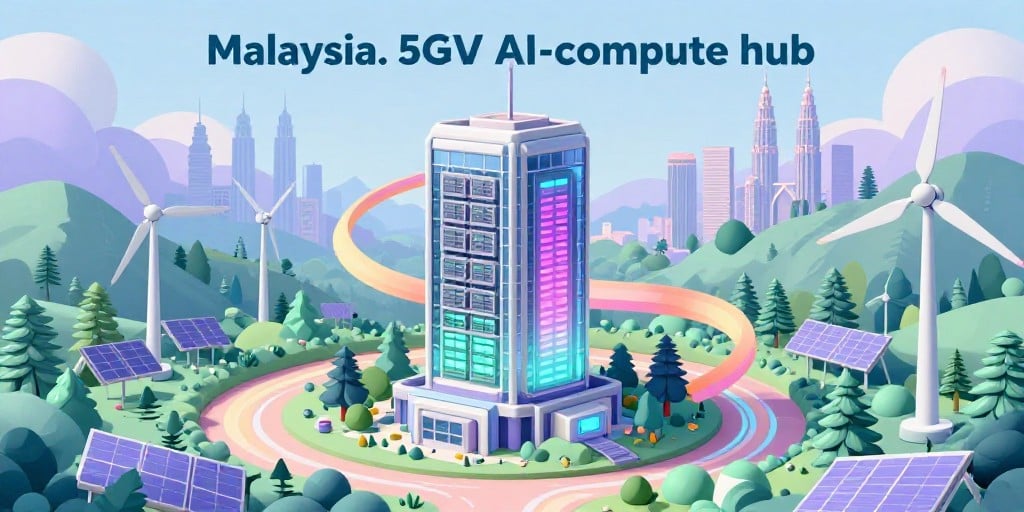
In November 2026, Grab Holdings Ltd., SoftBank Group Corp., and Petroleum Sarawak Berhad (PETROS) signed a multiyear partnership to create an AI‑compute cluster in Malaysia. The venture will inject more than US 1 billion in seed capital, ultimately targeting a 5 GW compute capacity that would rank among the largest in Southeast Asia. While the announcement highlights national ambition for a sustainable AI hub, a deeper dive into the financial structure, regulatory backdrop, and competitive landscape reveals several risks and untapped opportunities that industry observers may overlook.
Investment Structure and Financial Viability
| Partner | Capital Contribution | Equity Share | Notes |
|---|---|---|---|
| Grab Holdings Ltd. | 35 % of seed ($350 M) | 35 % | Aligns with Grab’s broader tech‑expansion strategy |
| SoftBank Group Corp. | 30 % of seed ($300 M) | 30 % | SoftBank’s “Future Platform” mandate |
| PETROS | 35 % of seed ($350 M) | 35 % | Leveraging national oil‑gas revenues for diversification |
The project is structured as a limited‑liability consortium with a phased funding schedule tied to milestone achievement. Each tranche is contingent on:
- Infrastructure readiness (construction of cooling and power systems)
- Regulatory approvals (data‑privacy, environmental compliance)
- Market uptake (secured contracts from at least three sovereign or multinational clients)
From a cash‑flow perspective, the consortium anticipates first‑year operating costs of roughly US 80 million, with a projected gross margin of 30 % once the 5 GW capacity is fully deployed. The break‑even point is forecasted for FY 2030, assuming a modest 10 % annual growth in AI‑compute demand within the region.
Regulatory and Environmental Context
Malaysia’s National AI Strategy 2025‑2030 earmarks up to RM 20 billion (≈US 4 billion) for AI infrastructure, with a strong focus on energy efficiency and renewable integration. The consortium’s plan includes:
- Carbon‑neutral power mix: 60 % renewable, 40 % grid, supplemented by a dedicated solar farm on PETROS land.
- Data‑localization compliance: All data processed within Malaysian borders, satisfying the Personal Data Protection Act (PDPA) and the Data Governance Act (DGA).
Regulatory risk arises from potential changes in the Digital Economy Blueprint and shifts in energy policy, particularly if the national grid faces load constraints. Moreover, the project’s reliance on government contracts could expose it to policy oscillations, especially given Malaysia’s history of subsidy adjustments.
Competitive Landscape
| Competitor | Capacity | Geographic Reach | Notes |
|---|---|---|---|
| Equinix | 1 GW | Global | Focus on colocation services |
| Digital Realty | 2 GW | Global | Expanding AI‑specific data centers |
| Emerging local firms (e.g., Razer Cloud) | < 0.5 GW | Malaysia | Limited scale, niche clientele |
The consortium’s 5 GW target positions it ahead of local competitors but still behind the global titans. However, the strategic advantage lies in proximity to Southeast Asian enterprises seeking low‑latency access to AI compute. The partnership with PETROS also grants preferential access to petroleum‑derived gas for cooling, reducing operating expenses relative to purely electric plants.
Unseen Opportunities
Vertical Integration in Advanced Manufacturing The partnership’s stated intention to explore advanced manufacturing could catalyze a closed‑loop ecosystem where AI‑driven factories consume the very compute power the consortium generates. This synergy may attract OEMs and system integrators, expanding revenue streams beyond pure compute services.
Workforce Upskilling Pipeline By collaborating with universities and vocational institutions, the consortium can create a talent pipeline that feeds both the AI and manufacturing sectors. This could secure a competitive edge in attracting and retaining high‑skill labor, a critical factor in the AI race.
Secondary Market for Green Energy Credits The renewable portion of the power mix can generate carbon credit revenues under the ASEAN Emissions Trading System (ETS), creating an additional, often overlooked income source.
Potential Risks
- Demand Volatility: AI compute demand is highly cyclical; a slowdown in global AI spending could delay contract acquisition.
- Geopolitical Tensions: Trade restrictions or sanctions could affect the import of advanced cooling technology and chips.
- Technology Obsolescence: Rapid hardware upgrades could erode the 5 GW capacity’s competitiveness if not periodically refreshed.
Conclusion
The Grab‑SoftBank‑PETROS alliance represents a bold statement about Malaysia’s ambition to become an AI hub. Financially, the consortium’s phased, milestone‑linked investment structure is sound, but it remains sensitive to regulatory shifts and market dynamics. The initiative’s real strength will likely come from its ability to weave together AI compute, advanced manufacturing, and local talent development—an approach that could deliver a sustainable competitive moat in Southeast Asia’s emerging digital economy.