
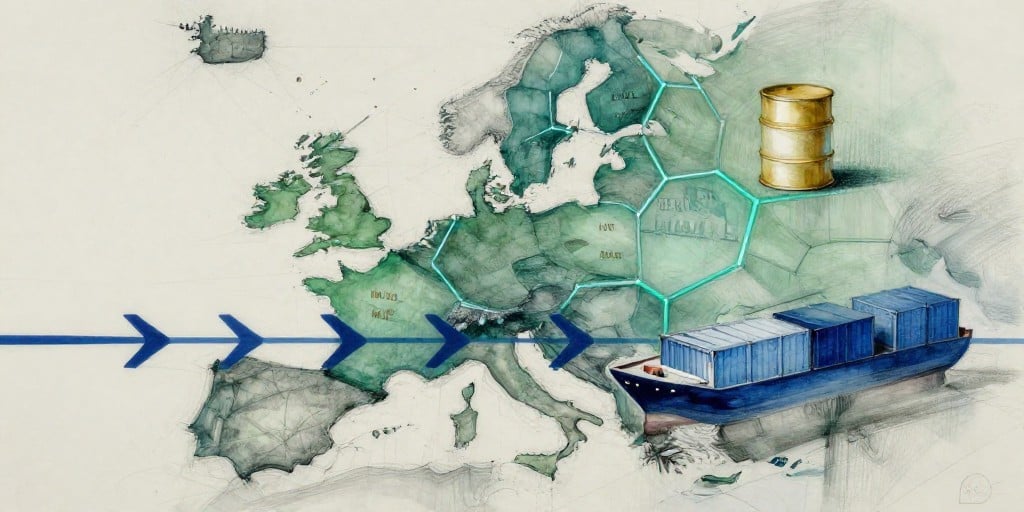
Goldman Sachs Group Inc.: Strategic Positioning Across Capital Markets, Corporate Governance, and Commodity Risk Management
Goldman Sachs Group Inc. (GSG) continues to demonstrate its influence across a spectrum of financial, technology, and commodity sectors. Recent disclosures illustrate a multi‑faceted strategy that blends equity ownership, derivative trading, and macro‑economic research, reinforcing the firm’s standing as a pivotal player in global capital markets.
1. Expansion of Voting‑Rights Holdings in European Technology and Industrial Firms
Under German securities law, GSG disclosed that it has surpassed the 3 % ownership threshold in both a leading semiconductor supplier and a major industrial conglomerate. The filings required public notification, underscoring the bank’s increasing participation in governance and strategic direction of these firms.
Market Context
- Semiconductor Supply Chain Resilience: The semiconductor industry remains a critical enabler of digital infrastructure. GSG’s stake signals confidence in sustained demand, especially as geopolitical tensions and supply‑chain disruptions push industry players to secure long‑term commitments.
- Industrial Conglomerate Outlook: The conglomerate’s diversified portfolio—spanning aerospace, automotive, and defense—offers exposure to multiple growth drivers. GSG’s influence could shape capital allocation toward high‑margin segments, potentially enhancing shareholder value.
Strategic Implications
- Voting Influence as a Competitive Lever: By crossing regulatory thresholds, GSG gains formal voting rights, enabling it to advocate for policies that align with its investment thesis. This can translate into favorable terms on future financing or partnership agreements.
- Risk Mitigation through Governance: Active governance allows the bank to monitor and mitigate operational and compliance risks, especially in industries facing rapid regulatory changes.
2. Active Equity and Derivative Participation in the U.K. Market
Disclosures under the U.K. Takeover Code detail GSG’s trading activity in a U.K. logistics firm’s shares and substantial cash‑settled derivatives positions.
Market Context
- Logistics Sector Dynamics: The logistics firm operates within a high‑growth niche, benefiting from e‑commerce expansion and supply‑chain digitization. Volatility in this sector can be amplified by macro‑economic cycles and freight rate swings.
- Derivative Usage: Cash‑settled derivatives serve as hedging instruments against market movements, allowing GSG to manage exposure without altering underlying equity positions.
Strategic Implications
- Liquidity Provision and Market Making: By actively buying and selling shares, GSG enhances liquidity, potentially earning bid‑ask spreads and reinforcing its reputation as a reliable counterpart in the market.
- Hedging Efficiency: The derivative positions enable precise risk management, protecting client portfolios and internal capital allocation against adverse price movements.
3. Commodity Risk Outlook – Oil Prices and the Strait of Hormuz
Goldman’s research note highlights the vulnerability of Brent crude to geopolitical disruptions in the Strait of Hormuz. While the base case price for Q4 remains moderate, the note cautions that sustained tensions could elevate prices sharply.
Market Context
- Geopolitical Risk Premium: Historical data show that even brief closures of critical chokepoints can lead to significant price spikes and supply shortages, impacting global inflation and industrial demand.
- Energy Transition Pressures: Increasing regulatory emphasis on decarbonization may alter demand curves for oil, yet short‑term volatility remains tied to geopolitical events.
Strategic Implications
- Client Advisory Value: By providing nuanced, data‑driven risk assessments, GSG can strengthen relationships with energy‑sector clients, positioning itself as a trusted partner for hedging strategies and capital‑raising efforts.
- Portfolio Diversification: Insights into commodity risk help institutional investors adjust exposure, potentially reallocating capital toward alternative energy assets or fixed‑income instruments with lower sensitivity to oil price swings.
4. Integrated Corporate Strategy and Long‑Term Market Implications
GSG’s recent activities reflect a cohesive strategy that leverages its strengths across multiple asset classes:
- Capital Market Transactions – Active trading and ownership stakes enable the bank to shape market dynamics while capturing fee income and capital appreciation.
- Corporate Governance Oversight – Voting rights in key European firms position GSG to influence strategic decisions that can enhance long‑term shareholder value.
- Macro‑Economic Risk Assessment – Commodity research informs both client advisory services and the bank’s own risk‑management frameworks.
Competitive Dynamics
- Peer Benchmarking: Firms such as JPMorgan Chase and Bank of America are also expanding governance influence in high‑technology sectors. GSG’s early positioning in European technology and industrial conglomerates provides a competitive edge in accessing emerging growth opportunities.
- Regulatory Landscape: Increasing disclosure requirements and stricter ownership thresholds across jurisdictions elevate the importance of transparent governance. GSG’s proactive compliance posture mitigates regulatory risk and enhances investor confidence.
Emerging Opportunities
- Technology‑Enabled Finance – The intersection of fintech, supply‑chain finance, and ESG considerations offers avenues for product innovation, particularly in structured finance and green bonds.
- Commodity Hedge Products – The volatility highlighted in oil markets presents a market for tailored derivatives, structured swaps, and insurance‑linked instruments.
- Global Infrastructure Investments – The logistics sector’s growth, coupled with geopolitical risk management, positions GSG to advise on large‑scale infrastructure financing projects in high‑stability regions.
Executive Takeaway for Institutional Investors
Goldman Sachs’ recent filings and research outputs signal a deliberate focus on:
- Enhancing Governance Influence in critical European sectors.
- Maintaining Liquidity and Hedging Discipline through active trading and derivative use.
- Providing Forward‑Looking Commodity Risk Analysis to inform portfolio decisions.
These initiatives collectively support a long‑term strategy that balances immediate fee‑generating activities with positioning in growth sectors and risk mitigation. Institutional investors should monitor GSG’s evolving stake profiles, trading patterns, and research insights to assess potential co‑investment opportunities, capital‑raising synergies, and hedging solutions that align with their own risk appetites and strategic objectives.