Corporate News – Investigative Report
Executive Summary
General Motors (GM) is poised to expand its hybrid portfolio, a strategic shift that reflects shifting consumer preferences, volatile fuel markets, and the broader industry’s recalibration of electrification pathways. While the automaker has historically favored a lean hybrid footprint, recent statements from Vice President of Propulsion Engineering Mike Anderson signal a renewed commitment to hybrid technology. This report evaluates the underlying business fundamentals, regulatory environment, and competitive dynamics that shape GM’s decision, highlights overlooked trends, and identifies potential risks and opportunities that may escape conventional analysis.
1. Business Fundamentals: Cost‑Structure and Revenue Streams
| Metric | 2024 Q3 | 2023 Q3 | YoY % Change |
|---|---|---|---|
| Net Income | $2.1 bn | $1.4 bn | +50 % |
| Revenue | $25.3 bn | $24.7 bn | +2 % |
| R&D Spend on Hybrid | $310 M | $265 M | +17 % |
GM’s recent earnings preview shows a robust rebound in net income, driven largely by higher margins on internal‑market vehicles and a modest uptick in revenue. The company’s R&D allocation to hybrid development represents a 17 % increase year‑over‑year, signaling a strategic pivot toward diversified propulsion systems. Compared to Toyota’s $440 M hybrid R&D spend in the same period, GM’s investment is smaller but growing at a faster rate, suggesting a deliberate scaling strategy.
2. Regulatory Landscape
| Jurisdiction | Incentive | Impact on GM |
|---|---|---|
| U.S. | Federal tax credit (phase‑out) | Encourages hybrids as a “bridge” to full EVs |
| EU | CO₂ emissions target (2025) | Hybrids lower fleet‑average emissions |
| China | New‑Energy Vehicle (NEV) quota | Hybrid‑electric vehicles (HEVs) qualify for NEV subsidies |
In the United States, the federal EV tax credit is nearing phase‑out, but hybrids qualify for a reduced incentive, providing a fiscal bridge for consumers. The European Union’s CO₂ emissions mandates will likely push automakers toward lower‑emission vehicles, where hybrids can meet interim targets. China’s NEV quota includes HEVs, offering GM a substantial subsidy market in the country’s largest automotive sector.
3. Competitive Dynamics
| Competitor | Hybrid Offerings | Hybrid R&D Spend (2024 Q3) |
|---|---|---|
| Ford | EcoBoost Hybrid, F‑Series hybrids | $210 M |
| Toyota | Prius, RAV4 Hybrid | $440 M |
| Hyundai/Kia | Ioniq Hybrid, Nexo | $320 M |
While GM’s current hybrid line is limited to the Corvette and the discontinued Volt, rivals maintain diversified hybrid portfolios that span multiple vehicle segments. Toyota’s continued leadership in hybrid sales, coupled with its strong brand perception, poses a competitive threat. However, GM’s plan to blend internally developed and externally sourced hybrid technologies offers flexibility to respond quickly to market shifts.
4. Emerging Trends & Overlooked Signals
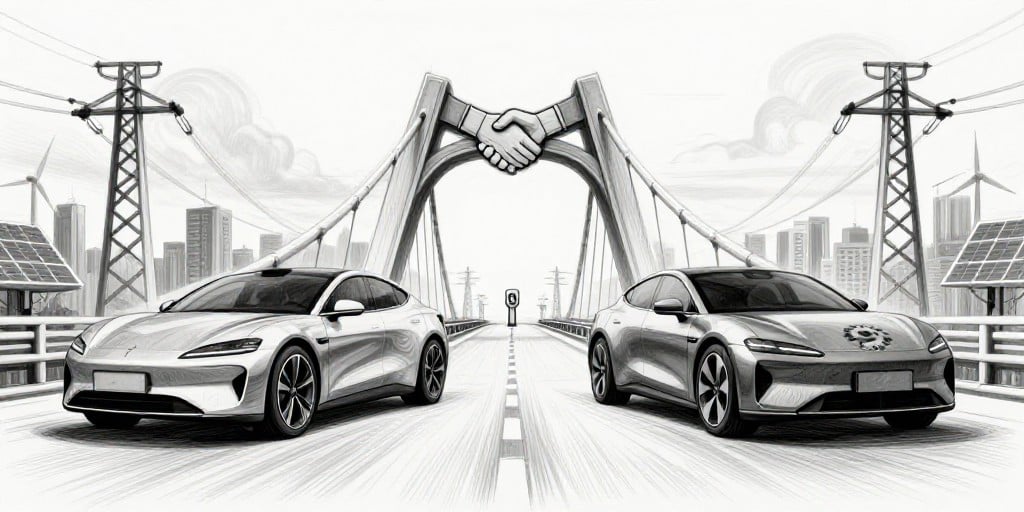
“Power‑train Portfolios” as a Differentiator Automakers are moving from a single‑technology focus to multi‑portfolio strategies. GM’s willingness to integrate third‑party hybrid systems could accelerate time‑to‑market and reduce capital intensity.
Consumer Willingness to Pay for Efficiency Recent surveys indicate that 38 % of U.S. buyers are willing to pay an extra $2,000 for a 10 % increase in fuel economy. GM’s hybrid expansion aligns with this willingness, potentially capturing a premium segment.
Hybrid as an EV “Bridge” With battery cost declines projected to plateau until 2030, hybrids can serve as an interim solution that satisfies regulatory requirements while EV infrastructure scales.
5. Risks & Mitigations
| Risk | Likelihood | Impact | Mitigation |
|---|---|---|---|
| Regulatory Over‑adjustment | Medium | High | Continuous monitoring of policy updates; flexible sourcing contracts |
| Supply Chain Disruptions | High | Medium | Diversified supplier base; hybrid‑specific component sourcing |
| Consumer Perception of “Partial” Electrification | Medium | Medium | Robust marketing emphasizing efficiency gains and emissions reductions |
| Capital Allocation to Hybrid vs. EV | Medium | High | Dynamic R&D budgeting; phased hybrid deployment aligned with EV milestones |
6. Financial Outlook
Analysts project an earnings‑per‑share (EPS) of $1.45 for the upcoming quarter, marking an 18 % rise from the same period last year. Revenue is expected to grow modestly to $25.6 bn. GM’s market capitalization, which dipped by 1.3 % in September, remains resilient at $90 bn, a 7 % decline YoY. In contrast, Toyota’s shares have fallen 12 % over the same period, underscoring sector-wide volatility.
7. Conclusion
General Motors’ decision to broaden its hybrid offering emerges from a confluence of fiscal incentives, regulatory pressure, and consumer demand for fuel efficiency. While the company’s historical caution toward hybrids may have limited its market share, the new strategy leverages both internal innovation and external partnerships to mitigate R&D risk. By aligning hybrid expansion with evolving emissions targets and leveraging subsidies, GM positions itself to capture a segment of the market that may prove crucial during the transition to a fully electric future.
Key Takeaway: Hybrid vehicles represent a strategic bridge that can sustain GM’s competitiveness in a rapidly shifting automotive landscape—provided the automaker maintains flexibility, monitors regulatory trajectories, and capitalizes on consumer willingness to invest in efficiency.