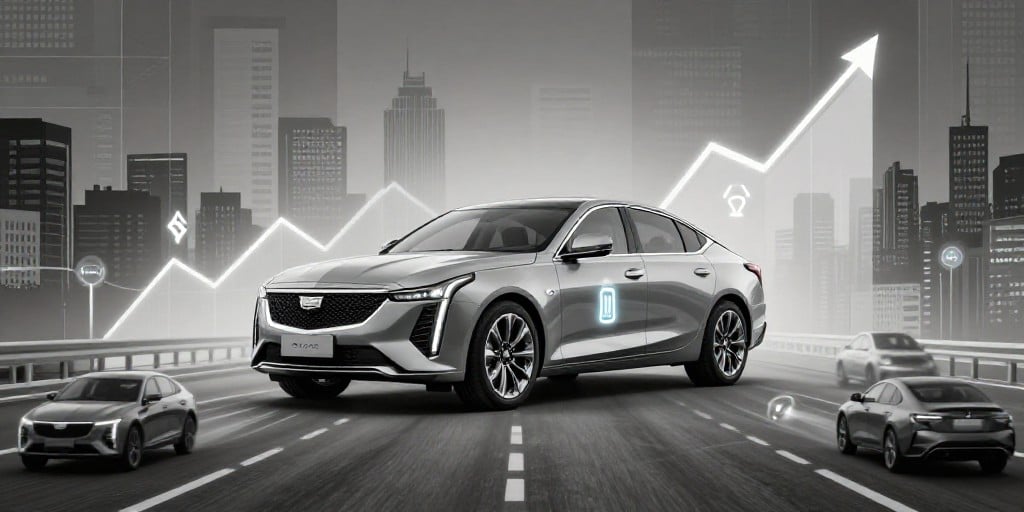
General Motors Reports Modest Gains in Electric‑Vehicle Segment Amid Resurgence in U.S. Demand
General Motors Co. (GM) has announced a modest improvement in its electric‑vehicle (EV) segment, reflecting a broader revival in demand for battery‑powered cars across the United States. The automaker highlighted that sales of its Cadillac brand—encompassing a range of plug‑in hybrids (PHEVs) and fully electric models—are gaining traction as dealers increasingly request more electrified inventory. This shift follows a recent dip in overall EV sales that left many manufacturers with surplus stock after the loss of federal tax incentives last year.
Industry Context
Industry analysts note that while the overall market share of electric vehicles remains modest, the pace of recovery has accelerated. The uptick in sales is attributed in part to rising gasoline prices and renewed consumer interest in reducing fuel costs. General Motors, like other major manufacturers, is monitoring the situation closely and adjusting its production mix to balance demand for hybrids and fully electric vehicles.
Executives have expressed confidence that the company will continue to meet market needs without significantly expanding output, emphasizing the importance of maintaining flexibility in a volatile environment. In parallel, GM’s broader strategy focuses on expanding its electrified lineup and enhancing battery technology partnerships. By aligning production with dealer demand and consumer preferences, the automaker aims to sustain its competitive position in a market that is gradually shifting back toward electric mobility after the temporary slowdown triggered by the elimination of generous federal incentives.
Production and Supply‑Chain Adjustments
GM’s production strategy has pivoted to accommodate the changing demand landscape. The company has increased the allocation of manufacturing capacity to Cadillac’s fully electric models, while simultaneously bolstering output for PHEVs that offer a transitional solution for consumers wary of a complete shift to battery‑only vehicles. This dual‑focus approach mitigates the risk associated with fluctuating consumer sentiment and regulatory environments.
Supply‑chain adjustments have also been significant. GM is negotiating longer‑term contracts with battery suppliers to secure pricing stability and ensure a steady flow of critical materials, such as lithium and cobalt. These moves are designed to reduce exposure to commodity price volatility and enhance the company’s ability to deliver vehicles on schedule.
Competitive Positioning
Within the broader automotive sector, GM’s emphasis on a balanced electrified portfolio positions it favorably against rivals that are either fully committing to electric vehicles or maintaining a strong hybrid presence. The automaker’s Cadillac brand, traditionally associated with luxury and performance, now leverages its heritage to appeal to a new generation of buyers seeking sustainability without compromising on prestige.
Moreover, GM’s investment in battery technology partnerships signals a strategic intent to reduce dependence on external suppliers. Collaborations with leading battery developers aim to accelerate the development of higher‑capacity, lower‑cost cells—critical factors in achieving competitive pricing for EVs in a price-sensitive market.
Economic and Regulatory Influences
The recent resurgence in EV demand is partly driven by macroeconomic factors, including higher gasoline prices and tighter corporate fuel budgets. Additionally, the temporary pause in federal tax incentives has prompted manufacturers to refine their pricing strategies and focus on cost efficiencies.
On the regulatory front, state‑level policies in key markets—such as California’s stringent emissions standards—continue to exert pressure on automakers to expand electrified offerings. GM’s proactive stance on regulatory compliance and its investment in domestic battery production are expected to provide a competitive advantage as governments worldwide tighten emissions mandates.
Outlook
General Motors remains cautiously optimistic about the trajectory of its electric‑vehicle segment. While acknowledging that the current gains are modest, the company is confident that its balanced production approach, strategic supply‑chain partnerships, and focus on battery technology will sustain its market position. As the broader automotive industry navigates a period of transition—characterized by fluctuating incentives, evolving consumer preferences, and regulatory tightening—GM’s disciplined strategy exemplifies the adaptability required to thrive in a dynamic environment.