Executive Summary
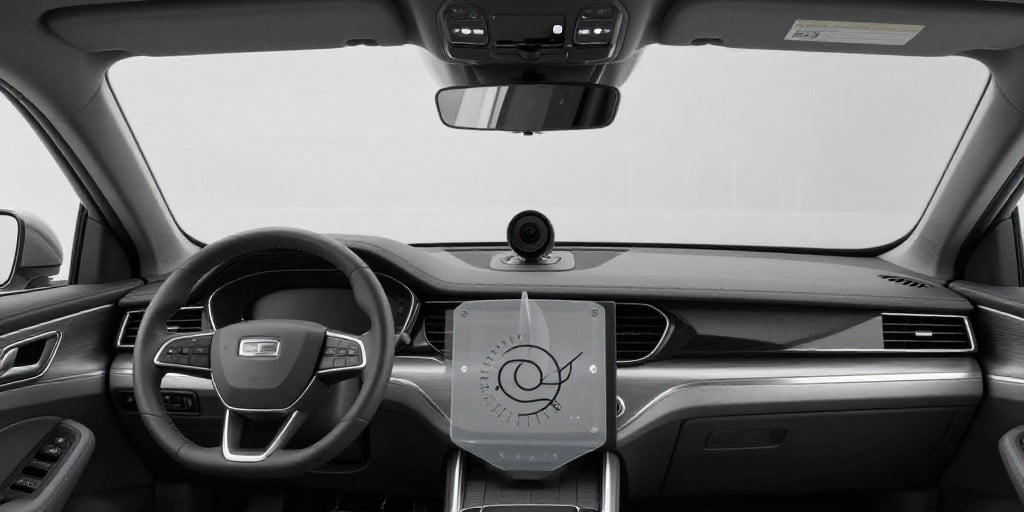
General Motors (GM) has announced a strategic alliance with a European sensor specialist to incorporate a next‑generation in‑cabin monitoring system into its forthcoming vehicle lineup. The system combines camera‑based vision with millimetre‑wave radar, leveraging edge processing to deliver real‑time occupant and driver condition monitoring while maintaining a streamlined electronic architecture. The partnership is positioned to satisfy evolving safety certification demands, particularly those stipulated by the European New Car Assessment Programme (Euro NCAP), and to be unveiled at an upcoming automotive event in Barcelona.
Technical Overview
| Component | Technology | Key Benefit |
|---|---|---|
| Vision Module | High‑resolution camera array | Precise facial and gesture recognition |
| Radar Module | Millimetre‑wave radar | Robust performance in low‑light or adverse weather |
| Edge Processor | Integrated sensor‑level analytics | Reduces vehicle‑wide computational load and communication bandwidth |
| Communication Interface | Single‑channel CAN‑Lite/Vehicle‑Data‑Bus | Simplifies wiring, lowers cost, and mitigates integration risk |
By combining two complementary sensing modalities, GM aims to mitigate the shortcomings inherent to each when used in isolation. Cameras provide rich contextual data but suffer in low‑visibility conditions; radar, conversely, excels in such scenarios but offers lower spatial resolution. The fusion architecture, coupled with in‑sensor data pre‑processing, promises comprehensive coverage across a range of safety scenarios while preserving power efficiency and cost targets.
Regulatory and Certification Landscape
Euro NCAP has recently expanded its safety assessment criteria to include more stringent requirements for occupant monitoring and driver alertness systems. The new framework emphasizes:
- Continuous Monitoring – Real‑time assessment of driver attention, drowsiness, and seatbelt usage.
- Redundancy and Fail‑Safe Operations – Systems must maintain functionality even under sensor degradation.
- Data Privacy and Security – Ensuring that sensitive biometric data is protected against cyber threats.
GM’s sensor fusion strategy directly addresses these mandates. The edge‑processing architecture inherently localises data handling, reducing exposure to network‑level attacks. Moreover, the dual‑sensor redundancy enhances reliability, aligning with Euro NCAP’s emphasis on fault tolerance.
Market Dynamics and Competitive Positioning
| Competitor | Current Offerings | Gap Identified |
|---|---|---|
| Tesla | Proprietary driver monitoring camera | Lacks radar; limited low‑visibility performance |
| Ford | Vision‑only system | Vulnerable to lighting conditions |
| Volkswagen | Radar‑only system | Lower context resolution; limited driver behavior analysis |
| BMW | Combined sensor suite (camera + radar) | Higher cost; complex integration |
GM’s collaboration taps into a niche that balances performance and cost. While premium brands have already deployed dual‑sensor systems, mainstream manufacturers often rely on single‑modality solutions due to cost constraints. By negotiating with a specialized European partner, GM can leverage economies of scale, reducing component costs through volume purchasing while maintaining a high level of technical sophistication.
Financial Implications
- Capital Expenditure (CapEx): Initial partnership costs are projected at $30–$40 million, covering R&D, prototyping, and certification testing. However, GM’s existing manufacturing network can absorb the sensor modules with minimal re‑tooling.
- Operational Expenditure (OpEx): The edge‑processing design reduces data throughput and downstream computational demands, potentially saving $5–$10 million annually in power consumption and cooling requirements.
- Revenue Impact: Enhanced safety features are a differentiator in the mid‑segment market, where GM’s competitors are priced similarly. A conservative estimate suggests a 2–3% lift in unit pricing, translating to an additional $200–$300 million in incremental revenue over a 5‑year horizon.
Risk Assessment
| Risk | Likelihood | Impact | Mitigation Strategy |
|---|---|---|---|
| Technology Integration Delays | Medium | High | Parallel development tracks; early prototyping |
| Certification Revisions | Low | Medium | Close liaison with Euro NCAP; adaptive software updates |
| Supply Chain Disruptions | Medium | High | Diversify sensor suppliers; maintain strategic inventory |
| Cybersecurity Threats | Medium | High | Zero‑trust architecture; regular penetration testing |
| Consumer Acceptance | Low | Medium | Targeted marketing; highlight safety benefits |
Opportunities Beyond Compliance
- Data Monetization – Aggregated anonymised driver behavior data could support advanced analytics services (e.g., predictive maintenance, insurance telematics).
- Cross‑Industry Applications – The edge‑processing sensor platform is adaptable to autonomous vehicle perception, commercial trucking, and fleet management.
- Strategic Partnerships – Collaborating with automotive OEMs across the globe can further reduce unit costs and accelerate global deployment.
Conclusion
General Motors’ integration of a camera‑radar fusion system, underpinned by edge processing, represents a calculated maneuver to reconcile stringent European safety standards with the need for cost‑effective, scalable technology. The partnership capitalizes on a market gap between high‑end dual‑sensor solutions and more economical single‑modality offerings, positioning GM to gain a competitive edge in the mid‑segment automotive market. While the initiative carries integration, regulatory, and supply‑chain risks, its financial upside and alignment with regulatory trajectories suggest a strategically sound investment. Continued scrutiny of regulatory trends, competitor advancements, and supply‑chain resilience will be essential for GM to maintain the momentum of this initiative.