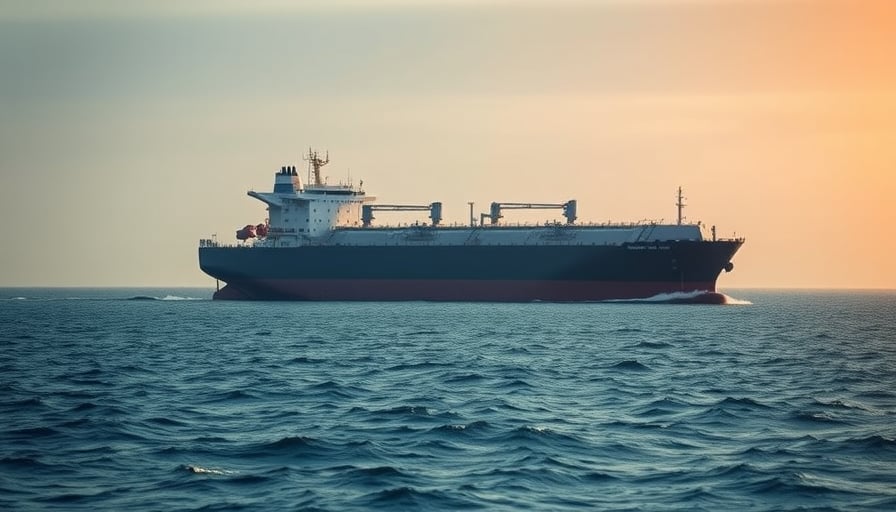
Global LNG Exports Suffer Six‑Month Low Amid Middle Eastern Conflict
The latest quarterly data indicate that global liquefied natural gas (LNG) exports have fallen to a six‑month low, a downturn largely attributed to escalating hostilities in the Middle East. The conflict has disrupted the flow of LNG from Qatar and the United Arab Emirates—two of the world’s largest producers—and has raised concerns about the long‑term stability of the global supply chain.
Impact on Major Producers
Qatar, whose Ras Laffan petrochemical complex supplies roughly 25 % of world LNG output, has been forced to shut down several production trains following attacks on the facility. Repairs are projected to take several years, meaning that output will remain constrained well into the mid‑2020s. The United Arab Emirates, which also relies on the Strait of Hormuz to export LNG to Asian and European markets, has seen its own throughput decline as shipping lanes become riskier.
The reduction in supply has tightened global markets and pushed LNG prices upward, thereby altering the economics of both producers and consumers. Because LNG is often traded under long‑term contracts, the uncertainty around delivery schedules has complicated cost management for downstream users, especially those with tight operating margins.
Ripple Effects on Downstream Industries
India’s fertiliser sector provides a clear illustration of the downstream impact. The country’s ammonia–urea plants, which rely heavily on natural gas for feedstock, have reported a sharp decline in urea output. Energy shortages and operational inefficiencies have increased overall consumption while reducing production capacity, placing significant financial pressure on manufacturers. The resultant supply‑chain disruptions have also introduced volatility in pricing structures for long‑term LNG contracts, further challenging producers’ ability to hedge against price swings.
Beyond fertiliser, other energy‑intensive sectors—including steel manufacturing and chemical production—are facing similar constraints. The broader economic consequence is a potential slowdown in growth for countries heavily dependent on LNG‑derived feedstocks.
U.S. LNG Exporters Benefit from Supply Tightness
In the United States, Houston‑based LNG exporter XYZ Energy Corp. (ticker: XYZ) has seen its shares rise amid broader market movements. The company’s strategy focuses on converting domestically produced natural gas into LNG for international markets, a model that positions it well to capitalize on supply tightening elsewhere. Recent trading activity has been notable, with significant volumes and shifts in analyst ratings contributing to price volatility.
XYZ Energy Corp. reported earnings that surpassed estimates, and its revenue increased substantially year over year, reinforcing investor confidence. The company also announced a modest dividend, underscoring its commitment to shareholder returns despite the challenging geopolitical environment.
The positive performance of U.S. exporters highlights a key market dynamic: while global supply is constrained, domestic producers with flexible production and export capabilities can benefit from higher prices and increased demand. This shift in supply dynamics may influence investment sentiment and reshape competitive positioning within the LNG market.
Broader Economic Context
The tightening LNG supply has broader economic implications. Higher energy costs can translate into increased production expenses across multiple sectors, potentially slowing economic growth in affected regions. Conversely, U.S. exporters may experience higher profit margins, attracting investment and potentially stimulating capital flows into the broader energy infrastructure.
The current situation underscores the importance of diversified supply chains and robust risk management strategies for firms that rely on LNG. In a global environment where geopolitical tensions can swiftly alter market conditions, companies that can adapt operationally and strategically are likely to outperform their peers.
In summary, the geopolitical tensions in the Middle East have tightened LNG supply, creating challenges for both producers and consumers worldwide. The resulting market volatility has influenced investment sentiment, particularly in U.S. LNG exporters that are positioned to benefit from the shifting supply dynamics.