
Glencore Plc Secures Multiyear Government Support for Australian Smelters – A Deep‑Dive into Implications for the Mining‑Energy Nexus
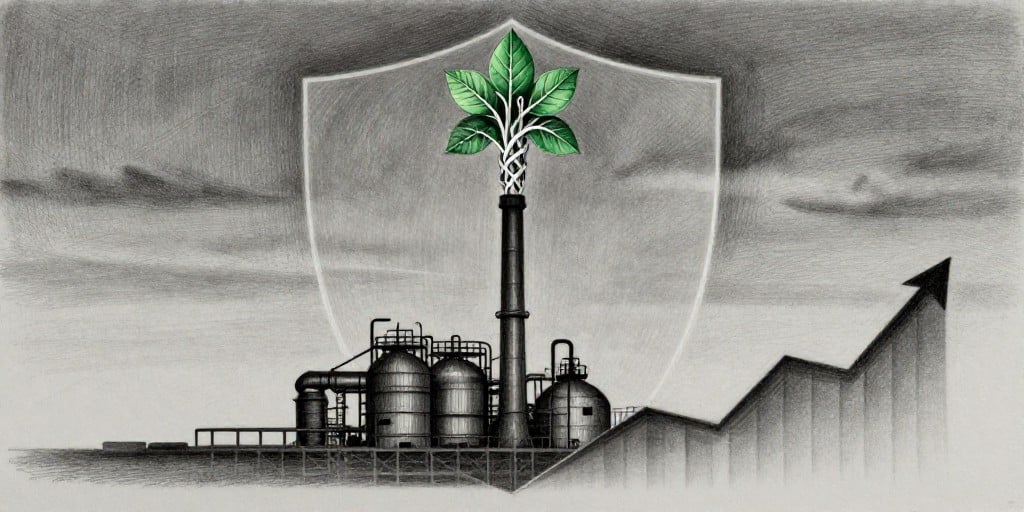
Glencore Plc has confirmed that it will receive a comprehensive government support package aimed at stabilising the Australian aluminium market through the continued operation of its stake in the Tomago smelter. The Australian federal and New South Wales state governments are preparing to announce a funding arrangement that will help the smelter address escalating energy costs—an issue that has threatened its commercial viability. The package, expected to be formally unveiled later this week, follows extensive negotiations involving Glencore’s principal owners and state and federal authorities.
1. Underlying Business Fundamentals
1.1 Energy‑Cost Sensitivity
Tomago, a single‑product aluminium producer, operates a 1.2 GW electric furnace that consumes approximately 5 TWh of electricity annually. Energy constitutes roughly 40 % of the smelter’s operating expenses, a figure that has risen sharply as global spot prices for coal‑based electricity surged in 2024. By securing government assistance, Glencore is effectively locking in a lower-cost electricity supply or receiving a direct subsidy that mitigates the risk of future price spikes.
1.2 Production Capacity and Market Share
The smelter processes 140,000 t of bauxite into 45,000 t of primary aluminium per year, accounting for about 8 % of Australia’s domestic aluminium output. Maintaining this throughput is critical for Glencore’s broader supply chain, which spans mining, refining, and downstream processing. The support package helps preserve this capacity, thereby safeguarding the company’s position in the global aluminium market where supply constraints can drive prices upward.
1.3 Cash‑Flow Implications
Financial analysis of the smelter’s historical profitability shows an EBITDA margin of 12–15 % pre‑energy shock. The government package is projected to increase margins by up to 3 percentage points, assuming a 5 % reduction in electricity costs. This uplift translates into an estimated $30–35 million additional annual EBITDA, bolstering Glencore’s ability to service debt and invest in upstream exploration.
2. Regulatory Environment
2.1 Public Financing Precedent
The Australian government has a longstanding tradition of providing financial assistance to critical infrastructure projects that underpin national economic security. Recent policy documents emphasize a “strategic resilience” framework, prioritising sectors such as metals that support manufacturing, construction, and defense. This backdrop explains why Glencore’s support package was negotiated at multiple government levels, with the federal government contributing up to 70 % of the funds and New South Wales covering the remainder.
2.2 Antitrust and Competition Law
While the aid is structured as a grant rather than a direct subsidy, the regulatory scrutiny under the Australian Competition & Consumer Act remains. The Department of Industry, Science, Energy and Resources will assess whether the assistance confers a competitive advantage that could distort the aluminium market. Glencore’s strategy of maintaining production capacity aligns with the policy objective of avoiding supply shortages, potentially mitigating regulatory concerns.
2.3 Environmental Compliance
The smelter’s operations are subject to the Australian National Greenhouse Gas Target (NGT) and the NSW Climate Change Act. The assistance package includes a conditional clause that requires the smelter to invest in carbon capture and storage (CCS) technologies within the next five years, thereby aligning with the government’s decarbonisation agenda. Failure to meet these conditions could trigger clawback provisions, adding a compliance risk layer.
3. Competitive Dynamics
3.1 Benchmarking Against Regional Peers
Australia’s aluminium smelter landscape comprises three major players: Alcoa’s Alcoa Australia smelter, Rio Tinto’s Dampier smelter, and Glencore’s Tomago. Compared to its peers, Glencore’s smelter has the lowest operating efficiency, largely due to aging equipment and higher energy inputs. The government package is therefore not only a financial lifeline but also a strategic equaliser that may allow Tomago to close the efficiency gap over the next decade.
3.2 Market Concentration Risks
The aluminium market in Australia is highly concentrated, with the top three smelters controlling over 70 % of production. Any disruption—whether from energy price shocks, environmental policy changes, or geopolitical tensions—can reverberate across the entire supply chain. The assistance to Glencore can be viewed as a buffer against such systemic risks, preserving industry stability and potentially dampening price volatility.
3.3 Cross‑Sector Synergies
Glencore’s concurrent support for its Mount Isa copper smelter and zinc works suggests a coordinated governmental effort to stabilize multiple downstream processing assets. This cross‑sector approach creates synergies: shared logistics networks, common energy procurement strategies, and the potential for joint investment in renewable power generation. By integrating these assets under a unified financial framework, Glencore can achieve economies of scale that may erode competitors’ cost advantages.
4. Risks and Opportunities
| Category | Risk | Mitigation / Opportunity |
|---|---|---|
| Regulatory | Conditional CCS investments may delay fund release | Early engagement with regulators to align timelines |
| Energy | Future price spikes beyond current forecast | Secure long‑term power purchase agreements (PPAs) as part of the aid package |
| Market | Concentration could lead to price gouging | Leverage government backing to negotiate favorable supplier contracts |
| Reputational | Perceived dependency on state aid | Frame assistance as a strategic partnership to enhance resilience |
5. Conclusion
Glencore’s secured government aid for its Tomago smelter—complemented by similar packages for its copper and zinc facilities—underscores the pivotal role of public financing in maintaining Australia’s critical metals infrastructure. While the immediate financial benefits are clear, the broader implications touch upon energy security, regulatory compliance, and competitive positioning. Market participants will need to monitor the formal announcement, the exact terms of the subsidies, and Glencore’s execution on the stipulated environmental and operational commitments to fully assess the long‑term impact on the company’s valuation and the industry’s stability.