
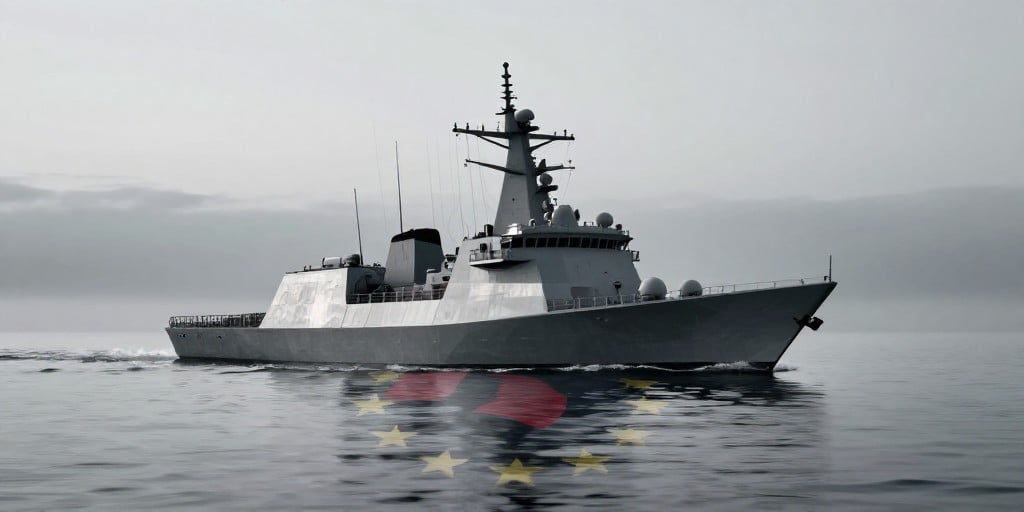
Impact of Germany’s Shift from F126 to MEKO A‑200 on the Defence Industry
1. Immediate Market Reactions
On 24 June 2026, Defence Minister Boris Pistorius announced the cancellation of the F126 frigate programme, opting instead for eight MEKO A‑200 frigates supplied by Thyssen Krupp Marine Systems (TKMS). The decision precipitated a pronounced sell‑off across German defence equities:
| Company | Percentage Move | Context |
|---|---|---|
| Rheinmetall | –18.9 % | Largest one‑day decline in over twenty years, reflecting the company’s heavy reliance on naval procurement contracts. |
| Hensoldt | –5.4 % | Losses attributed to reduced demand for naval surveillance systems linked to the F126 project. |
| Renk | –4.7 % | Decline mirrored Hensoldt’s, stemming from the broader contraction in naval hardware orders. |
European indices reflected a cautious mood. The Stoxx 600 hovered near its pre‑event level, while the German DAX recorded a modest downturn, suggesting that the shock was largely confined to defence‑specific stocks rather than the broader market.
2. Cross‑Border Spill‑Over
The German decision reverberated through the wider European defence ecosystem:
- Leonardo (Italy) and Saab (Sweden) posted modest share declines, underscoring the perception of reduced demand for European naval platforms.
- Conversely, TKMS experienced a rally, benefiting from its status as the new supplier of the German navy’s frigate fleet. The company’s share price surged, reflecting immediate upside potential tied to the new procurement contract.
These movements illustrate the interconnectedness of national defence budgets and the sensitivity of multinational defence conglomerates to policy changes in a single country.
3. Analytical Context: Procurement Policy and Contract Stability
The episode serves as a case study in the broader dynamics that shape defence valuations:
Contract Certainty as a Valuation Driver Defence firms derive a substantial portion of their revenue forecasts from long‑term procurement contracts. Abrupt cancellations or reallocations can materially alter cash‑flow projections, prompting swift market corrections.
Portfolio Diversification Companies heavily invested in a single platform (e.g., Rheinmetall’s focus on the F126) are more vulnerable to policy shifts than those with diversified product lines across land, air, and naval domains.
Supply‑Chain Positioning Suppliers positioned as alternative or backup options (e.g., TKMS) can capitalize on shifts, highlighting the importance of contractual flexibility and network breadth in sustaining revenue streams.
Geopolitical Underpinnings While procurement policy is a proximate driver, the long‑term outlook remains tethered to geopolitical tensions and the accompanying demand for modern naval capabilities. Consequently, the sector’s resilience is anchored in broader defence budgets, which have historically remained stable or expanded in response to global security dynamics.
4. Long‑Term Outlook
Despite the short‑term turbulence, several factors support a favourable long‑term trajectory for the European defence sector:
- Steady Defence Expenditure: EU member states have maintained or increased their defence budgets in the past decade, ensuring continued demand for naval platforms and associated technologies.
- Technological Upgrades: Modernisation programmes (e.g., cyber‑defence, unmanned systems) are expanding the scope of naval procurement beyond conventional platforms.
- Geopolitical Risks: Persistent tensions in the Baltic Sea, the Black Sea, and the Indo‑Pacific region keep naval readiness and capabilities on the agenda of national defence ministries.
In summary, the German navy’s procurement pivot underscores the inherent volatility of the defence industry to national policy changes while simultaneously reaffirming the sector’s foundational dependence on stable budgets and geopolitical imperatives. Companies that cultivate diversified portfolios, secure robust contractual frameworks, and maintain flexible supply‑chain relationships are best positioned to weather such shocks and capitalize on the enduring demand for advanced naval capabilities.