Germany’s Strategic Positioning in the Next‑Generation Fighter Jet Market
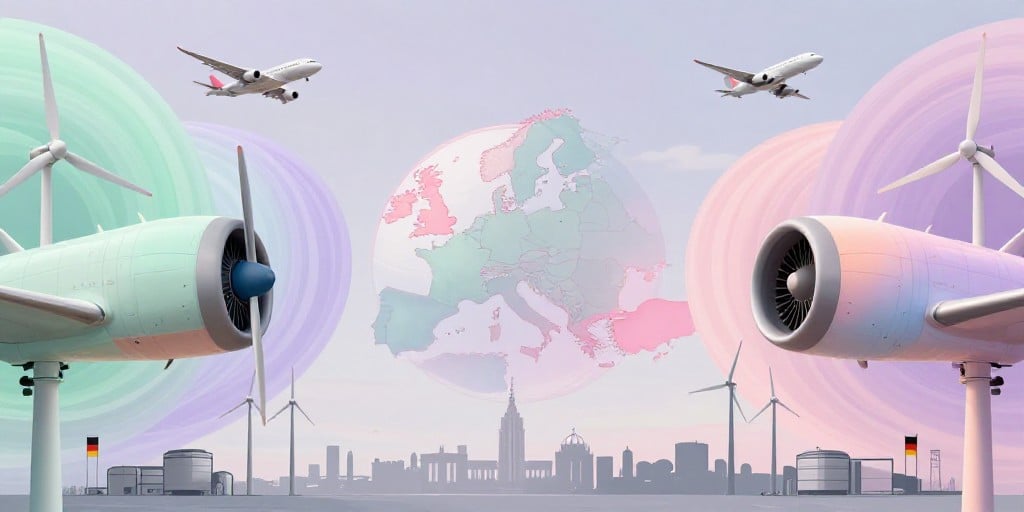
Germany’s defence sector is currently pivoting toward a decisive milestone: the forthcoming determination of the country’s participation in a next‑generation fighter‑jet programme. In early November, Defence Minister Boris Pistorius announced that a decision will be made by the end of March 2027. The minister outlined two principal avenues: (1) joining a multinational partnership that includes the United Kingdom, Italy, and Japan; or (2) collaborating with Airbus and other European partners on a project aimed at the 2040s. High‑level deliberations—highlighted by Chancellor Friedrich Merz’s recent visit to Japan—suggest that the German government is actively evaluating these options within the broader context of European defence cooperation.
A Domestic Consortium Advocates for a Homegrown Jet
A German consortium composed of leading defence and aerospace firms—namely Airbus Defence and Space, Diehl Defence, MTU Aero Engines, and Hensoldt—has presented a comprehensive proposal to Berlin. The consortium’s plan not only envisions a new fighter jet but also invites collaboration with Spanish and Swedish defence firms, thereby reinforcing a pan‑European network of expertise. The initiative aligns with a broader strategy to secure Germany’s influence in advanced aviation technology and to sustain the competitiveness of its domestic industry in the long term.
Key elements of the consortium’s proposal include:
- Technology Transfer: Leveraging existing German capabilities in avionics, propulsion, and materials science to create a platform that meets NATO and EU interoperability standards.
- Industrial Participation: Ensuring that a significant proportion of the project’s work—design, manufacturing, and testing—occurs within Germany, thereby preserving high‑skill employment and sustaining the supply chain.
- Export Potential: Positioning the aircraft as a viable option for other European and allied air forces, which could create a robust export market and further integrate Germany into the global defence economy.
Munich’s Emerging Defence Startup Ecosystem
While Berlin hosts the political decision‑making process, Munich continues to solidify its reputation as a hub for defence innovation. In the past year, the city attracted a substantial share of European defence‑sector venture capital. Companies such as Hensoldt and Quantum Systems have secured significant investment rounds, underscoring the attractiveness of Munich’s ecosystem.
The city’s success is attributable to several interlocking factors:
- Research Institutions: Proximity to leading universities and research laboratories provides a steady stream of talent and cutting‑edge scientific breakthroughs.
- Talent Pipeline: A high concentration of engineers and technicians, many of whom have transitioned from aerospace to defence roles, ensures a skilled workforce.
- Government Engagement: The opening of the Bundeswehr’s Innovation Centre in Erding has created a direct channel for startups to engage with procurement processes, accelerating technology integration into military applications.
European Defence Collaboration and Geopolitical Context
Germany’s deliberations are taking place against a backdrop of intensified European defence collaboration. The country’s engagement with the Global Combat Air Programme (GCAP) and its potential partnership with Airbus are part of a concerted effort to maintain technological leadership amid geopolitical shifts and the evolving demands of modern air warfare.
Several macro‑economic and strategic considerations influence Germany’s decision:
- Technological Edge: Next‑generation fighters demand advanced stealth, network‑centric warfare capabilities, and AI‑driven systems—areas where European partners possess complementary strengths.
- Cost Efficiency: Shared development costs reduce individual national expenditures, a critical factor for maintaining fiscal prudence while advancing sophisticated platforms.
- Geopolitical Stability: Diversifying beyond traditional suppliers aligns with European security strategy, reducing reliance on external actors and enhancing collective defense readiness.
Implications for Germany’s Aerospace Industry
The outcome of the forthcoming decision will set the trajectory for Germany’s aerospace sector over the next decade. Should Germany join the multinational partnership, the country could gain access to joint research and development facilities, share risk, and benefit from a broader market. Alternatively, pursuing an indigenous project through Airbus collaboration would allow Germany to assert greater control over technology and supply chains, potentially boosting domestic employment and reinforcing its position as a global defence technology leader.
In either scenario, the decision will influence:
- Investment Flows: Both public and private capital will be redirected toward the chosen pathway, affecting the broader European defence supply chain.
- Industrial Capabilities: Germany’s core competencies in propulsion, avionics, and aerostructures will be tested and potentially enhanced through large‑scale collaboration.
- Strategic Autonomy: The choice will reflect Germany’s balance between integration within European defence initiatives and preservation of national strategic autonomy.
The forthcoming decision, therefore, represents a pivotal moment for Germany’s defence industry, offering an opportunity to shape the future of aerospace technology, strengthen multinational partnerships, and adapt to the evolving dynamics of global air power.