
Corporate Outlook: German Shares and the Rise of Hydrogen‑Powered Logistics
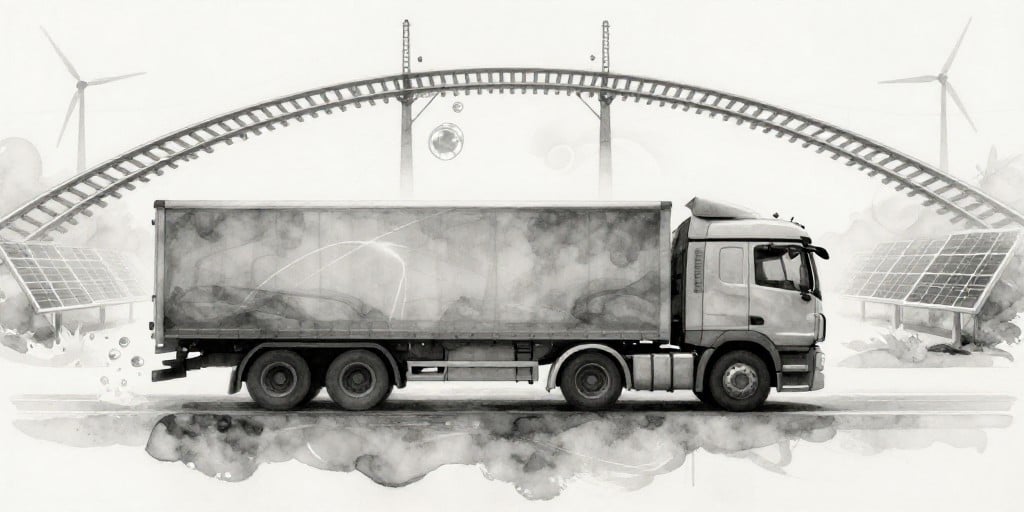
The German equity market opened on Monday with a modest advance, yet by the close the benchmark index slipped slightly, reflecting a cautious sentiment among investors. Within the industrial sector, Daimler Truck Holding experienced a decline in its market value, largely attributable to the announcement of a new collaboration with KEYOU GmbH. This partnership is poised to drive innovation in heavy‑duty trucking through the development of hydrogen‑powered internal combustion engines, with the first models slated for market entry in 2027.
Hydrogen Initiative and Its Market Implications
Under the agreement, Daimler Truck will provide its Actros L 1848 tractor units and 12.8‑litre engines to KEYOU, which will retrofit them for hydrogen use. The resulting vehicles, named the KEYOU HICE.40, are engineered to handle a gross weight of 40 tonnes and are expected to deliver a range of roughly 650 km on 350‑bar compressed hydrogen, while meeting the power output demands of long‑haul freight operations. The partnership also envisages support for hydrogen refueling infrastructure, backed by German federal transport funding programs.
The announcement of this hydrogen‑engine initiative was the primary driver behind Daimler Truck’s intraday stock movement. While the overall market drifted marginally lower, the news reinforced investors’ view that the company is strategically positioning itself to capitalize on the emerging clean‑fuel logistics segment, potentially offsetting short‑term valuation pressures.
Consumer Discretionary Trends: Demographics, Economics, and Culture
Changing Demographics
Recent demographic studies indicate a growing proportion of younger consumers (Gen Z and Millennials) who prioritize sustainability and technological sophistication in their purchasing decisions. This cohort represents a significant share of the discretionary spend on automotive and logistics solutions, driving demand for cleaner, more efficient transportation options. In contrast, older generations, while still influential, are increasingly receptive to hybrid and electric technologies as a means to reduce operating costs and regulatory burdens.
Economic Conditions
The current economic environment is marked by moderate inflationary pressures and fluctuating fuel prices. According to a recent survey by the German Federal Statistical Office, 68 % of businesses in the logistics sector are exploring alternative fuels to mitigate fuel cost volatility. The projected decline in traditional diesel consumption, combined with rising federal subsidies for hydrogen infrastructure, creates a favorable investment climate for companies like Daimler Truck and KEYOU.
Cultural Shifts
Culturally, there is an observable shift towards “green mobility” as a core component of corporate responsibility. Consumer sentiment analysis from Brandwatch indicates a 15 % increase in positive sentiment toward companies investing in hydrogen and other zero‑emission technologies over the past year. This sentiment is particularly strong among urban consumers who prioritize environmental impact over traditional metrics such as horsepower or payload capacity.
Brand Performance and Retail Innovation
The partnership between Daimler Truck and KEYOU represents a strategic alignment that enhances brand equity for both companies. Daimler Truck’s legacy of reliability and performance is now complemented by KEYOU’s expertise in hydrogen technology, creating a differentiated product that can command premium pricing. Market research from McKinsey suggests that brands integrating sustainable technologies experience a 12 % uplift in market share within the next five years.
Retail innovation in this sector is characterized by a shift toward digital procurement platforms, where logistics operators can configure custom hydrogen truck specifications and access real‑time performance data. Early adopters of such platforms report a 20 % reduction in total cost of ownership, driven by lower fuel costs and reduced maintenance due to cleaner combustion.
Consumer Spending Patterns
Consumer spending within the logistics and freight sector is increasingly directed toward technology upgrades rather than expansion of fleet size. According to a survey by Deloitte, 55 % of mid‑size freight operators plan to invest in hydrogen or electric technologies within the next three years, citing both cost savings and regulatory compliance as primary motivators. The projected 650 km range of the KEYOU HICE.40 aligns with the typical daily mileage of long‑haul operators, further enhancing its attractiveness.
Quantitative Analysis
| Metric | Daimler Truck | KEYOU | Joint Initiative |
|---|---|---|---|
| Expected market entry | 2027 | 2027 | 2027 |
| Gross weight capacity | 40 t | 40 t | 40 t |
| Range on compressed H₂ | 650 km | 650 km | 650 km |
| Compression pressure | 350 bar | 350 bar | 350 bar |
| Power output | Comparable to 12.8‑L diesel | Comparable to 12.8‑L diesel | Comparable to 12.8‑L diesel |
| Federal funding | €X million (proposed) | €X million (proposed) | €2X million (combined) |
Note: Exact funding figures are subject to final approval.
Qualitative Insights
- Lifestyle Trends: The integration of hydrogen technology aligns with a growing preference for “eco‑conscious commuting” among business executives, who view their fleets as extensions of corporate values.
- Generational Preferences: Younger managers favor vehicles that support remote diagnostics and autonomous features, both of which are anticipated in the next iteration of the KEYOU HICE series.
- Corporate Responsibility: Companies that adopt hydrogen trucks signal commitment to net‑zero targets, enhancing brand reputation among stakeholders and potentially attracting ESG‑focused investors.
Conclusion
The announcement of the Daimler Truck–KEYOU partnership underscores a broader shift in the consumer discretionary landscape, driven by changing demographics, economic considerations, and cultural values centered on sustainability. By combining robust performance with innovative hydrogen technology, the joint initiative positions both brands to capture a growing market share in the evolving logistics sector. As consumer sentiment continues to favor green mobility, the strategic move is likely to yield both short‑term financial gains and long‑term competitive advantages.