Market Overview
The German equity market in Frankfurt has displayed a relatively subdued trading session during the latest daily close. The MDAX index, which tracks a range of mid‑cap companies, registered a modest decline of only a fraction of a percent in the morning trade and finished the day slightly lower than its prior close. Over the course of the calendar year, the index has slipped by nearly nine percent, underscoring a broader trend of weakness among mid‑cap firms in the region.
Within the MDAX, several stocks have attracted investor attention. The construction and building‑materials sector experienced a modest rally after a recent decline, partially buoyed by comments from the Israeli Prime Minister that suggested a weakening of Iranian military capabilities. This sentiment helped lift the Stoxx Europe 600 Construction & Materials index by around one and a half percent. Companies in this sector, notably a leading German construction group, saw their shares advance by just over one percent to a level above four hundred euros, marking a modest recovery after earlier sell‑offs. Another prominent European materials group mirrored this performance, reflecting a broader sectoral rebound.
Technological Innovation in Heavy Industry
Advanced Manufacturing Processes
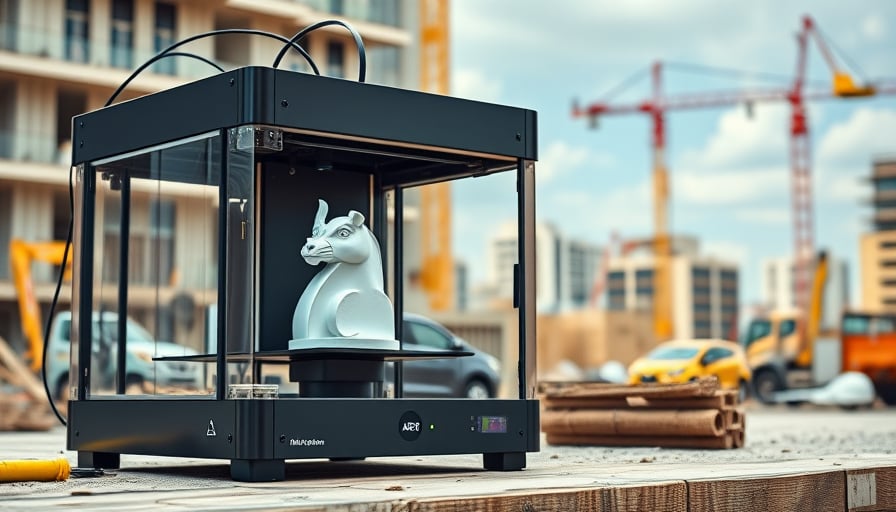
In the construction and materials domain, the adoption of additive manufacturing (3‑D printing) for structural components has begun to shift production paradigms. Engineers are now utilizing high‑performance polymers and composites in extrusion and laser‑sintering processes to fabricate load‑bearing panels with reduced material waste. This transition improves productivity metrics by shortening cycle times from several days to hours and reduces labor intensity, thereby lowering operating costs.
Smart Infrastructure Equipment
The deployment of cyber‑physical systems—combining Internet‑of‑Things sensors, edge computing, and AI analytics—has enabled real‑time monitoring of construction equipment such as hydraulic excavators and concrete mixers. Predictive maintenance models built on machine‑learning algorithms reduce unplanned downtime by up to 15 %, directly impacting throughput and capital‑expenditure efficiency.
Capital Investment Trends
Drivers of Capex Decisions
Capital expenditure decisions in the mid‑cap construction sector are increasingly guided by the following factors:
| Factor | Impact on Capex Decision |
|---|---|
| Energy‑Efficiency Targets | Demand for low‑carbon concrete and steel drives investment in high‑speed, low‑emission mixers. |
| Regulatory Incentives | Tax credits for green building materials reduce the weighted‑average cost of capital. |
| Global Supply Chain Resilience | Diversification of supplier bases prompts allocation to localized production facilities. |
| Digital Transformation | Automation of design‑build‑operate cycles justifies upfront capital outlay for BIM platforms and robotics. |
Productivity Gains
Industrial equipment upgrades—such as transitioning to variable‑frequency drives on heavy machinery—have been shown to improve energy productivity by 8 % while reducing noise pollution, thereby aligning with emerging environmental, social, and governance (ESG) expectations.
Supply Chain Impacts
The construction sector’s supply chain is currently contending with:
- Raw‑Material Volatility: Fluctuating prices of aggregates, steel, and cement are driven by geopolitical tensions and shipping bottlenecks, compelling firms to lock in long‑term contracts.
- Logistics Constraints: Port congestion and limited rail capacity increase lead times for critical components, urging a shift toward near‑shoring.
- Digital Tracking: Blockchain‑based traceability systems are being implemented to ensure compliance with safety standards and to mitigate the risk of counterfeit materials.
These dynamics directly influence capital budgeting, as firms allocate resources to inventory‑management systems and alternative sourcing strategies.
Regulatory Landscape
Emissions‑Trading Reforms
Recent discussions around European emissions‑trading reforms have raised concerns about potential regulatory tightening. However, analysts from a leading brokerage have characterized these developments as “noise,” emphasizing the enduring attractiveness of the construction group’s valuation. This perspective suggests that, while short‑term market volatility may persist, long‑term capital commitments in the industry remain robust, especially in the face of evolving carbon pricing mechanisms.
Building Code Updates
The European Union’s upcoming revisions to the Construction Products Regulation (CPR) will likely mandate stricter material performance standards. Companies that proactively invest in compliance‑certified production lines will secure a competitive edge and may qualify for additional public funding.
Infrastructure Spending Outlook
Public infrastructure investment remains a key driver for the construction sector. European Union funding allocations for smart‑city projects and renewable energy installations are expected to grow, providing a stable demand base for mid‑cap construction firms. This fiscal support, combined with the sector’s growing emphasis on automation and digitalization, creates a compelling case for continued capital allocation.
In summary, the German mid‑cap construction and materials sector exhibits a cautiously optimistic trajectory, buoyed by modest market rallies and sustained by technological innovations that enhance productivity and reduce operational costs. While supply‑chain volatility and regulatory shifts pose risks, the long‑term capital‑investment landscape remains attractive, particularly for firms that align their strategies with emerging ESG mandates and digital transformation imperatives.