
Market Overview
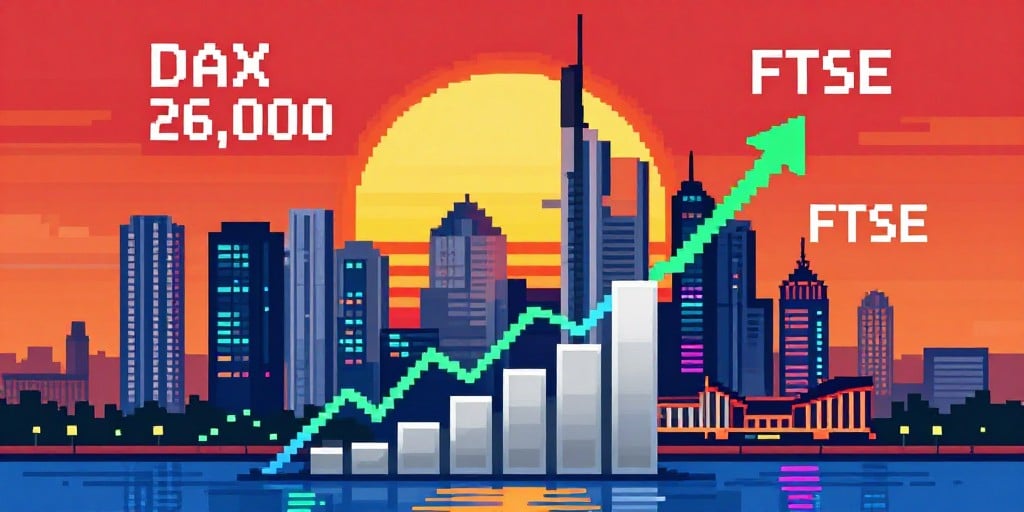
On Thursday, 3 September 2026, the German stock market index (DAX) concluded the session just above 26 000 points. The rise was driven by modest gains in technology names, notably the software giant SAP SE, and supported by a recent easing in bond yields. The broader German market benefitted from a stable operating environment for both industrial and technology firms, with the DAX recording a near‑half‑percent uptick.
In the United Kingdom, the FTSE 100 also registered modest gains, rising by roughly one percent. The performance of SAP within the DAX was highlighted as part of a wider trend of technology‑heavy sectors contributing to the index’s positive trajectory. While SAP’s share price continued to climb, it remained below the all‑time high reached in the past.
Across Europe, market sentiment was buoyed by encouraging regional purchasing‑manager data and a supportive environment for metals, which helped sustain equity price gains. Bond yields stabilised after earlier volatility, and oil prices exerted only a modest influence on market volatility. Analysts noted that, although the technology sector had room to expand, the gains were still contingent on broader macroeconomic developments.
DAX Dynamics
- Technology Influence: SAP SE was among the shares that moved higher, reflecting a broader positive trend for technology and industrial stocks on the German exchange.
- Bond Yield Effect: A recent easing of bond yields contributed to the DAX’s performance, as lower yields reduce the attractiveness of fixed‑income alternatives relative to equities.
- Industrial Stability: The DAX benefited from a stable operating environment for industry firms, reinforcing confidence in the German manufacturing base.
FTSE 100 Performance
- Sector Composition: The FTSE 100’s modest gains were driven by a mix of energy, financial, and industrial stocks, with technology names playing a secondary role.
- Correlation with DAX: The simultaneous rise in both indices suggests a shared sensitivity to European macroeconomic conditions, such as inflation expectations and monetary policy signals.
Broader European Context
- Purchasing‑Manager Index (PMI): Positive PMI readings across the eurozone indicated strengthening manufacturing activity, supporting equity valuations.
- Metals Outlook: A supportive environment for metals—benefiting from construction and infrastructure spending—further buoyed industrial shares.
- Oil Prices: While oil prices remained volatile, their impact on market volatility was muted, indicating that investors were focusing more on earnings and policy rather than commodity cycles.
Macroeconomic Implications
- Interest‑Rate Outlook: The stabilisation of bond yields points to a gradual easing of interest‑rate pressures, which can enhance corporate borrowing costs and expand investment budgets.
- Inflation and Growth: The combination of robust PMI data and stable commodity prices suggests that inflationary pressures may be easing, thereby improving growth prospects for both the technology and industrial sectors.
- Sector‑Specific Dynamics: Technology firms, particularly those with strong cash flows like SAP, are positioned to capitalize on reduced financing costs, whereas industrial firms benefit from increased demand for capital goods.
Conclusion
The trading day on 3 September 2026 illustrated how interlinked European markets can respond to a mix of micro‑sector performance, macroeconomic data, and financial market conditions. While technology shares such as SAP led the DAX rally, the broader economic backdrop—including easing bond yields, supportive PMI readings, and a stable metals market—played a decisive role in sustaining equity gains. Analysts will continue to monitor how these factors evolve in the context of global macroeconomic developments, as any shifts could reverberate across both the technology and industrial sectors.