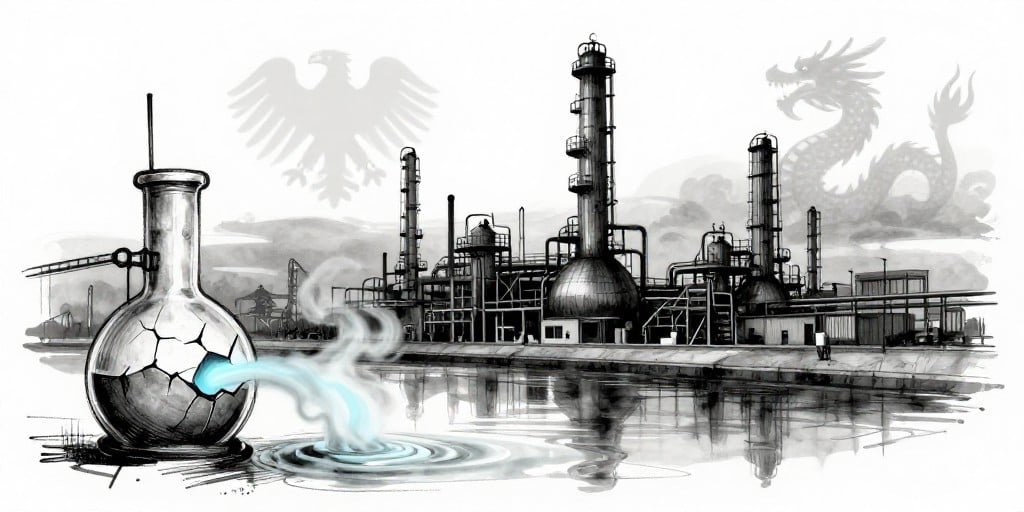
Corporate News Analysis
BASF SE, a leading German chemical manufacturer, registered a modest decline in its share price during Tuesday’s trading session. The company’s shares slipped by roughly one percent, mirroring the broader weakness that surfaced across German chemistry stocks. This movement occurred in tandem with a slight retreat in the DAX, which closed down approximately 0.2 percent, while the Euro Stoxx 50 also slipped marginally.
Sector‑Wide Context
The dip in BASF’s performance was part of a broader pattern of modest pressure on European chemical shares, which collectively experienced a decline of around two to three percent in the main index. Analysts attribute this downturn to several persistent factors:
- High Energy Costs – Elevated electricity and fuel prices continue to weigh on production margins across the chemical industry.
- Intensifying Competition from China – Chinese manufacturers have amplified their exports to Europe, exerting downward pressure on pricing and market share.
- Raw‑Material Price Volatility – Elevated levels for feedstock and other inputs remain a challenge, further eroding profitability.
- Supply‑Chain Disruptions – Ongoing disruptions, rooted in both geopolitical tensions and post‑pandemic recovery, have sustained supply‑chain fragility.
These dynamics collectively underscore the sector’s vulnerability to macro‑economic shocks and geopolitical shifts that transcend individual market boundaries.
Market‑Level Developments
In the broader market environment, the DAX benefited from a brief rebound following an early‑day decline. This rally was supported by:
- Modest Easing in Oil Prices – A slight reduction in crude prices helped to lift industrial sentiment.
- Decreased Bond Yields – A small decline in yields contributed to a more favorable risk‑premium environment for equities.
Within the German market, banks and other financial institutions recorded modest gains, while energy and utility stocks also saw incremental increases. The overall market reaction suggested a cautious but stabilising mood, with investors closely monitoring developments in global trade and the ongoing economic data releases.
Strategic Implications
BASF’s share price movement, in alignment with the broader European chemical sector, reflects entrenched concerns over energy costs and competitive pressures from Chinese exports. For industry participants, the key strategic imperatives include:
- Cost‑Efficiency Initiatives – Investing in energy‑efficient processes to mitigate the impact of high fuel prices.
- Supply‑Chain Resilience – Diversifying supply sources and enhancing inventory management to counteract disruptions.
- Competitive Differentiation – Leveraging advanced R&D and product innovation to maintain a premium position against cost‑competitive Chinese offerings.
The German market’s mixed performance illustrates a delicate balance between short‑term volatility and underlying structural trends in the industrial and chemical sectors. Maintaining a disciplined, data‑driven approach will be essential for stakeholders seeking to navigate this evolving landscape.