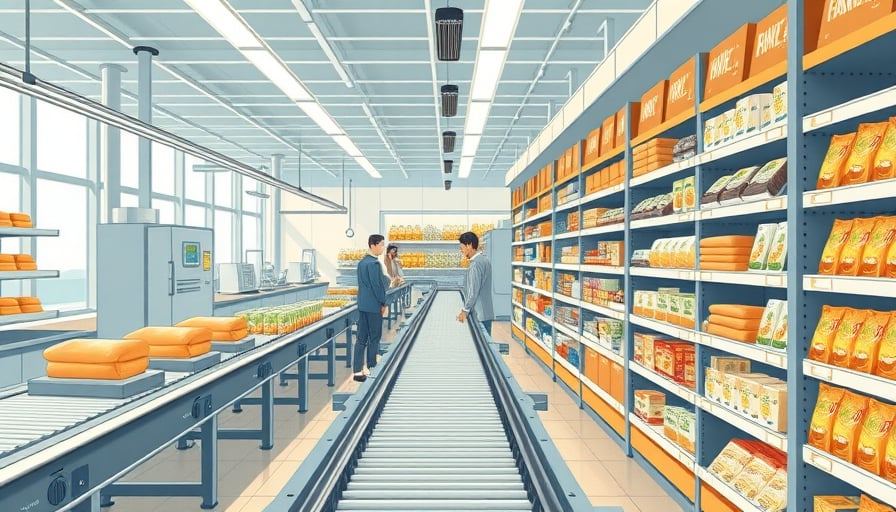
General Mills’ Supply‑Chain Revamp and the Rise of Health‑Focused Packaged Foods
General Mills Inc. has formally appointed Jonathan Ness as Chief Supply Chain Officer, effective March 16, after he had already been filling the role in an acting capacity since late January. Ness will report directly to CEO Jeff Harmening and will assume responsibility for manufacturing, procurement and logistics across the company’s global operations. Analysts view the change as a cornerstone of the firm’s “Accelerate” initiative, which seeks to tighten cost structures while preserving brand relevance in a climate of tightening margins.
Strategic Implications for an Omnichannel Future
The new supply‑chain leadership underscores the importance of an integrated, data‑driven approach to omnichannel retail. As consumer traffic shifts between brick‑and‑mortar outlets, e‑commerce platforms and direct‑to‑consumer channels, firms that can deliver real‑time inventory visibility, flexible fulfillment and rapid response to demand signals will gain a competitive edge. General Mills’ restructuring signals its intent to embed these capabilities across the value chain, leveraging predictive analytics to reduce stockouts and excess inventory while ensuring that popular products remain available at every point of sale.
Consumer‑Driven Product Innovation
Across the packaged‑food sector, brands are revisiting their product lines to accommodate a pronounced consumer pivot toward healthier, high‑fiber options. The trend is fueled by two interrelated forces:
- Gut‑Health Awareness – Research linking dietary fiber to improved microbiome balance has spurred a surge in demand for products that promise digestive benefits.
- Convenience‑Nutrition Duality – Shoppers increasingly look for “better‑for‑you” snacks that do not compromise on taste or on the quick‑serve nature of on‑the‑go foods.
General Mills’ product portfolio, which already includes a range of breakfast cereals and snack bars, is expected to expand its high‑fiber offerings. Such moves align with the broader consumer shift toward foods that combine nutritional value with ease of consumption, reinforcing the company’s position as a trusted brand in both health and convenience.
Cross‑Sector Market Patterns
When comparing data from the cereal, snack, and ready‑to‑eat meal categories, several cross‑sector patterns emerge:
- Premiumization of Fiber‑Rich Products – Across all segments, products with added fiber command a 5‑10 % price premium, indicating consumers’ willingness to pay for perceived health benefits.
- E‑Commerce Uptick – Online sales of high‑fiber snacks have outpaced category growth by 12 % year‑over‑year, suggesting that digital channels are pivotal for reaching health‑conscious demographics.
- Sustainability Integration – Brands that pair fiber enhancement with eco‑friendly packaging see a 3‑5 % lift in brand loyalty, reinforcing the importance of sustainability in the long‑term consumer narrative.
These trends reveal a converging pathway for packaged‑food producers: operational agility, fueled by robust supply‑chain infrastructures, must be paired with product innovation that meets the evolving health and sustainability expectations of shoppers.
Short‑Term Market Movements and Long‑Term Industry Transformation
In the immediate term, General Mills’ appointment of Jonathan Ness is likely to translate into tighter cost controls, improved forecasting accuracy and a reduction in time‑to‑market for new product launches. Investors reacting to these operational efficiencies may experience a modest lift in the company’s share price, reflecting confidence in the “Accelerate” strategy.
Over the longer horizon, the confluence of supply‑chain resilience and health‑centric product development is expected to reshape the packaged‑food landscape. Firms that master omnichannel delivery while continuously innovating their offerings to include high‑fiber, nutritionally balanced options will not only capture current consumer demand but also establish a durable competitive moat. As the industry evolves, the integration of advanced analytics, flexible manufacturing and sustainable sourcing will define the leaders of the next decade.