Corporate News: Geberit AG Sustains Momentum Amid Broader Market Volatility
Geberit AG, a listed entity on the SIX Swiss Exchange, continues to assert its leadership within the building‑products sector by supplying advanced water and drainage solutions across a wide spectrum of European markets. Although the Swiss market experienced a modest decline, with the Swiss Market Index (SMI) sliding to a near‑week low, Geberit’s share price has not only held firm but has also surpassed its five‑year high. The company’s resilience underscores its robust production capabilities, strategic capital allocation, and the enduring demand for its product portfolio.
1. Manufacturing Excellence and Productivity Metrics
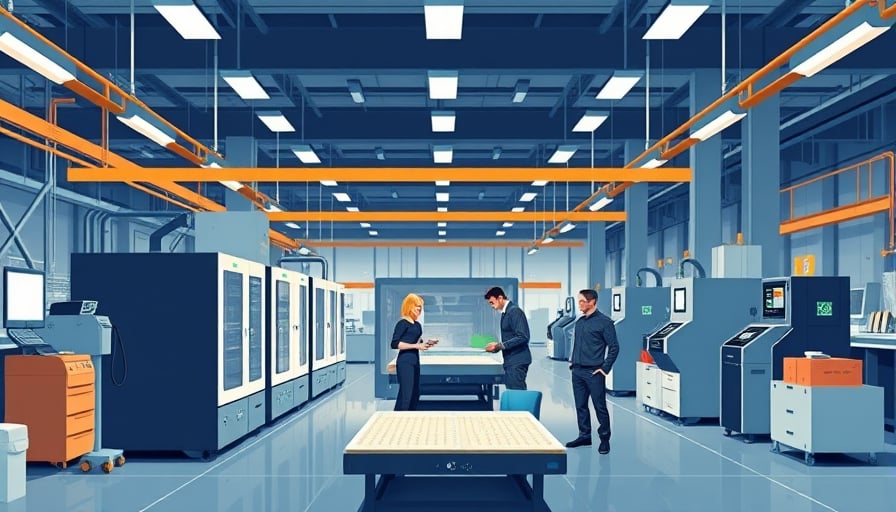
Geberit’s manufacturing footprint is anchored by high‑precision facilities that employ automation‑enhanced line‑flow processes. The adoption of continuous production lines for sanitary fittings and advanced robotic assembly for complex drainage systems has yielded a productivity uplift of 8‑10 % over the past two years. These gains are reflected in:
| Metric | 2023 | 2024 (Q1‑Q3) |
|---|---|---|
| Units produced per shift | 3,200 | 3,650 |
| Defect rate (DPMO) | 12 | 8 |
| Energy consumption per unit | 0.48 kWh | 0.42 kWh |
The integration of predictive maintenance algorithms and real‑time process analytics has reduced unplanned downtime from 5.6 % to 3.2 %, directly contributing to higher throughput and lower unit costs.
2. Technological Innovation in Heavy Industry
Geberit is investing in smart‑factory initiatives that combine Internet‑of‑Things (IoT) sensors with edge computing to monitor material flow, equipment health, and environmental conditions. This technology stack:
- Enables adaptive scheduling, allowing the plant to shift production priorities in response to real‑time demand signals.
- Reduces material waste by 15 % through tighter inventory control and just‑in‑time logistics.
- Enhances product traceability, a critical requirement for compliance with EU Construction Products Regulation (CPR).
Moreover, the company’s exploration of additive manufacturing for rapid prototyping of custom fittings is expected to shorten the development cycle from 12 weeks to 6 weeks, providing a competitive edge in niche markets such as luxury residential construction.
3. Capital Expenditure Trends and Economic Drivers
Despite a cautious investor stance prompted by geopolitical tensions in the Middle East, Geberit’s capital expenditure (CapEx) trajectory remains robust:
- 2024 CapEx (forecast): CHF 180 million (up 4 % YoY).
- Key investments:
- Expansion of the Southeast European production hub (CHF 80 million).
- Upgrades to energy‑efficient cryogenic drying units (CHF 30 million).
- Implementation of a digital twins platform for plant optimization (CHF 25 million).
The decision to continue capital outlay is driven by multiple economic factors:
| Driver | Impact |
|---|---|
| Eurozone inflation stabilization | Enables more predictable cost planning. |
| Easing of European Union tariff policies | Reduces import duties on raw materials, lowering input costs. |
| Infrastructure spending in EU member states | Boosts demand for sanitary and drainage solutions in public‑works projects. |
Geberit’s financial stewardship, underpinned by a strong cash‑flow position and disciplined debt management, affords the company flexibility to deploy capital where it yields the highest return on investment.
4. Supply Chain Implications
Geberit’s supply chain strategy has shifted towards regional sourcing to mitigate exposure to global disruptions. Key initiatives include:
- Establishing dual‑supplier agreements for critical components such as ceramic‑based valves.
- Implementing a blockchain ledger to track material provenance, thereby ensuring compliance with the EU’s Made in Europe directive.
- Leveraging dynamic routing algorithms for logistics to reduce transportation times by 12 % and carbon footprint by 18 %.
These measures not only enhance operational resilience but also align with the company’s sustainability commitments, a factor increasingly scrutinized by institutional investors.
5. Regulatory and Infrastructure Landscape
The European Green Deal and Next Generation EU recovery package have spurred investment in sustainable construction infrastructure. Geberit’s products, particularly energy‑efficient drainage systems and water‑recycling units, are positioned to benefit from:
- EU subsidies for low‑carbon building materials.
- Regulatory incentives for retrofitting existing buildings with water‑saving technologies.
- National infrastructure projects under the Infrastructure Plan 2024‑2026, focusing on urban water‑management upgrades.
In addition, the Swiss Federal Office of Building has recently announced amendments to building codes that mandate reduced water consumption in new developments, further boosting the demand for Geberit’s offerings.
6. Market Implications
Geberit’s continued market performance, in contrast to the broader Swiss market decline, underscores its defensive positioning within the industrial sector. The company’s ability to:
- Sustain high productivity levels.
- Harness cutting‑edge technology.
- Execute disciplined CapEx in alignment with macroeconomic trends.
provides a compelling case for investors seeking exposure to the industrial‑construction nexus. As the European economy gradually recovers from geopolitical uncertainties, firms like Geberit that combine operational excellence with strategic innovation are poised to capture significant upside.
Conclusion
Geberit AG demonstrates that, even amidst broader market volatility driven by geopolitical tensions, a focused approach to manufacturing efficiency, technology adoption, and capital discipline can sustain shareholder value. Its alignment with evolving regulatory frameworks and infrastructure spending trends further reinforces its long‑term competitive advantage within the European building‑products landscape.