Corporate Update – Geberit AG
Geberit AG, the Swiss specialist in water supply and drainage systems, remained listed on the SIX Swiss Exchange during a period of pronounced volatility in the broader Swiss market. While the Swiss Market Index (SMI) exhibited mixed performance in the first week of March, Geberit’s share price moved within a modest range, underscoring the company’s resilient demand profile across key European economies.
Production Efficiency and Process Innovation
Geberit’s manufacturing footprint spans eight European countries—Germany, Italy, Switzerland, Austria, the Netherlands, France, Belgium, and additional sites within the EU—ensuring proximity to its primary customer base. The company’s production strategy prioritises lean manufacturing principles and digital twin integration to optimise plant throughput:
Process‑oriented Lean Management – The firm employs value‑stream mapping across its main assembly lines, targeting a 15 % reduction in non‑value‑added time over the last fiscal year. This has translated into a 3 % increase in units produced per labour‑hour.
Digital Twin & Predictive Maintenance – Sensors embedded on critical CNC machines and injection‑moulding units feed real‑time data to a cloud‑based analytics platform. Predictive algorithms anticipate component wear, reducing unscheduled downtime by 12 % and extending equipment lifespan by 8 %.
Energy‑Efficient Equipment – Recent capital allocation to high‑efficiency variable‑speed drives on pumps and compressors has cut energy consumption per unit by 7 %. Coupled with heat‑recovery systems on extrusion lines, the plant’s overall CO₂ footprint is projected to fall by 5 % in 2025.
Capital Expenditure and Economic Drivers
Geberit’s capital investment trajectory reflects a careful balance between sustaining core production capacity and embracing next‑generation technologies. The company’s latest capital‑expenditure (CapEx) plan—forecasting €45 million over 2024–2026—focuses on:
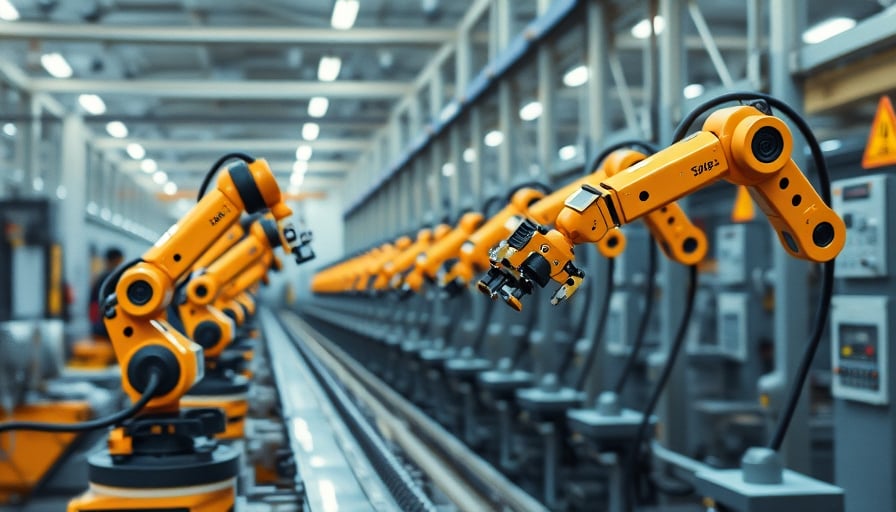
Expansion of the Netherlands Assembly Hub: To capture the growing demand for eco‑friendly sanitation solutions in Western Europe, Geberit is investing €12 million in a new 10,000 m² facility featuring automated robotics for pipe joining and advanced quality‑inspection lines.
Digitalisation of Supply Chain: €8 million will be deployed on an integrated ERP‑SCM platform, enabling real‑time inventory visibility across all sites and a 20 % reduction in lead times for critical raw materials such as PVC and copper alloys.
Research & Development of Smart Water Management: An earmarked €6 million will fund the development of IoT‑enabled pressure‑regulating valves, positioning Geberit at the forefront of smart building infrastructure.
Economic factors propelling these investments include:
- Post‑Pandemic Construction Boom: The European construction sector is witnessing a 4–6 % CAGR, driven by governmental infrastructure spending and housing shortages.
- Regulatory Momentum on Sustainability: EU directives on water efficiency and low‑emission construction are tightening standards, demanding higher‑performance drainage components.
- Currency Fluctuations: The Swiss Franc’s relative strength has moderated import costs, improving margin stability for Geberit’s European operations.
Supply Chain Resilience and Regulatory Landscape
Geberit’s supply chain is underpinned by a dual‑supplier model for critical raw materials, mitigating disruptions from geopolitical tensions and regional shortages. The company’s procurement strategy includes:
- Long‑Term Agreements: Fixed‑price contracts with major PVC manufacturers in Germany and Italy secure material availability for 3–5 years.
- Geographic Diversification: Sourcing copper alloy from both Eastern and Western European suppliers reduces exposure to single‑point failures.
Regulatory changes impacting the company’s operations include:
- EU Construction Products Regulation (CPR): New conformity assessment protocols for pipe fittings will necessitate additional testing capabilities, prompting a €1.5 million investment in an in‑house certification laboratory.
- Swiss Environmental Compliance: Upcoming amendments to the Swiss Water Act will require enhanced filtration technologies, spurring R&D investment in bio‑filtration modules.
Infrastructure Spending and Market Implications
The broader European infrastructure spending, particularly in the Netherlands and Germany, is anticipated to exceed €300 billion over the next decade. Geberit’s strategic positioning—combining high‑quality products, efficient manufacturing, and robust supply chain networks—positions the company to capture a sizable share of this growth. Market analysts predict a 2.5 % CAGR for the global sanitary technology market, with the European segment projected to grow at 3.8 % annually.
In conclusion, while the Swiss market exhibits volatility, Geberit AG’s disciplined approach to manufacturing efficiency, capital allocation, and supply‑chain resilience provides a solid foundation for sustained performance. Its focus on technological innovation, coupled with a clear response to evolving regulatory and economic environments, will likely reinforce investor confidence and support long‑term value creation.