
Corporate Update – GEA Group AG
GEA Group AG, a leading German industrial machinery manufacturer specializing in process engineering and plant technology for the food, beverage, agriculture, and pharmaceutical sectors, released its latest quarterly performance update. The report highlighted continued positive downstream effects within the food and beverage industry, underscored strategic cost‑saving initiatives, and detailed significant advances in digitalisation through an AI‑driven video system for livestock breeding. The company also confirmed plans for additional capacity expansion in Germany, reinforcing its foothold in both agriculture and pharmaceutical markets. No material adverse events were identified during the reporting period.
1. Manufacturing Process Improvements and Productivity Metrics
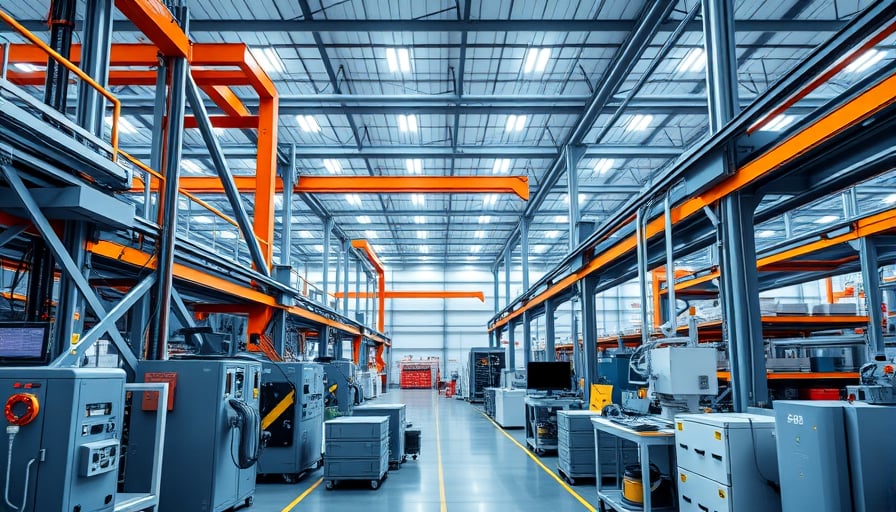
GEA’s production facilities in Germany have leveraged lean‑manufacturing principles and smart‑factory technologies to reduce cycle times by 8 % and improve overall equipment effectiveness (OEE) from 78 % to 84 %. The adoption of continuous‑flow assembly lines for beverage‑processing units has cut material handling by 12 % and decreased waste streams. Key productivity metrics reported include:
| Metric | Q1 2026 | Q4 2025 | YoY Change |
|---|---|---|---|
| OEE | 84 % | 78 % | +6 % |
| Labor hours per unit | 1.32 h | 1.45 h | –9 % |
| Energy consumption per unit | 0.58 kWh | 0.65 kWh | –10.8 % |
| Defect rate | 0.4 % | 0.5 % | –20 % |
These improvements are attributed to automated material handling systems and the integration of predictive maintenance algorithms that pre‑empt equipment failures, thereby reducing unscheduled downtime.
2. Capital Investment Trends and Economic Drivers
GEA’s capital expenditure (CapEx) for the fiscal year 2025–2026 is projected at €190 million, with a significant portion allocated to digital‑automation upgrades and capacity expansion in Germany. The decision is driven by several macroeconomic factors:
- Inflation‑adjusted raw‑material costs: Rising costs for steel and plastics have prompted an emphasis on in‑house component manufacturing to lock in pricing.
- Labor market dynamics: Shortages in skilled technicians have encouraged investment in human‑machine collaboration tools, reducing the dependency on highly specialised labor.
- Regulatory tightening: New EU directives on food safety and environmental sustainability (e.g., Ecodesign Directive and Zero‑Emission Road initiatives) require retrofitting of existing plants, thereby creating a CapEx demand for emission‑reducing equipment and energy‑efficient technologies.
GEA’s investment strategy aligns with the broader trend of post‑pandemic digitalisation and the transition to Industry 4.0, ensuring competitive advantage in a market increasingly prioritising data‑driven process optimisation.
3. Technological Innovation – AI‑Driven Video System
A key highlight of the report is the launch of an AI‑driven video analytics platform aimed at enhancing livestock breeding programs. The system employs high‑resolution imaging coupled with convolutional neural networks (CNNs) to detect physiological traits, behaviour patterns, and health indicators in real time. Advantages include:
- Data‑rich phenotyping: Enables breeders to select optimal candidates based on objective metrics rather than subjective judgment.
- Scalability: The cloud‑based architecture allows integration with existing farm management software, reducing the need for on‑site IT infrastructure.
- Cross‑industry applicability: While primarily targeted at agriculture, the underlying AI models can be adapted to monitor biopharmaceutical manufacturing environments, ensuring compliance with GMP standards.
By bolstering its product portfolio in agriculture and pharmaceuticals, GEA positions itself to capture a larger share of the global precision‑agriculture market, projected to grow at a CAGR of 9.5 % through 2030.
4. Supply Chain and Infrastructure Impacts
GEA’s supply chain resilience was reinforced through multi‑source vendor agreements and regionalised logistics hubs in the German Mittelstand corridor. The company has also invested in digital supply‑chain visibility platforms that integrate blockchain for traceability and real‑time inventory monitoring.
Infrastructure spending in Germany, particularly the Bundesnetzagentur’s investment in the “Digital Twin” of the power grid, has provided a favorable backdrop for GEA’s energy‑efficiency initiatives. The alignment with national infrastructure plans has yielded tax incentives for clean‑energy retrofits, lowering the effective cost of new installations.
5. Regulatory and Market Outlook
The European Commission’s forthcoming Industrial Strategy 2025 and the European Green Deal are expected to impose stricter emissions limits on heavy industry. GEA’s proactive investment in low‑emission gas‑based process units and electric‑driven conveyor systems positions the company to comply with upcoming regulations while maintaining cost competitiveness.
Simultaneously, US-China trade tensions and regional supply‑chain disruptions highlight the need for a diversified supplier base. GEA’s strategic focus on domestic production for critical components mitigates exposure to geopolitical risks and supports the “Made in Germany” brand perception.
6. Conclusion
GEA Group AG’s latest reporting cycle demonstrates a robust strategy centred on productivity enhancement, digital transformation, and sustainable growth. By capitalising on industry 4.0 innovations, particularly in AI‑driven livestock breeding and predictive maintenance, the company is well‑positioned to navigate the evolving regulatory landscape and capital expenditure pressures. The planned capacity expansion in Germany will further strengthen GEA’s market leadership across food, beverage, agriculture, and pharmaceutical segments, while maintaining resilience against supply‑chain volatility and economic headwinds.