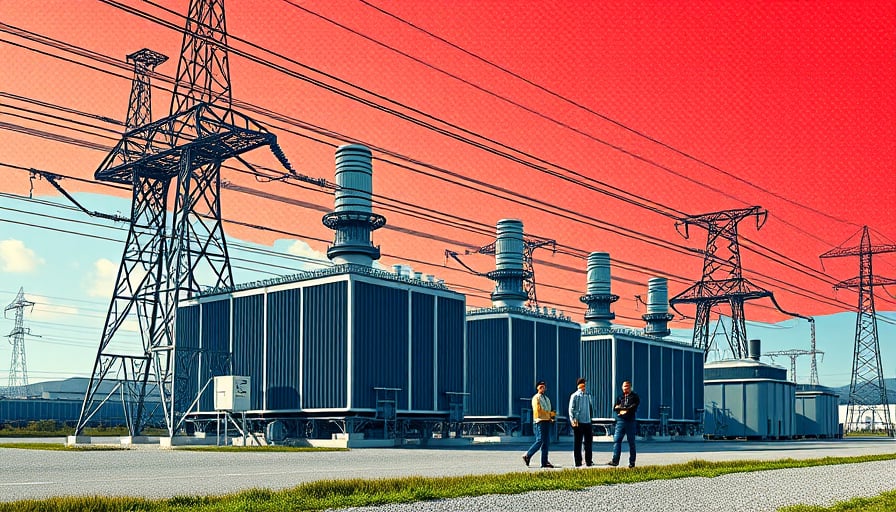
Corporate Analysis: GE Vernova T&D India and Strategic Expansion in India
1. Investor Interest and Performance Upswing
General Electric’s India‑based unit, GE Vernova T&D India, has captured significant investor attention after a pronounced turnaround in its financial metrics. The company has transitioned from operating losses to recording a positive profit margin in the most recent quarter, accompanied by a marked improvement in operating profitability. This shift is largely attributable to the unit’s repositioning from a traditional equipment supplier to a technology partner specializing in high‑voltage direct current (HVDC) transmission solutions.
Key performance indicators include:
- Positive profit margin in the latest reporting period.
- Improved operating profitability, reflecting tighter cost control and higher contribution margins.
- Expanded order backlog, signaling robust demand and a pipeline that is poised to generate revenue as capacity expands.
2. Strategic Positioning in India’s Grid Infrastructure
India’s grid infrastructure is undergoing rapid transformation driven by three interlocking trends:
| Driver | Impact on GE Vernova T&D India |
|---|---|
| Renewable Energy Expansion | Solar and wind farms require efficient long‑distance transmission; HVDC offers lower losses compared to HVAC. |
| Electrification Drive | Rural and urban electrification increases overall load, necessitating upgraded transmission capacity. |
| Data‑Centre Growth | Data centers demand stable, high‑capacity power, reinforcing the need for advanced grid solutions. |
The unit’s focus on high‑margin HVDC and grid‑stability projects aligns with these macro‑trends, positioning it as a key player in the evolving energy landscape. However, the market price of the unit reflects an expectation of flawless execution; operational delays or cost overruns could trigger a valuation reassessment.
3. Operational Risks and Market Expectations
While the financial turnaround is encouraging, the valuation carries implicit risk premia:
- Execution risk: Scaling up capacity to convert order backlog into revenue demands disciplined project management and supply‑chain stability.
- Cost escalation: Raw material and labor cost volatility could erode margins.
- Regulatory uncertainty: Changes in government policy or tariff structures may alter project economics.
Analysts advise monitoring project timelines, cost control mechanisms, and regulatory developments to gauge the sustainability of the unit’s growth trajectory.
4. GE’s Broader Investment in India
Parallel to the unit’s performance, General Electric’s parent company has announced a substantial investment in a new manufacturing facility in India. The facility aims to:
- Increase local production capacity for power equipment.
- Enhance supply chain resilience by reducing dependence on imports.
- Support electrification initiatives through tailored product offerings.
This expansion is a strategic component of GE’s long‑term growth agenda, reinforcing its presence in a high‑growth market. By strengthening local manufacturing capabilities, GE positions itself advantageously in the global power equipment sector while deepening its ties to India’s dynamic energy sector.
5. Cross‑Sector Implications
The developments at GE Vernova T&D India illustrate broader patterns in the energy and manufacturing sectors:
- Technology‑centric pivot: Companies are increasingly moving from component supply to integrated technology solutions, driving higher margins and deeper customer engagement.
- Localization trend: Investments in domestic manufacturing are becoming a strategic priority to mitigate geopolitical risks and capture emerging market demand.
- Sustainable infrastructure demand: The push for renewable integration and electrification fuels continuous investment in advanced grid technologies worldwide.
By aligning with these macro trends, GE and its India unit are poised to capitalize on sustained demand for HVDC solutions while contributing to global decarbonisation and grid resilience goals.