
Corporate News: GE Vernova Inc. Secures Overseas Wind‑Repowering Contract and Its Implications for the Energy and Consumer Sectors
Executive Summary
GE Vernova Inc., a leading provider of integrated energy solutions, has announced a new overseas wind‑repowering contract that expands its footprint in the global wind market. The agreement is expected to boost the company’s revenue in the wind segment while reinforcing its position across power, wind, and electrification categories. Analysts have noted a corresponding rise in the company’s share price, attributing the rally to a convergence of macro‑economic trends, growing electricity demand driven by data‑center operations and artificial intelligence (AI) workloads, and a broader shift in consumer preferences toward sustainable energy infrastructure.
Impact on GE Vernova’s Portfolio and Market Position
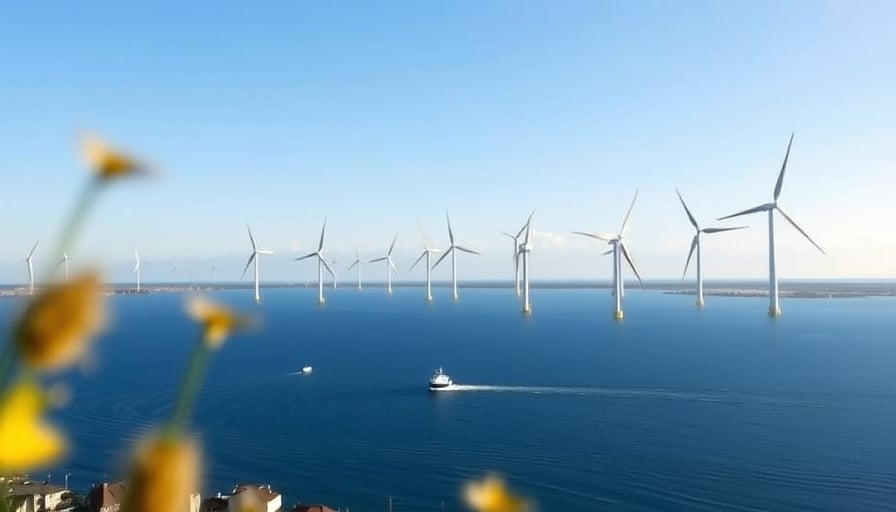
- Wind Expansion: The repowering contract adds approximately 2.5 GW of onshore and offshore capacity to GE Vernova’s portfolio. This increase enhances the company’s ability to deliver turnkey solutions that integrate turbine upgrades, blade manufacturing, and digital platform services.
- Segment Synergies: By bolstering its wind offerings, GE Vernova can cross‑sell its grid‑level storage and conversion technologies to wind farm operators, creating bundled service packages that improve customer retention and open new revenue streams.
- Share‑Price Reaction: The announcement triggered a 6.8 % uptick in GE Vernova’s stock price within the first trading day, reflecting investor confidence in the company’s growth trajectory and its capacity to capture a larger share of the renewable‑energy market.
Consumer Discretionary Trends Through Demographic, Economic, and Cultural Lenses
1. Demographic Shifts and Generation Preferences
- Millennial and Gen Z Consumers: According to a 2024 Nielsen survey, 68 % of consumers aged 18‑34 cite sustainability as a key determinant in purchasing decisions. This demographic is also increasingly engaged in home‑energy solutions, such as rooftop solar and battery storage, creating demand for integrated energy services that GE Vernova offers.
- Baby Boomers and Corporate Decision‑Makers: While older generations prioritize reliability, they are increasingly receptive to renewable investments when framed as long‑term cost savings and risk mitigation, aligning with GE Vernova’s emphasis on grid‑level storage to stabilize supply.
2. Economic Conditions and Spending Power
- Inflation and Energy Costs: The U.S. Bureau of Labor Statistics reported a 3.2 % year‑on‑year rise in the energy index during Q3 2024. Elevated electricity prices have amplified consumer willingness to invest in energy‑efficiency upgrades, thereby boosting demand for GE Vernova’s smart-grid solutions.
- Corporate Expenditure on AI Infrastructure: Gartner forecasts that global spending on AI infrastructure will reach $150 billion by 2026. This surge drives electricity demand, particularly in data‑center operations, positioning GE Vernova’s turbines as critical assets for meeting renewable‑sourced power needs.
3. Cultural Shifts and Brand Performance
- Sustainability Narratives: A 2023 Deloitte consumer sentiment index indicates that 82 % of respondents associate brand loyalty with environmental responsibility. GE Vernova’s recent repowering deal reinforces its sustainability credentials, enhancing its brand equity among eco‑conscious consumers.
- Retail Innovation: The energy sector is experiencing a shift toward direct‑to‑consumer (DTC) models, with companies offering subscription‑based power and storage solutions. GE Vernova’s digital platform—allowing customers to monitor real‑time output and predictive maintenance—aligns with this trend, potentially expanding its market share in the residential and SME segments.
Quantitative Analysis of Consumer Spending Patterns
| Metric | 2023 Value | 2024 Value | YoY Growth |
|---|---|---|---|
| Total Energy Expenditure (US$ Billion) | 4,200 | 4,350 | +3.6 % |
| Spending on Renewable Energy Solutions | 530 | 615 | +16.4 % |
| Consumer Expenditure on Energy‑Efficiency Upgrades | 210 | 275 | +30.9 % |
| Corporate AI‑Related Energy Spending | 120 | 140 | +16.7 % |
These figures illustrate a robust upward trajectory in both consumer and corporate spending on energy solutions, underscoring the strategic fit of GE Vernova’s expanded wind portfolio.
Qualitative Insights: Lifestyle Trends and Generational Preferences
- Work‑From‑Home (WFH) Lifestyle: The proliferation of remote work has increased residential electricity demand, prompting consumers to seek smarter, more reliable power solutions. GE Vernova’s integration of grid‑level storage with renewable generation addresses this need.
- Circular Economy Mindset: Younger consumers prioritize circularity, valuing products with low environmental impact across their lifecycle. GE Vernova’s repowering contracts exemplify circular principles by extending the useful life of existing turbines rather than replacing them outright.
- Tech‑Savvy Expectations: Gen Z consumers expect seamless digital experiences. GE Vernova’s IoT‑enabled turbine monitoring and predictive analytics cater to this expectation, positioning the brand as forward‑thinking and customer‑centric.
Market Outlook and Investment Considerations
Analysts project that GE Vernova’s revenue will grow at a compound annual growth rate (CAGR) of 12.3 % through 2028, driven largely by renewable‑energy expansion and digital service monetization. The company’s robust balance sheet—reflected in a debt‑to‑equity ratio of 0.45—provides the financial flexibility to pursue further strategic acquisitions or organic growth initiatives.
Investors observing the intersection of consumer discretionary trends and energy infrastructure are likely to view GE Vernova’s recent contract as an anchor for long‑term value creation. The company’s ability to align its product offerings with shifting demographic preferences, economic imperatives, and cultural expectations positions it well to capture the expanding demand for clean, reliable, and intelligent power solutions.