
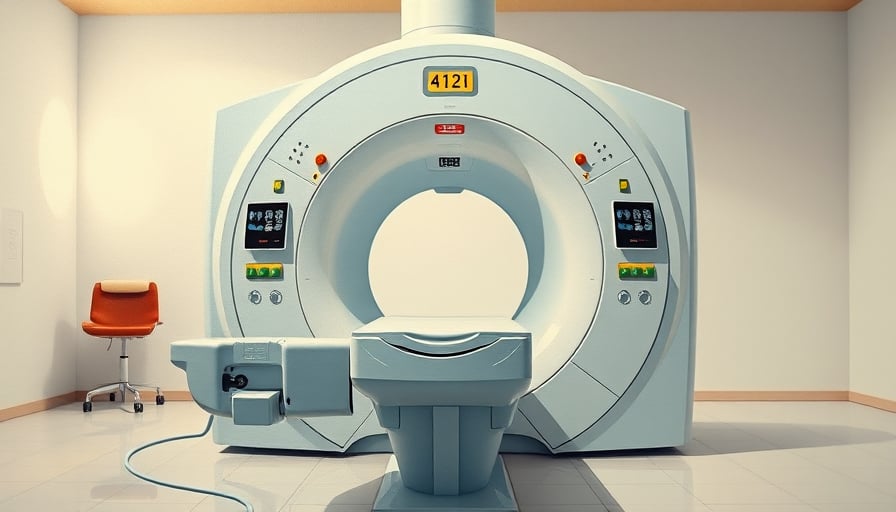
Corporate Update: GE HealthCare Announces Next‑Generation MRI Technology for RSNA 2025
GE HealthCare Inc. (NYSE: GEHC) has announced that it will showcase a suite of advanced imaging solutions during the Radiological Society of North America (RSNA) 2025 Annual Meeting in Chicago. The company emphasized its forthcoming SIGNA™ MRI platform, noting that it has already filed 510(k) applications with the U.S. Food and Drug Administration (FDA) as part of a systematic effort to secure regulatory clearance.
Strategic Significance of the SIGNA™ Platform
The SIGNA™ platform represents a significant evolution in magnetic resonance imaging (MRI) technology. By integrating high‑field strengths with modular hardware and software configurations, GE HealthCare aims to deliver:
- Enhanced image quality and diagnostic precision, enabling earlier detection of disease processes.
- Improved workflow efficiency through streamlined acquisition protocols and automated post‑processing.
- Greater patient comfort via reduced scan times and quieter operating modes.
These capabilities align with the broader industry trend toward precision medicine, where imaging is used to guide individualized treatment plans. The company’s focus on precision care underscores its commitment to addressing complex healthcare challenges, such as managing chronic conditions and reducing diagnostic uncertainty.
Regulatory Pathway and Market Dynamics
Submitting 510(k) applications is a strategic move that reflects GE HealthCare’s intent to bring the SIGNA™ platform to market within a regulated framework that assures safety and efficacy. The FDA’s 510(k) process requires demonstrating that the new device is substantially equivalent to a predicate device already on the market. This approach balances the need for regulatory compliance with the speed of product deployment, a critical factor in the rapidly evolving imaging sector.
Market drivers for advanced MRI systems include:
- Growing demand for high‑resolution imaging in oncology, neurology, and musculoskeletal applications.
- Reimbursement pressures that favor technologies offering higher diagnostic yield and cost savings through reduced repeat studies.
- Competitive pressures from other major players such as Siemens Healthineers, Philips Healthcare, and Canon Medical Imaging, each vying for market share by offering proprietary software and hardware innovations.
GE HealthCare’s long history of merging medical expertise with cutting‑edge technology positions it well to compete on both product performance and clinical value.
Economic Context and Cross‑Sector Implications
The healthcare imaging market is influenced by macroeconomic factors such as:
- Healthcare spending growth, driven by aging populations and increased chronic disease prevalence.
- Capital investment cycles in hospital infrastructure, where imaging departments are often prioritized due to their high revenue potential.
- Telehealth and remote monitoring trends, which create a demand for portable or hybrid imaging solutions that can be integrated into broader care networks.
Beyond the imaging domain, advancements in MRI technology have spillover benefits for adjacent sectors. For instance, improvements in image processing algorithms can inform artificial intelligence applications in oncology and cardiology, fostering interdisciplinary collaboration between radiology, oncology, and data science teams.
Competitive Positioning
GE HealthCare’s SIGNA™ platform will compete directly with Siemens’ SOMATOM® and Philips’ Ingenia® series. Key differentiators include:
- Modular architecture that allows for scalable deployment across low‑ to high‑throughput facilities.
- Integrated artificial intelligence workflows that enhance image interpretation and reduce inter‑observer variability.
- Robust clinical data ecosystems facilitating longitudinal patient monitoring.
By positioning the SIGNA™ platform as a precision‑care solution, GE HealthCare taps into a narrative that resonates with both clinicians and payers, potentially accelerating adoption rates.
Anticipated Outcomes of the RSNA Presentation
The RSNA 2025 Annual Meeting offers a platform for GE HealthCare to:
- Demonstrate clinical efficacy through live imaging demonstrations and peer‑reviewed case studies.
- Engage key opinion leaders and gather feedback that can refine product specifications.
- Secure early adopters who can provide validation data for regulatory submissions and market entry strategies.
The company’s presentation is expected to reinforce its legacy of innovation while highlighting tangible benefits to patient care and healthcare economics.
Prepared for corporate investors and industry analysts seeking a nuanced understanding of GE HealthCare’s strategic initiatives in medical imaging.