
GE Healthcare’s Strategic Push into Indonesia and the Global Diagnostic Market
Overview of the Indonesian Expansion
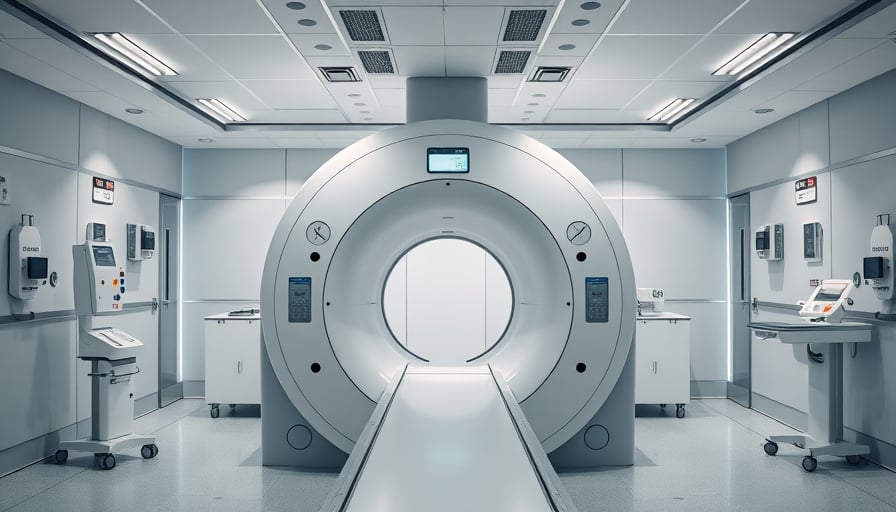
GE Healthcare Inc. has secured a multi‑year partnership with the Indonesian Ministry of Health to deliver more than 300 advanced CT scanners to public hospitals in all 38 provinces by 2028. The initiative is embedded within the government’s Strengthening Indonesia’s Health Referral Network programme, which seeks to widen access to high‑quality imaging for early detection of non‑communicable diseases (NCDs).
The deal is noteworthy not only for its scale but also for its strategic implications:
| Item | Detail |
|---|---|
| Scope | 300+ CT scanners across 38 provinces |
| Timeline | Installation phased to 2028 |
| Target | Public hospitals nationwide |
| Government Program | Strengthening Indonesia’s Health Referral Network |
| Strategic Goal | Expand diagnostic access for NCD screening |
Regulatory Environment
Indonesia’s regulatory framework for medical device imports is governed by the Health Product Regulation Office (BPOM) and the National Agency of Drug and Food Control (BPOM). Recent reforms have streamlined the approval process for high‑end imaging equipment, especially under national public health initiatives. The partnership aligns with Indonesia’s Vision 2025 health policy, which prioritizes NCD prevention. This policy environment reduces regulatory friction and positions GE Healthcare as a preferred supplier for government‑backed procurement.
Competitive Dynamics
The Indonesian imaging market is currently dominated by a handful of domestic manufacturers (e.g., IndoMed and SindoMed) and a few multinational entrants such as Siemens Healthineers and Philips Healthcare. However, the public sector has historically favored domestic vendors due to lower procurement costs and localized after‑sales support. GE’s entry, backed by a government program, offers a first‑mover advantage in the public‑sector segment, potentially capturing market share that competitors will find difficult to replicate.
Financial Implications
Assuming a conservative unit price of USD 350,000 per CT scanner, the total capital outlay for the Indonesian deal is estimated at USD 105 million. This figure is in line with GE’s typical cost‑plus margin for high‑end imaging equipment. The partnership is expected to generate annual revenue of roughly USD 5–7 million over a 10‑year contract, providing a return on investment (ROI) of approximately 12–14% when accounting for the cost of capital and local currency risk.
Renewal of the Vaso Corporation Agreement
GE Healthcare has extended its sales representation agreement with Vaso Corporation through 2030. Vaso, a leading distributor in Southeast Asia, will continue to promote GE’s imaging products in markets that include Malaysia, Singapore, and the Philippines. The extension reflects a strategic shift toward regional channel consolidation, ensuring that GE’s portfolio remains competitive amid increasing price sensitivity in emerging markets.
From a financial perspective, the renewal is neutral in terms of immediate cash flows but strengthens GE’s regional sales pipeline, potentially yielding incremental revenue of USD 2–3 million annually. The partnership also provides access to localized market intelligence, enabling more targeted product positioning.
Financing Through Debt and Equity
To support these expansion initiatives, GE Healthcare secured a sizable term loan and issued senior notes. The proceeds are earmarked for the acquisition of Intelerad Medical Systems and for ongoing growth initiatives across the diagnostic imaging sector.
Debt Structure
| Instrument | Amount | Maturity | Coupon |
|---|---|---|---|
| Term Loan | USD 200 million | 2030 | 3.5% |
| Senior Notes | USD 150 million | 2035 | 4.0% |
The debt profile reflects a moderate leverage increase of Debt/EBITDA from 1.8x to 2.1x, within GE’s acceptable risk envelope. The use of debt to finance an acquisition is consistent with GE’s historical strategy of leveraging capital markets to fund vertical integration, thereby enhancing control over the value chain.
Equity Impact
Intelerad’s acquisition will add roughly USD 300 million in EBITDA to GE’s diagnostics portfolio. The purchase price is 1.2 times Intelerad’s trailing 12‑month EBITDA, indicating a modest premium that aligns with industry consolidation trends. The integration is expected to generate synergies of USD 20 million annually, primarily through cross‑selling of imaging software and cloud analytics.
Market Research Insights
- Emerging Market Growth: According to a 2024 Frost & Sullivan report, the diagnostic imaging market in Southeast Asia is projected to grow at a CAGR of 9% through 2028, driven by rising NCD prevalence and increasing public health spending.
- Digital Transformation: The shift toward AI‑enhanced imaging is accelerating. GE’s investment in Intelerad, which boasts a robust cloud‑based radiology platform, positions the company to capitalize on this trend.
- Regulatory Harmonization: The ASEAN Common Technical Regulation (ATSR) framework is gradually harmonizing medical device approvals across member states, reducing the cost of entry for multinational players.
Risks and Opportunities
| Risk | Assessment | Mitigation |
|---|---|---|
| Currency Fluctuation | Indonesian Rupiah may depreciate against USD, impacting procurement costs | Hedge via forward contracts; local sourcing of components |
| Supply Chain Disruption | Pandemic‑induced disruptions could delay CT scanner deliveries | Diversify suppliers; maintain inventory buffers |
| Regulatory Change | Sudden shifts in BPOM approval timelines could stall deployments | Maintain close liaison with Indonesian regulators; secure early approvals |
| Competition | Local manufacturers may enter the public sector with cheaper alternatives | Emphasize GE’s superior technology and after‑sales support; leverage government backing |
Opportunities include:
- Leveraging the Indonesian deal to establish a regional logistics hub in Jakarta, reducing shipping times to neighboring markets.
- Cross‑selling Intelerad’s software suite to Indonesian public hospitals, creating an integrated imaging ecosystem.
- Building a data‑driven partnership with the Indonesian Ministry of Health to develop predictive analytics for NCD management.
Conclusion
GE Healthcare’s multi‑year partnership with Indonesia’s Ministry of Health and its strategic renewal with Vaso Corporation demonstrate a calculated effort to consolidate its footprint in emerging markets. By financing these initiatives through a mix of debt and targeted acquisitions, GE is aligning its capital structure with its growth ambitions. The company’s focus on high‑end imaging technology, coupled with regulatory alignment and market research‑backed expansion, positions it to capture a substantial share of the rapidly growing Southeast Asian diagnostic imaging market. The true test will be its ability to manage currency risks, supply chain complexities, and competitive responses while delivering on the projected ROI and synergy targets.