
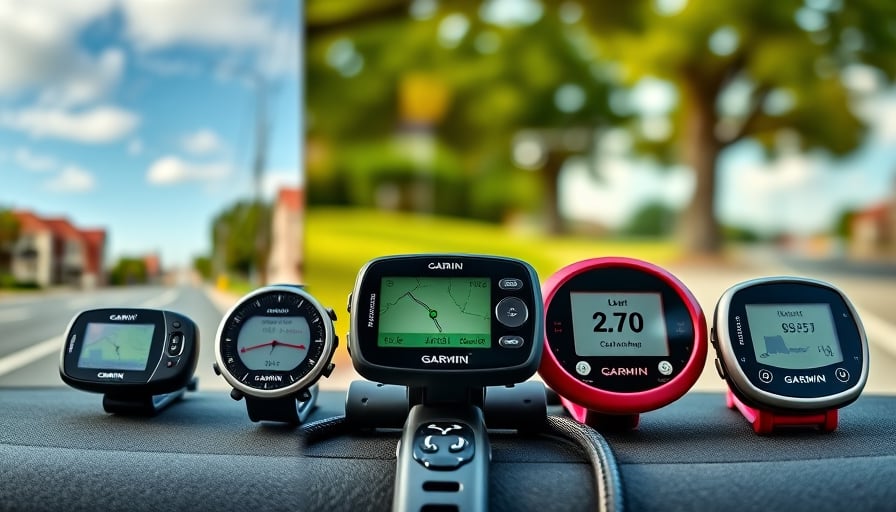
Institutional Trading Activity in Garmin Ltd. Reflects Strategic Portfolio Management Amid Broader Consumer‑Goods Trends
On January 24 2026, Garmin Ltd., the Swiss‑based consumer‑technology firm listed on the New York Stock Exchange, experienced a flurry of institutional trading. The Goldman Sachs Strategic Factor Allocation Fund increased its position by adding a substantial block of shares, while Bridgewater Advisors Inc. reported a sale of a smaller block. In addition, BNC Wealth Management, LLC; Jackson Thornton Wealth Management, LLC; Triad Wealth Partners, LLC; and Hager Investment Management Services, LLC each divested several hundred to several thousand shares. These transactions demonstrate active portfolio management by major institutional investors and underscore Garmin’s continued relevance across multiple consumer‑goods sectors, including automotive, aviation, marine, outdoor, and fitness.
Market Context: Consumer‑Goods Trends and Retail Innovation
Consumer‑goods markets are currently undergoing a shift toward integrated, data‑driven solutions that enhance the consumer experience across both physical and digital touchpoints. Garmin’s product portfolio—encompassing navigation devices, wearable fitness trackers, and marine electronics—positions the company at the intersection of these trends:
| Sector | Current Trend | Garmin’s Opportunity |
|---|---|---|
| Automotive | In‑vehicle connectivity and autonomous navigation | Expansion of connected‑car modules and over‑the‑air software updates |
| Aviation | Real‑time flight data and safety analytics | Growth in commercial and private aviation segments via certified flight‑management systems |
| Marine | IoT‑enabled vessel monitoring | Increase in smart‑boat solutions and integration with marine‑specific sensors |
| Outdoor & Fitness | Health‑tracking and location‑based services | Broadening of wearables ecosystem and partnerships with sports apparel brands |
The convergence of these sectors suggests that Garmin’s diversified revenue streams may provide a hedge against cyclical demand swings in any single market.
Omnichannel Retail Strategies and Consumer Behavior Shifts
Retailers across the consumer‑goods landscape are accelerating their omnichannel initiatives to meet consumers’ expectations for seamless purchase journeys. Key drivers include:
- Digital‑first Engagement: Consumers now begin their research online, often using mobile devices to compare products, read reviews, and access augmented‑reality (AR) demos before making a purchase in-store.
- Personalized Experience: Data analytics enable retailers to tailor recommendations based on past buying behavior and real‑time browsing data.
- Fast Fulfilment: Same‑day delivery and in‑store pickup options have become standard, particularly for high‑tech products like Garmin’s devices.
For Garmin, this translates into strategic partnerships with e‑commerce platforms and physical retailers that can leverage in‑store data analytics to upsell complementary devices (e.g., pairing a fitness tracker with a smartwatch or marine navigation system). Moreover, Garmin’s own direct‑to‑consumer e‑commerce portal offers a controlled narrative that can reinforce brand positioning as a premium provider of integrated navigation solutions.
Supply‑Chain Innovations and Long‑Term Industry Transformation
The global supply chain for consumer electronics is evolving to address volatility, sustainability, and speed:
- Near‑shoring: Companies are relocating or expanding manufacturing facilities closer to key markets to reduce lead times and geopolitical risk. Garmin’s recent announcement of a new assembly plant in Central America exemplifies this trend.
- Digital Twins and Predictive Analytics: Real‑time monitoring of supply‑chain nodes allows for proactive management of component shortages and quality issues.
- Circular Economy Models: Recycling programs for wearable devices and electronic components are gaining regulatory and consumer support, prompting firms to redesign products for easier disassembly.
These innovations are reshaping how firms like Garmin source, assemble, and distribute their products, potentially reducing operating costs and improving time‑to‑market. Over the longer term, the integration of AI‑driven forecasting and blockchain‑based traceability could become industry standards, enhancing transparency for both consumers and regulators.
Short‑Term Market Movements vs. Long‑Term Transformation
The institutional trades observed on January 24 2026 reflect a mix of tactical and strategic motives:
- Goldman Sachs’ block addition likely signals a bullish outlook on Garmin’s ability to capitalize on rising demand for connected automotive and fitness technologies.
- Bridgewater’s sale may represent a portfolio rebalancing effort or a hedge against sector‑specific risk, given the firm’s reputation for macro‑strategic positioning.
- Divestitures by wealth‑management firms suggest a recalibration of exposure to a mid‑cap technology stock amid a broader shift toward defensive or higher‑growth sectors.
While these transactions influence short‑term liquidity and volatility, they also hint at underlying confidence in Garmin’s positioning within the evolving consumer‑goods ecosystem. In the long term, sustained investment in omnichannel retail, supply‑chain resilience, and cross‑sector product integration will likely drive value creation for investors and consumers alike.
This article synthesizes publicly available institutional trading data with macro‑level consumer‑goods trends, providing a strategic editorial perspective on the implications for Garmin Ltd. and the broader industry.