
Corporate News
Galp Energia SGPS SA has announced a strategic partnership with TotalEnergies concerning the newly discovered Mopane oil and gas field in Namibia. Under the agreement, TotalEnergies will assume a 40 % operating stake in the Mopane block, while Galp will receive a 10 % participating interest in TotalEnergies’ Venus discovery and a further 9‑plus % interest in another Namibian field. TotalEnergies will also cover half of Galp’s capital expenditures for the Mopane block, with repayment to be made through future production cash flows. The deal positions TotalEnergies as the operator of the two largest discoveries in Namibia and is expected to support the development of a significant producing hub for the region.
Market Context and Supply‑Demand Fundamentals
The Southern African region has seen a notable shift in its hydrocarbon landscape in the past year, with discoveries such as Mopane, Venus, and the unnamed field boosting local production forecasts. According to the International Energy Agency (IEA), Africa’s upstream production is projected to grow by 2.5 % annually through 2027, driven largely by new discoveries and the expansion of existing fields. Namibia’s total recoverable oil resources are now estimated at 200 million barrels of oil equivalent (MBOE), up from 150 MBOE in 2023, reflecting the impact of these new projects.
On the demand side, global oil demand remains resilient, with the Organization of the Petroleum Exporting Countries (OPEC) forecasting a 1.5 % year‑over‑year rise in consumption in 2025. Meanwhile, the International Energy Agency projects that natural gas demand in Africa will grow by 4 % annually, supported by the expansion of liquefied natural gas (LNG) export infrastructure and domestic power generation needs. The Mopane field, with an estimated 15 million barrels of oil and 500 billion cubic feet of natural gas, is expected to contribute significantly to these growth trajectories.
Technological Innovations in Energy Production and Storage
TotalEnergies’ operational expertise in the Mopane block will leverage advanced drilling technologies such as horizontal drilling and managed pressure drilling to maximize recovery rates while minimizing environmental impacts. In addition, the partnership will incorporate digital oilfield solutions, including real‑time data analytics, predictive maintenance, and autonomous well‑site operations. These technologies are projected to improve recovery efficiency by up to 12 %, reducing the levelized cost of production (LCOE) by approximately 4 % compared with conventional methods.
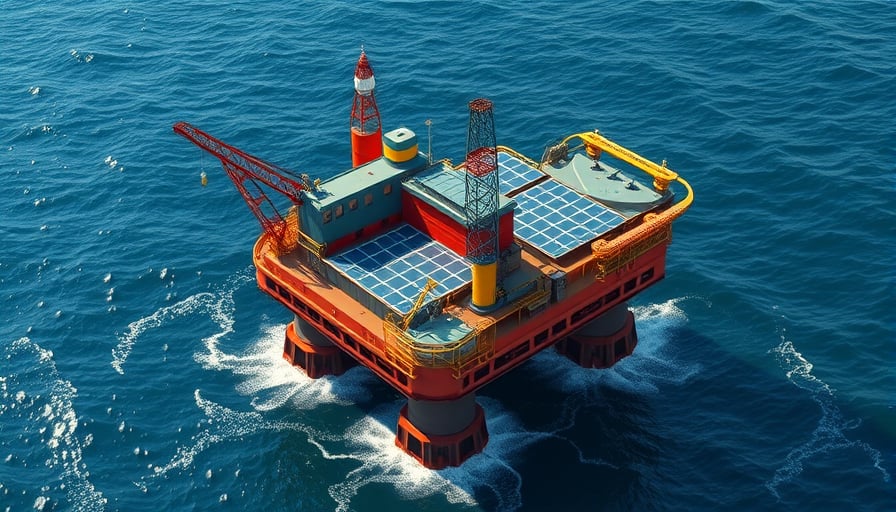
The Namibian government has expressed interest in incorporating renewable energy storage into the offshore infrastructure. Consequently, the partnership will explore the integration of battery storage units and hydrogen production facilities to capture excess gas during off‑peak periods. This hybrid approach aligns with the global trend toward carbon‑neutral operations, potentially enabling a dual revenue stream from both oil/gas and clean energy products.
Regulatory Impacts on Traditional and Renewable Energy Sectors
The Namibian Energy Regulatory Authority (NERA) has recently revised its policy framework to encourage foreign investment in upstream projects while tightening environmental safeguards. Under the new regulation, operators must secure a comprehensive environmental impact assessment (EIA) and adopt a mandatory carbon accounting system. The Mopane partnership has already secured preliminary compliance with these requirements, and both Galp and TotalEnergies will jointly develop a carbon mitigation strategy that includes carbon capture and storage (CCS) and bio‑energy integration.
On the renewable side, Namibia has committed to achieving 70 % renewable electricity generation by 2030. The partnership’s potential integration of hydrogen production from the Mopane gas stream aligns with the national policy, creating an incentive for tax credits and subsidies under Namibia’s Renewable Energy Incentive Scheme (REIS). The resulting synergy between fossil fuel production and renewable energy generation is expected to provide a balanced portfolio that mitigates regulatory risks while contributing to the country’s decarbonisation goals.
Commodity Price Analysis
Oil prices have exhibited volatility over the past 12 months, with Brent crude fluctuating between $80 and $100 per barrel. Natural gas prices have mirrored this trend, ranging from $3.50 to $4.20 per million British thermal units (MMBtu). The partnership’s financial structure—specifically, the 40 % operating stake and the shared capital expenditure—provides Galp with a more favourable exposure to price upside while mitigating downside risk through shared investment responsibilities.
Moreover, the ability to repay the capital contribution through future production cash flows provides a natural hedge against commodity price swings, ensuring that the partnership remains financially viable even in periods of lower oil and gas prices. The projected production ramp‑up, combined with the potential for a 10 % share in the Venus discovery, could generate significant revenue streams, thereby stabilising the partnership’s balance sheet.
Infrastructure Developments and Market Dynamics
The Mopane field is situated near the existing Trans–Namibian Oil and Gas Pipeline, which will be extended to accommodate the new production volumes. TotalEnergies plans to upgrade the pipeline to 48 inch capacity, enhancing transport efficiency and reducing logistical bottlenecks. Additionally, a new export terminal is slated for construction at the port of Walvis Bay, with an estimated capacity of 5 million tonnes of crude per annum, ensuring that the region’s production can be efficiently routed to global markets.
The infrastructure investments—particularly the pipeline and terminal upgrades—will generate multiplier effects throughout the local economy, creating jobs and fostering ancillary services. From a market perspective, the increased production capacity will improve Namibia’s position in the regional supply chain, potentially stabilising local market prices and reducing import dependencies for neighboring countries.
Balancing Short‑Term Trading Factors with Long‑Term Energy Transition Trends
In the short term, the partnership’s operational strategy will focus on achieving a rapid production ramp‑up to capture immediate market opportunities, particularly in the global oil and gas markets that remain sensitive to supply shocks. Simultaneously, the long‑term outlook will be governed by the energy transition narrative, where the integration of hydrogen production and renewable storage becomes essential to align with climate targets and evolving regulatory frameworks.
By aligning short‑term revenue generation with long‑term sustainability initiatives, Galp Energia and TotalEnergies position themselves as forward‑looking actors in the Namibian energy market. The partnership’s hybrid model—leveraging traditional hydrocarbon production while embracing renewable technologies—offers a compelling case study for the broader industry on how to navigate the complex interplay between commodity markets, regulatory landscapes, and the accelerating energy transition.